Saturday, 12 October 2013

Wilfred Owen's poetry silences the Festival Hall

Benjamin Britten: War Requiem (1962)

London Philharmonic Orchestra 
Vladimir Jurowski conductor 
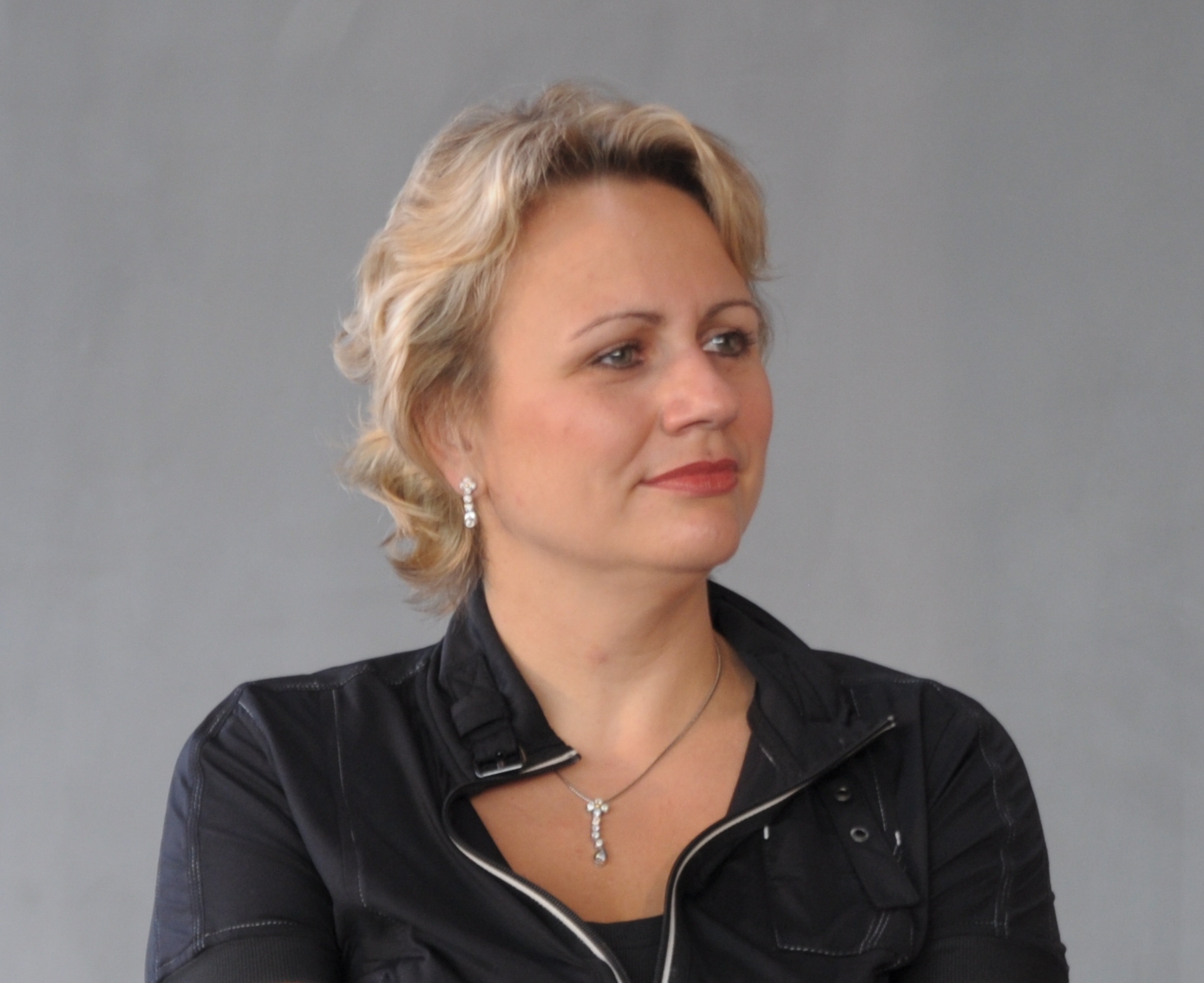
Evelina Dobraceva soprano 
Ian Bostridge tenor 
Matthias Goerne baritone 
Neville Creed conductor (chamber orchestra) 
London Philharmonic Choir 
Trinity Boys Choir

Royal Festival Hall, London 12 October 2013

*****************
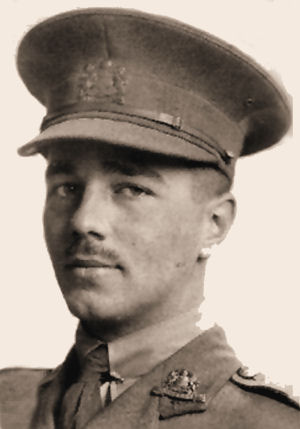
Wilfred Owen

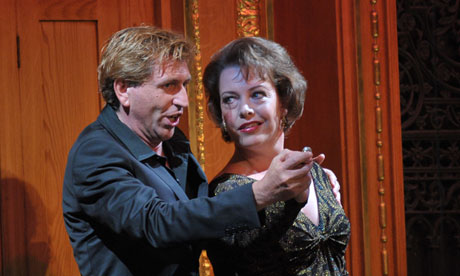
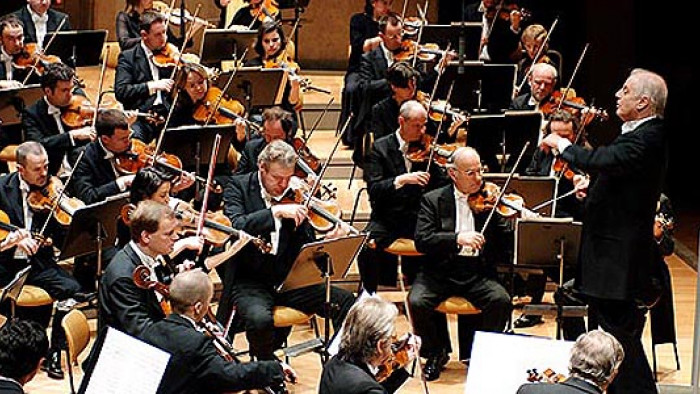
A solid evening's work from the LPO under Jurowski, even if it was not as searing as might have been expected.  On a first hearing, there was a nagging feeling this work is not more than the sum of its undeniably impressive parts.

There was much to admire, led by Wilfred Owen's moving First World War poetry which Britten ingeniously intersperses throughout the Latin Requiem mass.  In the Offertorium there was this stunning undercutting of the Biblical story of the sacrifice of Abram's son:

Then Abram bound the youth with belts and straps,
And builded parapets and trenches there,
And stretched forth the knife to slay his son.
When lo! an angel called him out of heaven,
Saying, Lay not thy hand upon the lad,
Neither do anything to him. Behold,
A ram, caught in a thicket by its horns;
Offer the Ram of Pride instead of him.

But the old man would not so,
but slew his son, -
And half the seed of Europe, one by one.


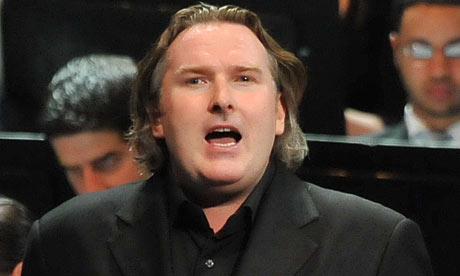
Very fine indeed were the two poetry soloists Ian Bostridge and Matthias Goerne, with Bostridge leading with his plangent voice and compelling fusion of melody and word. Vladimir Jurowski and Neville Creed directed with clarity and feeling.  Elsewhere the LPO chorus were well balanced without really taking flight, while the off-stage boys choir were virtually inaudible at critical moments.

It was left to Bostridge (unforgettable in "Move him into the sun..." and the Agnus Dei) and Goerne to deliver the high points, not least in the closing of the Libera Me and its call to sleep.  This work delivers a powerful message of pacifism and Jurowski might have held the final silence for longer than the 20 seconds he chose.

Wilfred Owen's poem "Strange Meeting" featured in the Libera Me 


Sunday, 6 October 2013

Vitality and verve from Orchestra Mozart

Beethoven: Leonora Overture No. 2, Op. 72a
Beethoven: Piano Concerto No. 2 in B flat, Op. 19
Beethoven: Symphony No. 4 in B flat, Op. 60


Orchestra Mozart

Bernard Haitink, conductor
Maria Joao Pires, piano

Bernard Haitink

Royal Festival Hall, London, 1 October 2013
***************

In the end Artistic Director Claudio Abbado was not able to join the Orchestra Mozart due to health concerns.  But impressive back-up came from the equally fine conductor Bernard Haitink and a splendid partner in soloist Maria Joao Pires.

This concert was a bizarrely managed bit of scheduling by London's Southbank Centre in which only the presence of Orchestra Mozart itself was a constant.  It started with an attractive Haydn/Mozart/Beethoven programme which then became all-Beethoven.  Then Pires dropped out as soloist to be replaced by Martha Argerich.  Abbado was subsequently forced to cancel his concerts for 2 months, including a tour of Japan.  Argerich simultaneously cancelled and Haitink stepped in at short notice with the suddenly available again Pires.

Orchestra Mozart is a chamber ensemble formed in 2004.  With Abbado as Artistic Director and Diego Matheuz as Principal Guest Conductor (he recently took up the same position with the Melbourne Symphony) it does not want for star conductors.  No doubt with this influence it also plays with the front rank of today's soloists.  And among its own ranks are some famous names such as Wolfram Christ, previously principal viola with the Berlin Philharmonic Orchestra.
Wolfram Christ


Pires, a gold standard these days in the classical piano concerti, was in vintage form in the Beethoven Second Piano Concerto after a slightly hard edged start.  Her finely pitched delivery of the hanging notes at the close of the slow movement was mesmerising.  


With youth and technical prowess combined, the Orchestra Mozart strings brought great verve and vigour to their playing, not least in a thrilling Egmont Overture served as an encore.  The woodwind added fine individuality in their contributions to leave only an overall sense that the darker aspects of the works were slightly underplayed.  However the sunny Fourth Symphony was a delight from beginning to end, and there was no want of drama and heroic Beethovenian struggle in the overtures that book-ended the concert and which Haitink shaped with a sure hand.  This season is Haitink’s 60th as conductor, during which he will turn 85.  Long may orchestras benefit from his wisdom. 

Pianist Maria Joao Pires

Martha Argerich - not available

Friday, 2 August 2013

Prom 20 - Stemme's Brunnhilde crowns a triumphant Ring from Barenboim and the Staatskapelle Berlin

Wagner: Götterdämmerung (semi-staged)
 
Nina Stemme soprano (Brünnhilde)
Andreas Schager tenor (Siegfried)
Mikhail Petrenko bass (Hagen)
Gerd Grochowski baritone (Gunther)
Anna Samuil soprano (Guntrune/ Third Norn)
Johannes Martin Kränzle baritone (Alberich)
Waltraud Meier mezzo-soprano (Waltraute/ Second Norn)
Margarita Nekrasova mezzo-soprano (First Norn)
Aga Mikolaj soprano (Woglinde)
Maria Gortsevskaya mezzo-soprano (Wellgunde)
Anna Lapkovskaja mezzo-soprano (Flosshilde)
Royal Opera Chorus
Staatskapelle Berlin
Daniel Barenboim conductor 


Royal Albert Hall, London, 28 July 2013
*******************
To start at the end, this quite magnificent presentation of Wagner’s Der Ring des Nibelungen culminated in a spine-tingling Immolation Scene from Nina Stemme’s Brunnhilde.  Positioned at the Albert Hall organ loft high above the glorious Staatskapelle Berlin, she approached an ideal for this role.  Her technique and projection was rock solid combined with her now customary warmth and insight.  It was a resounding send-off: she instructs a funeral pyre be erected for the murdered Siegfried, having attained new self-awareness bids compassionate farewell to her father Wotan, and rides her horse Grane into the fire. 
Barenboim and Waltraud Meir as Waltraute

Barenboim then led his orchestra through the final golden pages of Wagner’s 16 hour, 4 opera journey, the Staatskapelle yet again producing thrilling levels of tonal depth and expressiveness.  As the final chord died away, Barenboim’s hand was held aloft and the packed Albert Hall sat in silence for a full 15 seconds.  Then thunderous acclaim.

Barenboim addressed the audience, praising it for its rapt silence throughout The Ring as well as giving a special farewell to the Staatskapelle’s concertmaster – Wolf-Dieter Batzdorf - who was retiring after 40 years.

Before then another luxury cast had joined Stemme in bringing Wagner’s flawed but great opera to life.   It is fundamental to understanding and indeed tolerating the unique musical achievement that is The Ring that its libretto was in fact written backwards.  Wagner first wrote the libretto of an opera to be called Siegfried’s Death.  He then expanded it to describe Siegfried’s back story as two operas which ultimately became Siegfried and Gotterdammerung.  But Wagner then was moved to include the story of Brunnhilde, which added The Valkyrie to the collection of operas.  Then finally he wanted to include a fuller version of the story of Wotan, which added the preliminary evening of The Rheingold.    While Wagner re-edited the full four opera libretto as a whole this backwards expansion explains why there are some inconsistencies and also why the audience is often being told things it already knows.  
Andreas Schager and Nina Stemme in the Prologue

So, Twilight begins with an extended Prologue which goes over some previous happenings.  Siegfried and Brunnhilde reprise their rapture from Act 3 of Siegfried and the Norns mull over the whole storyline of The Ring.  Thankfully Wagner's music is little short of genius, with Siegfried and Brunnhilde's scene and Siegfried's Rhine Music musically overwhelming.

This famously awkward and contradictory conclusion to The Ring was then greatly helped by Andreas Schager’s physically plausible and dashing Siegfried, channelling Errol Flynn, and Mikhail Petrenko’s darkly attractive Hagen who brought glamour and dramatic impact to the villain’s role. Both were ably supported by Anna Samuil as Gutrune and Gerd Grochowski as the spineless Gunther. 

Waltraud Meier as Waltraute created one of the evening’s big highlights with a riveting dialogue with Brunnhilde in Act 1.  She drew the listener into her long narrative of the plight of the gods, and brought a huge emotional charge to her distraught departure from the rock, having failed to convince Brunnhilde to return the ring to the Rhinemaidens. 

Throughout this performance of The Ring, the central revelation has been the commitment and quality of sound of the Staatskapelle Berlin.  Combined with the extraordinary potency and drama of Wagner’s music, listening to them was as continuously engaging and eloquent as the score itself.  Some slightly tired entries towards the end took nothing away from their conquest of the Albert Hall.  No one who attended these Wagner evenings will ever forget it.


The Royal Albert Hall, awaiting Act III

Peter O'Byrne


Saturday, 27 July 2013

Prom 18 - Barenboim Ring continues with Siegfried

Wagner: Siegfried (semi-staged)
 
Lance Ryan tenor (Siegfried) 
Nina Stemme soprano (Brünnhilde)
Terje Stensvold baritone (Wanderer)
Peter Bronder tenor (Mime)
Johannes Martin Kränzle baritone (Alberich) 
Eric Halfvarson bass (Fafner)
Rinnat Moriah soprano (Woodbird)
Anna Larsson mezzo-soprano (Erda) 
Staatskapelle Berlin
Daniel Barenboim conductor 
Royal Albert Hall, London, 26 July 2013
*************************

Daniel Barenboim's sure hand on this first complete Ring at the Proms continued with an engrossing Siegfried.

The driving force in this came from dramatically compelling performances from Canadian heldentenor Lance Ryan, as the young hero Siegfried who does not know the meaning of fear, and Peter Bronder as the dwarf Mime who is bringing Siegfried up in the forest who was energetically characterised from the start, scheming and wailing, part villain, part pathetic figure.

The opera naturally turns on its Siegfried and what a difficult character it is to bring off.  As Wagner's libretto has him, he can be a very unsympathetic character, a brainless beefcake, enjoying his tormenting of Mime a little too much.  Certainly Ryan's portrayal veered in this direction initially with his wilful, adolescent Siegfried, but he built considerable complexity as Siegfried questions Mime and learns across the opera more of his parents and himself. His Act 2 disturbed the onward impulse of the opera, but it injected some fine humour into proceedings through the "Forest Murmurs" section as he interacted with the on-stage orchestra.  For his horn calls to the wood bird, the first french horn of the wonderful Staatskapelle Berlin came out front to deliver it impeccably.  "Got any others?" Ryan quipped. Audience laughter, during a Ring!
Lance Ryan


Come Act 3, things moved onto new levels in a whole range of ways.  The great fault line in the music of The Ring of course comes at this point.  Wagner, having written the music of Rheingold, The Valkyrie and Acts 1 and 2 of Siegfried, left it for 12 years during which he wrote Tristan and The Mastersingers and his compositional genius advanced enormously.  The mighty Siegfried Act 3 prelude is music on another planet, and The Wanderer (Terje Stensvold) returned in more expansive mood than his rather one-speed contributions to that point and together with Erda (Anna Larrson) deepened the emotions at this point.  With Nina Stemme's entrance as Brunnhilde we were again reminded of her great artistry.  She is a complete Brunnhilde, powerful on the top register but with great warmth and quality across the full vocal range. 

Barenboim may have not been as successful as in the stunningly good Valkyrie on Tuesday at maintaining an underlying pulse to the evening, but the Staatskapelle Berlin were again a marvel.  The burnished brass were absolutely outstanding and the woodwind section sublime whether in conjuring up the forest sounds of Act 2 or blending subtly with the singer's vocal lines.  The horns were flawless and had an extraordinary capacity, though only 5 metres from my seat, to sound as if 100 metres distant, over a hill.  All promises well for Sunday's conclusion in The Twilight of the Gods.

Peter O'Byrne


Wednesday, 24 July 2013

Prom 15: Staatskapelle Berlin, Barenboim and Kampe in stellar Die Walküre

Prom 15: Staatskapelle Berlin, Barenboim and Kampe in stellar Die Walküre

Wagner: Die Walküre (concert performance)

Bryn Terfel bass-baritone (Wotan)
Eric Halfvarson bass (Hunding)
Simon O'Neill tenor (Siegmund)
Anja Kampe soprano (Sieglinde)
Nina Stemme soprano (Brünnhilde)
Ekaterina Gubanova mezzo-soprano (Fricka)
Sonja Mühleck soprano (Gerhilde)
Carola Höhn soprano (Ortlinde)
Ivonne Fuchs mezzo-soprano, (Waltraute)
Anaïk Morel mezzo-soprano, (Schwertleite)
Susan Foster soprano, (Helmwige)
Leann Sandel-Pantaleo mezzo-soprano, (Siegrune)
Anna Lapkovskaja mezzo-soprano, (Grimgerde)
Simone Schröder mezzo-soprano, (Rossweisse)
Staatskapelle Berlin
Daniel Barenboim conductor


Royal Albert Hall, London, 23 July 2013

*************************

The plush Staatskapelle Berlin inspired by the masterly direction of Daniel Barenboim and a first-choice cast including an electrifying Anja Kampe, delivered a memorable Die Walkure at the Proms last night.

Daniel Barenboim has taken to not so much giving concerts in London as much as masterminding events.  Previous highlights have been a complete Beethoven piano sonatas cycle  (2008), complete Beethoven symphonies cycle (2012), and a series of Mozart Piano concertos & Bruckner symphonies (2012).  Now he brings the first ever Proms The Ring of the Nibelung: Wagner's great pinnacle of opera writing consisting of three 4 hour operas The Valkyrie, Siegfried and Twilight of the Gods, preceded by the 2 hour "preliminary evening" of The Rhinegold.
 

This was a classic Proms experience; great artists performing a big work with very reasonable prices – a quarter of the norm for a staged version.  In the aftermath of a certain royal birth the previous day, this was democracy. 
Berlin Staatskapelle and Daniel Barenboim

Barenboim brought the Staatskapelle Berlin orchestra he is the music director of for The Ring, but on each of the 4 nights there are varying casts.  And the hero of The Valkyrie was undoubtedly the Staatskapelle – revealed as a great Wagner orchestra.  What does that mean?  Well, it has a burnished tone and a complete absence of rough edges in its sound. At times it sounded like one instrument, not an ensemble of 100, which always marks out the best orchestras.  Horns emerge from massed woodwind, oboes blend with strings, harps underpin unobtrusively the total sound.  And all this is important in Wagner because his music is characterised by a continuously evolving, shimmering, transforming tapestry of sound.  

Richard Wagner

Blessed with seats level with the orchestra and virtually sitting at the back of the second violins, there were countless moments of jaw-dropping beauty. Time and again the ear was distracted from the stellar singers to admire yet another moment of insight from the orchestra.  The culmination was a sound of breathtaking aural lushness at the conclusion with Brunnhilde asleep on the rock surrounded by the flickering magic fire.


So what is the story of The Ring?  Well it can be told in many ways but two primary themes are that it is about human love and compassion and its struggle against social laws and conventions, and about the replacement of one social order – that of the gods – with a new one.


In The Valkyrie this plays out through a sequence of key relationships.  First, Sieglinde is stuck in a loveless marriage with Hunding and meets and runs off with her twin brother Siegmund (Act 1).  Second, Wotan is stuck in a loveless marriage with Fricka who – being the goddess of marriage – demands the death of Sieglinde and Siegmund.  This, Wotan very reluctantly agrees as he is the father of both Siegmund and Sieglinde.  Third, Wotan is very close to another daughter, the valkyrie Brunnhilde.  He instructs her to carry out Fricka’s wishes (Act 2). However Brunnhilde thinks she knows what her father really wants and instead saves Sieglinde.  Wotan, with no option, punishes Brunnhilde by leaving her asleep on a rock for the first man to come across her to be her husband.  But in the long and profoundly moving conclusion to Act 3, overcome by compassion and admiration for Brunnhilde’s spirit, Wotan changes the sentence so that she is surrounded by a wall of magic fire that only a man who knows no fear will be able to penetrate.
Anja Kampe

Throughout the performance, Barenboim’s direction was very satisfying, delivering  concentration and space for the long arcs of music to breath. Generally broad tempi did not prevent Wagner’s moments of uber-excitement to deliver: the Act 1 prelude storm, climax of Act 1 and Sieglinde’s farewell to Brunnhilde in Act 3 (impressively broadened) standing out.

These particular moments also had another connection: Anja Kampe was on the stage.  Having made quite some impression in December as Senta, she here confirmed her reputation for ringing high notes and artistic fearlessness.  She may lack the vocal warmth of some, but in Wagner she delivers powerful singing and utter commitment.  It was completely thrilling and her reception at the end for her solo bow had to be heard to be believed.  A tumult, even for the effusive Proms audience.


Nina Stemme
Bryn Terfel
Nina Stemme  as Brunnhilde was a nuanced presence, well paced and with a wide vocal range.  Bryn Terfel’s Wotan commanded the stage with the outsize personality we have come to expect.  Terfel chewed up the words with gusto, but seemed fractionally more weary than weighty come the end.    Simon O’Neill was evidently struggling with a cold.  One constantly suspects he will prove too vocally lightweight for Wagner, but his artistry shone through with a fine heroic quality to his Siegmund.
Simon O'Neill


This was luxury casting, and backed up with the Staatskapelle’s magic carpet of sound and Barenboim’s sure hand, the night was thrilling, exhausting and ultimately transporting. 


Peter O'Byrne

Tuesday, 2 April 2013

Gustavo Dudamel
At home in the East

Vivier: Zipangu
Debussy: La Mer
Stravinsky: The Firebird (complete ballet)

Los Angeles Philharmonic Orchestra

Gustavo Dudamel conductor

Barbican Hall, London, 17 March 2013
**********************

Gustavo Dudamel is of course one of the most glamorous conductors on the circuit today.  As is well known, he was a product of El Sistema - Venezuela's famed music academy which teaches underprivileged children musical instruments and oversees over 100 youth orchestras - and graduated to direct its flagship orchestra: The Simon Bolivar Symphony Orchestra.  He now also leads the Los Angeles Philharmonic Orchestra where he was greeted with street posters shouting "Dudamel pasion".  It was this ensemble that he brought to London for a weekend residency, fronting it with an attractively unassuming stage manner. All music played was from the 20th and 21st centuries and it was in the most recent music that the biggest treasures were to be obtained from this conductor and ensemble.

The Sunday night programme was heavily weighted towards the early 20th century with masterworks of Debussy (La Mer) and Stravinsky (The Firebird).  These were delivered with the massive technical assurance which we have come to expect from this and other leading American orchestras.  But real orchestral magic was in short supply despite these scores providing abundant opportunities to conjure it up.  Dudamel seemed intent on clean, literal readings although the direct and fearless dispatch of Kastchei's infernal dance had some audience members spontaneously applauding.  Could Kastchei be the new March from Tchaikovsky's 6th in its ability to mislead listeners of the true ending? 
However Dudamel's more directional interventions could be electrifying.  No better demonstration of his obvious talent was in evidence than a mesmerising pianissimo transition into the final climax of the ballet.

Real musical intensity was delivered at the start with a work of Claude Vivier from 1980: Zipangu. Canadian composer Vivier's life was cruelly cut short when he was murdered in Paris in 1983. His ritualistic and colourful music was deeply influenced by extensive travel in Asia.  One of the countries he visited was Japan, and Zipangu was the name given to Japan at the time of Marco Polo.  

Claude Vivier, before his fateful visit to Paris
Igor Stravinsky, before he moved from Paris to Los Angeles
At the Barbican, the combination of excellent rehearsal, assurance and a strongly projected reading of the score provided the ideal kind of super-committed reading. "New" music deserves this treatment but does not always receive.  Through contrasting "typical" classical structures and more free forms suggestive of the natural world (bird calls on violins, the hum of forest life) the music skilfully created a strong sense of a culture clash between Europeans and the Japanese world.  The climax of sorts was a solo on the double bass - of all instruments - which pushed it outside its comfort zone, again enhancing the sense of a culture at its limits.

So, an eerie and memorable experience.  Not until that transition at the end of Firebird did this concert again deliver something so powerful.

Saturday, 9 February 2013

Lutoslawski festival -  Salonen and Zimerman turn on the style 

Lutoslawski: Musique funebre
Lutoslawski: Piano Concerto
Ravel: Daphnis et Chloe ballet
 

Philharmonia Orchestra
Philharmonia Voices
Esa-Pekka Salonen conductor
Krystian Zimerman piano
 

30 January 2013, Royal Festival Hall, London
*********************


Lutoslawski with Salonen
Lutoslawski has been a particular favourite of mine since I discovered his stunning 3rd Symphony – Beethoven for the late 20th century.  So it is a particular pleasure that Esa-Pekka Salonen and his Philharmonia Orchestra are playing a full tribute to the Polish composer on the 100 year anniversary of his birth in 1913.
 

The first concert of three at the Royal Festival Hall kicked off with the work that grabbed international attention for the composer at the second Warsaw Autumn Festival in 1958.  The Musique funebre has a tone equivalent to Strauss’ Metamorphosen and commemorates the 10th anniversary of the death of Bela Bartok.  It remains an arresting composition and Salonen was a model of restraint, emphasising the subdued and intimate atmosphere it generates. 
 

Lutoslawski and Zimerman performing together
From this followed the much later Piano Concerto of 1988 and we were treated to a typically polished and prepared performance from the work’s dedicatee – Krystian Zimerman.  Lutoslawski first discussed the project with Zimerman in 1976 so it had an extended gestation.   Thinner, often luminous orchestration is coupled with much surprisingly traditional writing for the piano.  Zimerman evoked the sparse, probing opening with the crystalline beauty we have come to expect, and revelled in the passacaglia finale which contains writing of a Lisztian bent.  In between it was possible to imagine that Chopin or Brahms were involved, but Lutoslawksi’s characteristic structural clarity, superb orchestration and magica improvisatory qualities were everywhere evident.  Kissing the score, Zimerman departed the stage after an ideal performance of this fine work.

After such concise, focused brilliance in the first half, it was perhaps unfair to throw out one of Ravel’s most bloated scores.  Fair or not, Daphnis well outstayed its welcome, however brilliantly it was played and sung by the Philharmonia Orchestra and Voices.   The orchestration was at times ravishing of course, but much of the ballet feels like sub- Rimsky-Korsakov and the worldless vocalising of the chorus has not dated well.

Bring on more Lutoslawski!