Monday, 4 June 2018

Rattle says farewell to Berlin

Jörg Widmann: Tanz auf dem Vulkan (UK premiere)
Lutosławski: Symphony No.3
Brahms: Symphony No.1


Berliner Philharmoniker 
Simon Rattle conductor

31 May 2018, Royal Festival Hall, London *************
In 2018, Simon Rattle's tenure at the helm of the Berliner Philharmoniker comes to a close,  Rattle heads to the London Symphony Orchestra and Russian conductor Kirill Petrenko takes his place in Berlin. 

The last London concert for Rattle and the Berliners was a snap-shot of his life in Berlin.  Admirably championing newer music while accommodating the traditional core repertoire of this famous orchestra in intelligent if not life-changing interpretations.

No sooner had the orchestra finished tuning when it launched into a jazzy theme and on rushed Rattle with stagey expressions of annoyance.  Then the "proper" music was started.  Only at the end does the jazzy music return and conductor walk off stage while the orchestra finishes.  All nicely done in this short new work from Jörg Widmann: Tanz auf dem Vulkan ("Dance on the Volcano").

Then it was the Polish composer Witold Lutoslawski's Third Symphony, premiered in 1983.  It is a very fine work structured around a repeated motif with clear references to the famous opening of Beethoven's Fifth Symphony.  This returns to divide up the sections of the 30 minute piece, many of which thrillingly use "aleatory" writing where the players have freedom to play their sections at their own speeds.  It all culminates in an almost tonal climax of considerable emotion.  The performance was of great poise, clarity and virtuosity.

Johannes Brahms
And then to Brahms, his first symphony certainly not his best but whose outer movements pack a great emotional punch.  From the start the refinement of the orchestral sound was glorious, the strings very weighty and built from the double basses up in classic Brahmsian fashion.  Were the strings a little too numerous?  Perhaps at times they seemed to overpower the woodwind.  And then there was a developing concern that it was all a little rounded and cultured, albeit in a super-refined way. 


But no, we had simply been set up for the coda, the whole concert waiting for the final minutes when we were taken to another level and treated to a truly extraordinary sound: blended, bronzed and with seemingly infinite reserves of tonal depth and sonority.  It was engulfing, uplifting and more than a little awe-inspiring.  Thank you Berliner Philharmoniker.
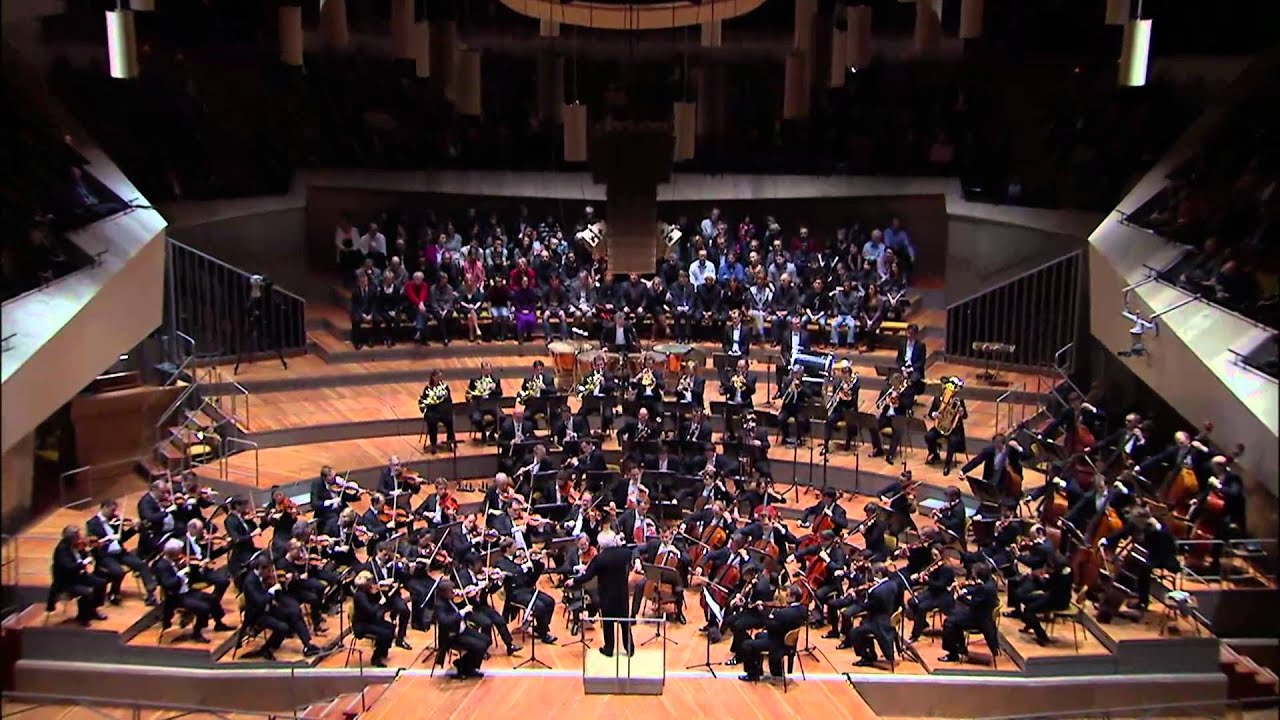
Sinon Rattle and the Berliner Philharmoniker

Sunday, 8 April 2018

Evgeny Kissin hammers the Hammerklavier

Beethoven Sonata No 29 in B flat Hammerklavier

Friday, 16 February 2018

Argerich, Maisky and Jansen at the Barbican

Friday, 9 February 2018

Tosca

Puccini: Tosca
Floria Tosca: Adrianne Pieczonka
Mario Cavaradossi: Joseph Calleja
Baron Scarpia: Gerald Finley
Spoletta: Aled Hall
Cesare Angelotti: Simon Shibambu
Sacristan: Jeremy White
Sciarrone: Jihoon Kim 
 
Royal Opera Chorus 
Orchestra of the Royal Opera House
Dan Ettinger conductor 
 
7 February 2017, Royal Opera House Covent Garden (live broadcast)
***********************
This featured some fine singing from Calleja in particular and an impressively strong characterisation of Tosca from Pieczonka in an otherwise tradiitional production.  But in the cinema the orchestra was projected so forward as to overwhelm the singers and deafen the audience.  When the clarinet solo in e lucevan le stelle drowns out out Cavadorossi, it is time to complain. 

Saturday, 20 January 2018

Primary colours Verdi

Verdi: Rigoletto

Duke of Mantua Michael Fabiano
Rigoletto Dimitri Platanias
Gilda Lucy Crowe

Royal Opera Chorus
Royal Opera Orchestra
Director David McVicar
Revival Director Justin Way
Conductor Alexander Joel


16 January 2018, Royal Opera House, Covent Garden
***************
The plot of Rigoletto is not the last word in subtlety, nor much of a standard bearer for sexual equality.  And Justin Way's approach to the latest revival of David McVicar's Royal Opera production offered no escape.  The Duke of Mantua's court was a lurid place of debasement and sexual exploitation, providing maximum contrast with the innocence of Gilda fresh from her convent.  The sense of dread for her safety was very effectively underlined.  But later her subsequent acceptance and protection of the Duke in all his flaws made little dramatic sense given his plainly horrific behaviour.

Verdi's music is a non-stop delight, clearly one of his most successful scores.  The singing on the whole did not live up to its subtlety.  Dimitri Platanias's Rigoletto was a hugely impressive physical, menacing performance, entirely capable of revenge.  But vocally he projected the more sensitive aspects of the role less successfully.  Lucy Crowe's Gilda had vocal control, but was not fully inside the role. In Caro nome there was no sense of a girl's breathless anxiety, more a singer focusing on her vocal technique.   Michael Fabiano's Duke was by contrast very fine throughout, with a gleaming tone and great command of the stage.

Thursday, 7 December 2017

Recorder overload

Vivaldi Concerti La Notte, L'Inverno, La Pimavera, The Gypsy and the Priest, and RV40.
Works by Giovanni Bassano, Dario Castello, Tomasso Albinoni, Baldassare Galuppi, Guiseppe Tartini, Pietry Locatelli, Biagio Marini, Maurizio Cazzati.

Red Priest

Trinity Church Wimbledon, 21 November 2017
*********************

Red Priest have been a fixture on the Baroque circuit for 20 years, with their refreshing take on the music and the concert ritual itself.  Red Priest was of course the nickname of the flame haired composer Antonio Vivaldi.
  
It’s made up of harpsichordist David Wright, cellist Angela East, violinist Adam Summerhayes and Piers Adams on the recorder.  Amongst these Adams is clearly the leader, happily skipping between soprano, alto and bass recorders, fronting repertoire spanning all the Venetian greats from Vivaldi to Galuppi, much of it arranged for the ensemble.

The concert was the “Venice” instalment in this year’s Wimbledon International Music Festival as part of its "Musical Capitals" theme in 2017.  Despite the undoubted brilliance of Adam’s artistry on the recorders, the relentless recorder-led music lacked variety in the first half.  The performances did not seem to achieve either enough polish or enough fun, falling awkwardly in the middle.  It was a relief when Adam Summerhayes’ violin began to take on more solos as the evening continued.

On the whole the second half proved much more successful, featuring the ensembles rendition of the over-famous Spring concerto of Vivaldi with a healthy injection of fantasy, and culminating in a version of the same composer’s "Gypsy" Concerto given a “wild Romanian” take.

Saturday, 25 November 2017

Rattle champions Haydn

Wagner Prelude and Liebestod from Tristan and Isolde
Bartok Piano Concerto No. 2
Haydn An imaginary orchestral journey

London Symphony Orchestra
Denis Kozhukhin, piano
Simon Rattle, conductor

Barbican Hall, London 11 July 2017
****************
Simon Rattle’s commitment to Haydn’s genius produced a memorable Barbican night.  For him this was a reprise of a concert in Berlin stringing together movements from various Haydn works into “An Imaginary Orchestral Journey”.  This type of thing has also been successfully done to Rameau by Marc Minkowski.
The Esterhazy Palace, Haydn's long-term home


As well as giving a more prominent platform for part of the “7 Last Words of Christ”, Symphonies 64, 6, 46, 60, 45, and 90 were excerpted as well as The Creation, The Seasons and the obscure L'Isola Disabitata. There was some lovely moments of fantasy, not least when the little known mechanical organ took centre stage.  Haydn wrote 17 pieces for mechanical organs, one of which was featured here before Rattle paused proceedings to listen to these little constructions being broadcast unadulterated from various locations around the Barbican Hall. Somehow both arch and evocative all at the same time.
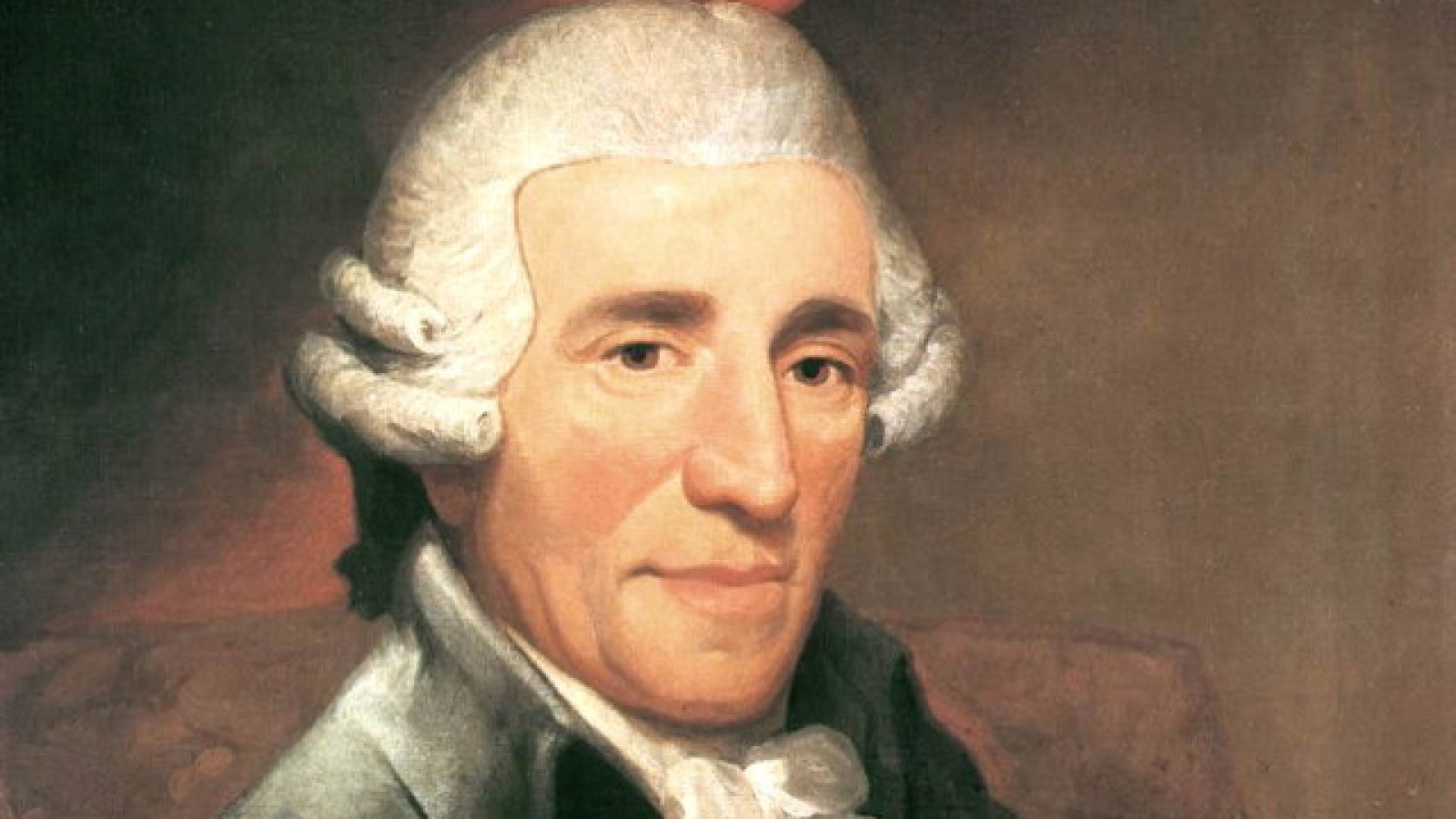
Joseph Haydn