Sunday, 23 December 2012

Terfel, Kampe, Salminen - a Wagnerian triumvirate

Richard Wagner: The Flying Dutchman (concert performance)


Baritone Bryn Terfel

Bryn Terfel The Dutchman
Anja Kampe Senta
Matti Salminen Daland
Martin Homrich Erik
Fabio Trumpy Steersman
Liliana Nikiteanu Mary

Zurich Opera Orchestra 
Zurich Opera Chorus
Alain Altinoglu conductor


15 December 2012, Royal Festival Hall, London
****************
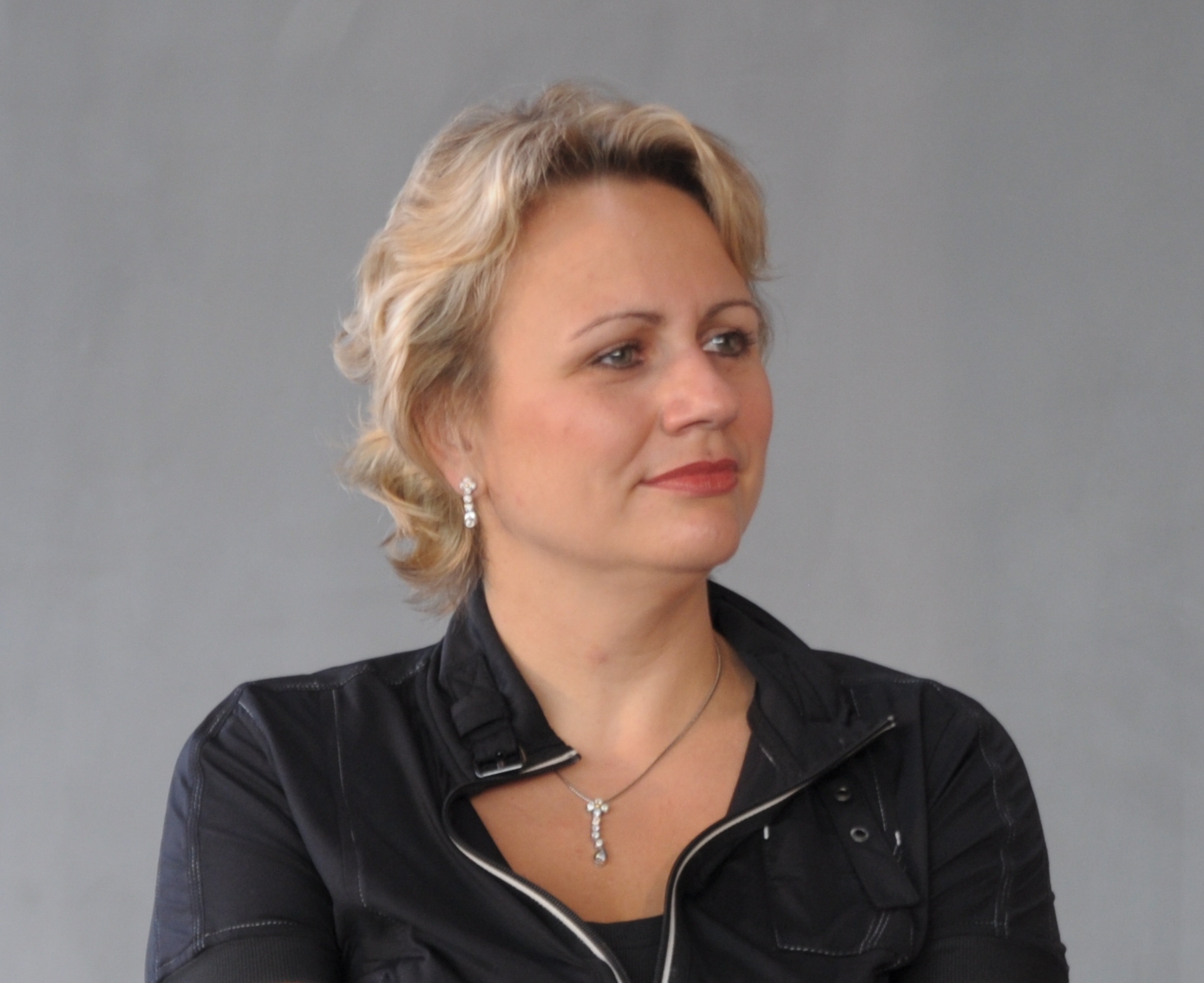
Anja Kampe


This performance of Wagner’s opera came straight from the Zurich Opera House.  As a result this was not one of those stilted concert performances which howls for sets and props.  The singers immediately created engaging relationships with eachother and the Festival Hall stage.  When underpinned by Wagner’s orchestral narrative, the evening was as enthralling as any staged version.

The Steersman and Captain Daland brought out humour as well as atmosphere from the opening and only Mistress Mary was an awkward presence, seemingly in two minds whether to act out her role as a very coquettish 50 year old, or hold true to more formal conventions of concert performance.


Wagner’s opera tells the tale of the Flying Dutchman, doomed to sail the seas until the day of
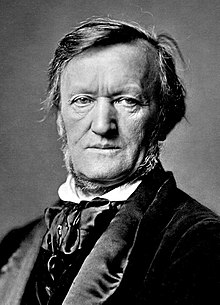
Richard Wagner
judgment unless he is redeemed by the love of a true woman.  He can return to land every 7 years to find such a person and the opera starts as he meets Daland, discovers he has a daughter Senta and strikes a bargain that he will give the father all his dazzling treasure in return for marrying her.  And – who would have thought - Senta has a picture of the Flying Dutchman on her wall. She spurns the advances of the hunter Erik in preference for awaiting the doomed man.  She is ecstatic on the Dutchman’s arrival but in the end the Dutchman suspects she has failed him and sails off.  Senta proves her love by throwing herself from a cliff into the sea as the opera ends.

Alain Altinoglu was directing this performance and was unfussy and direct throughout.  This brought greatest benefits when the orchestra reaches full frenzy as the human and ghostly ship crews dialogue in the final act.  Elsewhere it was not a reading of the score to set pulses racing.  Probably just as well though, because the singers were setting the air alight.

The evening had been marketed with Bryn Terfel as the headline act.  What we actually received was a spectacular triumvirate of Wagner singers: Terfel sharing the stage with two unforgettable performances from Anja Kampe as Senta and Matti Salminen as Daland.  When the three sang together at the climax of Act 3 this was clearly a vintage Wagner evening.

Matti Salminen

Salminen was the first on stage and his interpretation combined a powerful voice (a little hoarse sounding although he is a ship captain) with a wry and engaging interpretation of the character.  He brought a depth to the role that took it beyond the simple opportunism that it suggests. The Steersman was nicely clear and true.


The entrance of Terfel ratcheted up the temperature.  This was a vocal masterclass as Terfel introduced the audience to the Dutchman’s massive existential angst.  His delivery of the repeated calling for the end of the world was unforgettable.  As ever his voice combined power with great attention to the words and a remarkable ability to speak very directly to the listener.    
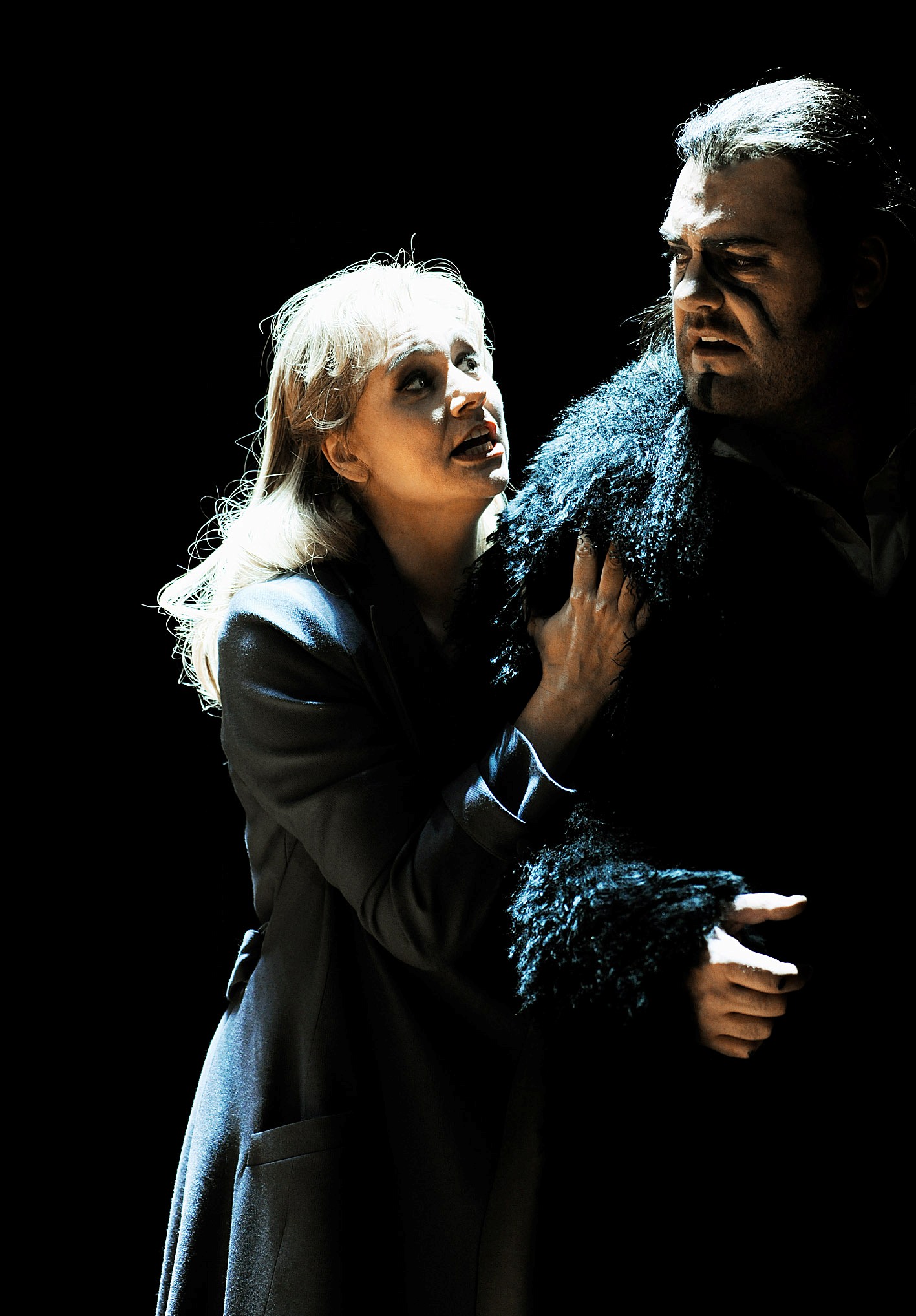
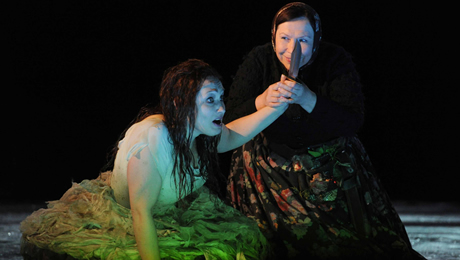
Kampe and Terfel together in the Zurich production

So far, all was going very well indeed.  Then Act II began.  After a bumpy spinning chorus and that slightly jarring Mary, Anja took control.  Even before she sang she seemed to radiate the type of indwelling confidence that a Senta should have.  After all she ignores all advice around her to wait for and then commit herself to a cursed ghost.  Once she was singing it became clear that she had a powerful voice combined with real artistic bravery.  She evidently has a few Sieglinde’s under her belt – I would pay good money to hear that on this showing.  She was far from flawless – suffering a power-failure in the Act 2 duet with the Terfel – but she sang with a generosity and abandon which suited the role very well.  Some Sentas may bring a more girl-ish aspect to both voice and acting, but Anja’s sledgehammer high notes at the opera’s conclusion were electric.  She all but knocked holes in the back of the hall. 


If Senta delivered the greatest thrills and spills Terfel’s Dutchman is difficult to imagine being bettered.  The intensity of his stage presence and singing was breath-taking and when he and Senta finally clinch, the moment was remarkable for its strangeness: Senta seemingly in a trance, the Dutchman consumed with not missing his chance at redemption. Tender it was not.  This was a triumph and a golden Wagner night.

 
Opera House Zurich (above) or Royal Festival Hall (below): which would you choose?

Sunday, 16 December 2012

A watery grave 

Antonin Dvorak: Rusalka
 

Wioletta Chodowicz Rusalka
Mischa Schelomianski Vodnik
Anne Mason Jezibaba

Ladislav Elgr Prince
Tatiana Pavlovskaya
Foreign Princess
Glyndebourne on Tour Chorus & Orchestra
Jakub Hrusa
conductor

9 November 2012, Wimbledon Theatre, London
********
 

As with so many fairy tales, this is a grim story.  The water sprite Rusalka falls in love with a prince.  But if she is to win him she must enter the world of humans and lose the power of speech.  Warned that this will be disastrous she goes ahead and finds that the prince tires of his mute bride and is drawn to a foreign princess.  Rusalka returns to the water cursed but the prince now follows and all ends dismally.


The opera turns on the duality of the water sprite’s world and that of the humans on land.  Glyndebourne’s production, directed by Melly Still, sought to convey this through elaborate choreography of the water scenes using long serpent tails and movement actors.  A tad over-fussy, it also proved quite intrusive when poor Rusalka is being lifted, spun and pawed by choreographic assistants as she sings her Song to the Moon.  This most famous music in Dvorak’s favourite opera was very nicely done by Wioletta Chodowicz, integrating it into the scene rather than separating it as an artificial “show-stopper”.

The wedding scene clearly had a good concept but the central angled walkway became a health and safety disaster when water was inadvertently spilt on it.  How the killer-heeled princess failed to fall remains a mystery, but it brought unwanted elements of drama to the celebration.

Don't slip!
Vodnik was a powerfully malevolent presence throughout and held our sympathies as Rusalka is undone at her wedding by the foreign princess.  His appearance at the climax of Act 2 was the musical highlight of the night.
 
All in all a fine evening at Glyndebourne on Tour, though this was a production with its heart in the sodden depths of the lake, which meant that the underpinning love story was underplayed.  While the tale is dark, it is the power of this love that triggers the plot.  At no point in Act 1 did it ring true – a fatal flaw.

Friday, 14 December 2012

Maazel finally delivers

Prokofiev: Romeo & Juliet ballet excerpts
Prokofiev: Violin Concerto No. 2
Tchaikovsky: Symphony No. 6 "Pathetique"

Philharmonia Orchestra
Lorin Maazel
conductor
Vadim Repin violin
 

8 December 2012, Royal Festival Hall, London
********************
 
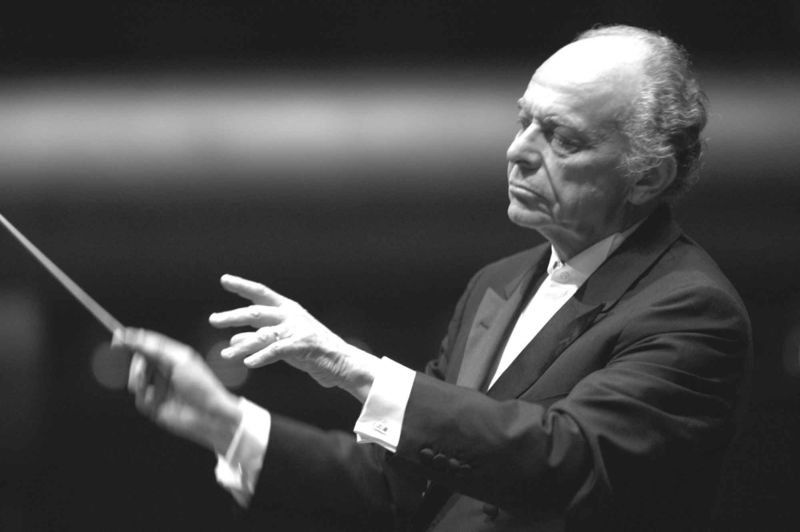
Lorin Maazel - teenage prodigy
A night that was never less than enjoyable finally achieved full lift off in the last movement of the Tchaikovsky.  After the histrionics of the third movement march the audience interrupted with extensive applause.  Maazel paused, and allowed an extended silence to intervene.  And then the great fourth movement lament was ushered in.  Maazel and the Philharmonia finally seemed to breath as one as he coaxed great monolothic phrases out of the orchestra in almost Brucknerian fashion.  The strings were at their most elequent in hushed pianissimo, and the conclusion was weighty and desolate. It was a masterly 10 minutes and worth the price of admission in itself. 
The Tchaikovsky had to that point been unimpeachably good, only held back by the Philharmonia's not always stylish contributions, whether in collective coordination or in individual utterances from the woodwind.  Maazel chose relaxed tempi but these navigated the emotional roller-coaster ride of this extraordinary work most effectively.  Much the same could be said of the Romeo and Juliet excerpts which scored big hits without removing the impression that the orchestral punches lacked the last ounce of sophistication.  Maazel started with a pungent Montagues & Capulets, proceeded onto the Tomb scene before ending with that most spectacular of show-pieces - The Death of Tybalt. 

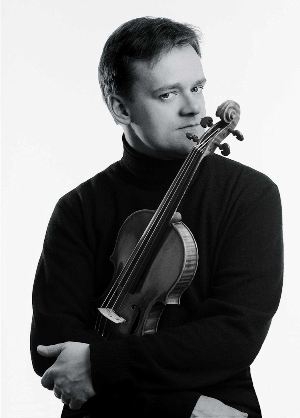
Vadim Repin


Vadim Repin also delivered a cool Second Violin Concerto.  The first movement of this equivocal work did not entirely settle but the slow movement struck an excellent balance between the folk-derived emotion and Prokofiev's cool neo-classicism.  The finale was pressed on very urgently and spectacularly to its conclusion. 

Maazel today remains a conductor worthy of admiration.  His stick technique is a model of clarity, and he has a proven record of making the big moments count.  In New York I heard him resurrect in the last movement what had been a super-polished but sluggish reading of Brahms' 4th Symphony.  His Tchaikovsky in London formed a pair with that experience.  The magic again revealed at the end. 

Lorin Maazel in more recent years

Wednesday, 26 September 2012

A conversation at the ballet

A conversation overheard at the cinema during interval watching a live broadcast of the Royal Ballet between two well spoken ladies in the row behind me.  

Lady A:  ... afterwards I'll get a taxi up the road as I didn't bring my car here.  
Lady B: Do you live far away?
A: Oh not far, just in Hampton Road.
B: Oh well I can give you a lift, I'm going that way.
A: Well that's very kind of you.  Most kind.  Can I give you something for petrol money?
B: Oh no that's not necessary.
A: Well thank you again.  My name's Karen.
B: Mine is Susan.
[pause]
A: I'm going to New York next week, I hope to see the New York City Ballet.
B: Oh that would be good.
[pause]
A: Yes it will be all Star Wars and shopping.
[pause]
A: I'm a Jedi you see.
B: Oh?
A: Yes, I go to all the Jedi knight conventions.
B: Ah.
[Conversation ended by thunderous advertisement for Royal Ballet DVDs]

Sunday, 26 August 2012

Prom 57 - Bach feeds 5000

Wagner: Parsifal – Act 3 Prelude and Good Friday Music
Berg: Violin Concerto
Richard Strauss: Der Rosenkavalier – suite
Ravel: La valse

Gustav Mahler Jugendorchester
Daniele Gatti conductor
Frank Peter Zimmermann violin 

26 August 2012, Royal Albert Hall, London
******************

The Gustav Mahler Youth Orchestra was founded in 1986 by Claudio Abbado and draws its members from the UK to Russia.   With the normal Proms programme, concert-goers were handed a separate programme covering the GMYO's 2012 Summer Tour.  Having two parallel programmes was actually quite instructive.  The GMYO's was a heavily corporate production on the orchestra's 25th anniversary, complete with words from the sponsors, president etc, and even a rather earnest Mission Statement ("Talent with professionalism, Musicianship without borders, Dedication and enthusiasm", in case you were wondering).  There were also some nice clashes: the GMYO was "the leading youth orchestra in the world" in its own brochure, but only "one of the world's leading youth orchestras" in the Proms programme.

Parsifal at Bayreuth in 2010 conducted by Daniele Gatti.  Photo: Enrico Nawrath
Gatti chose Wagner and Parsifal to open the concert.  In 2010 he directed the opera at Bayreuth and is booked to return again to the Wagner mecca. The GMYO sections are impressive units, and Gatti coaxed a nicely blended sound out of the group as a whole, although some on the woodwind were rather under-projecting their solo lines.  The concluding sections of this luminous music were beautifully shaped by conductor and orchestra.

Frank Peter Zimmermann
Alban Berg
With the Berg we were in for a treat with Frank Peter Zimmermann playing the solo part. Even after many listenings, Berg's melancholy and disturbing Violin Concerto has lost none of its mysterious power.  Sub-titled "To The Memory of an Angel", it was composed following the death at 18 of the daughter of close friends. The heart of the work comes as Berg quotes Bach's chorale Es ist genug ("It is enough!") in the woodwind.   And Bach reappeared, unexpectedly, as the highlight of the evening.  Zimmermann delivered an encore, the gently rocking Andante of Bach's A Minor Solo Violin Sonata.  It is music of simple, profound genius, and it was indescribably moving to see the Albert Hall - that 5000 capacity Colosseum - unified and transfixed by Zimmermann's hushed lullaby. 

The second half brought a cavalcade of waltzes.  First up was the pastiche of doubtful authenticity taken from Richard Strauss' opera Der Rosenkavalier.  Here too the competing programme notes diverged.  Did Strauss have no involvement in it and probably would have disliked it (Proms notes) or did he compose it possibly with some assistance from others such as Artur Rodzinski (GMYO notes)?  Personally I prefer the Proms version, as Strauss would surely have loathed the way it does not follow his own poetic conclusion to the opera but instead reprises high spirits from Act 2, and some of the gear changes between contrasted operatic moments are laughably insensitive. 

Things were taken to a whole extra level of sophistication with Ravel's masterwork La valse.  It was conceived as a homage to the great waltzes of Johann Strauss, but the First World War intervened and by its completion in 1920 Ravel had rounded it off with a violent climax which breaks the waltz with a terse, military conclusion.  It is a classic example (along with Bolero) of Ravel setting up a strictly rhythmic musical structure which then goes haywire at the end.  The GMYO brought an impressive, lithe sophistication to the piece with excellent contributions from the brass section, but Gatti rushed his fences at the end which substituted a frenzy for what should be a shocking change of rhythm - a virtual waltz-murder.
Peter O'Byrne

Wednesday, 22 August 2012

Prom 52 - Cinderella complete at Proms for first (and last?) time

Prokofiev: Cinderella - complete ballet (1945)
London Symphony Orchestra
Valery Gergiev conductor

22 August 2012, Royal Albert Hall, London
******************

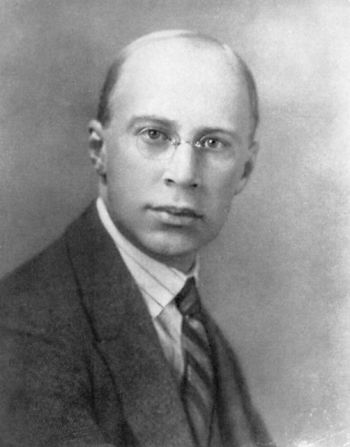
Sergei Prokofiev
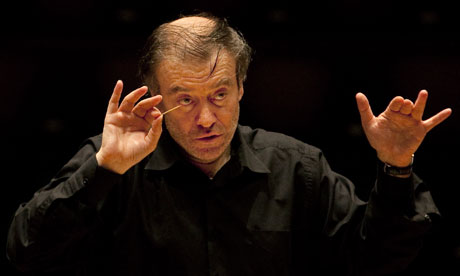
A concert performance of an evening-length ballet is normally enough to set you running for the hills.  But if the ballet is by Prokofiev or Tchaikovsky then it is an entirely different matter.  And if Valery Gergiev is conducting then we have grown accustomed to it being a highlight of the festival.

Valery Gergiev
Gergiev brought his London Symphony Orchestra to the summer Proms festival in the middle of a mini-European tour together.  16 - 19 August saw them performing 4 nights at the Edinburgh Festival in a complete Brahms and Szymanowski symphonies cycle that will be repeated in London in the coming Barbican season.  After tonight's Cinderella, they play 3 consecutive nights at Festivals in Salzburg and Lucerne.  The LSO then heads off to play with other conductors while Gergiev continues onto Stockholm direct for 3 more nights, then returns to the Edinburgh Festival with the Mariinsky for several more nights to round off August.  As it happens conducting Cinderella again.

Such are the schedules of the summer festivals, but what of tonight?  Could they pull a Cinderella without dancers off?  In a word, no. Cinderella is a delightful score and contains some of the greatest moments in Prokofiev's output, such as the stunning midnight clock music and the Act 1 waltz.  Prokofiev's enormous melodic gift combined with his edgy modernism provides the alchemy that lifts this ballet out of the ordinary.  But it does not have the long dramatic lines that Romeo or Sleeping Beauty have and the first Act in particular suffers greatly without the visual dimension, much of it full of sardonic humour as Cinderella's two stepsisters Skinny and Dumpy quarrel.

So, with these artists it was never going to be less than a quality performance, but it did not scale the heights.  History would have told them that no one had done this ballet complete in concert at the Proms before.  Gennady Rozhdestvensky did conduct Act 2 complete once - a sounder choice.
 
And I must comment on the toothpick.  I've grown accustomed to Gergiev directing orchestras without a baton; just his famous fluttering fingers.  He does sometimes use a full length baton.  But tonight he was using a thin 10cm long stick in his right hand.  Have the LSO complained they can't follow his beat?  After all which of the fluttering fingers is marking time?  In his toothpick, there was at least a (tiny) point for the players to focus on.

Peter O'Byrne

Monday, 23 July 2012

Review - Antonacci sets Berlioz ablaze at the Proms


Berlioz: The Trojans

Bryan Hymel tenor (Aeneas)
Fabio Capitanucci baritone, (Coroebus)
Anna Caterina Antonacci soprano (Cassandra)
Eva Maria Westbroek soprano (Dido)
Royal Opera Chorus
Orchestra of the Royal Opera House
Sir Antonio Pappano conductor 

Royal Albert Hall, London, 22 July 2012
********************
Anna Caterina Antonacci as Cassandra (2003)
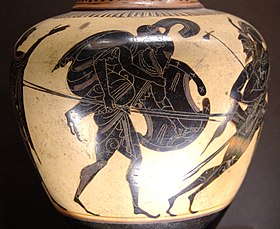
Berlioz described his opera The Trojans as "Virgil Shakespeareanised".  So the plot is based on Virgil's 1st century BCE poem Aeneid in which Aeneas escapes Troy as it is captured by the Greeks and goes on to found Rome after an extended dalliance at Carthage with its Queen Dido.  However the Shakespearean influence comes when Berlioz added elements drawn from his beloved Shakespeare such as Hector's ghost (modelled on Hamlet's father's ghost) and the interpolation of two comic Trojan sentries to undercut the pitiless tragedy of the final act.
Aeneas carrying his father (c.520 BCE)
   

From this text Berlioz composed a 4 hour, 5 act opera focused on the sack of Troy (Acts 1-2) and the story of Dido and Aeneas at Carthage (Acts 3-5).  In the grand French manner, the opera encompasses massive chorus scenes, extended wordless ballet sections and the formal requirements of the opera of the time (arias, duets etc).   Berlioz seems to have been ambivalent about Aeneas' character and so greatly expands the role of Cassandra in Acts 1-2 who leads the drama, foretelling doom as the Trojans party and welcome the Greek's wooden horse into the city walls.  Cassandra acts therefore as a counter-weight to Dido in Acts 3-5.

Bryan Hymel as Aeneas at Covent Garden (2011)
The recent Proms appearances of Antonio Pappano and his Royal Opera House forces have been clear highlights among the musical cavalcade this biggest of musical festivals offers.  And last night's Prom was again memorable.  Delivering opera in an un-staged format at the Proms lost more than usual in the extended ballet scenes.  That said, the Royal Opera House orchestra, liberated from the dark opera pit, played with verve and beauty, and the chorus were tremendously dramatic.  It is the music that benefits from these evenings, and while we all know that some opera obsessives seem to like anything but music, for the rest these Proms are true luxury occasions.

Anna Caterina Antonacci launched the evening in blistering fashion with a Cassandra of enormous  passion and depth of characterisation.  Her range of tone and emotion were riveting - a great performance.  Bryn Hymel's Aeneas may not have conveyed much inner turmoil but was comfortably equal to the tremendous vocal demands of this gruelling part.  Eva Maria Westbroek took Dido on a powerful dramatic journey from her initial satisfaction at founding her new city, to the depths of despair as Aeneas cruelly deserts her.

Apologists for this opera tell its story as one of initial incomprehension, being routinely cut and performed in two separate halves, then finally emerging into the light in the landmark 1957 Covent Garden performance of the work in its entirety.  Personally, I wonder if Berlioz might have ultimately cut a solid half an hour of the 4 hour work, with Acts 3 and 4 in particular dragging.  Berlioz's music is a unique and marvellous thing - luminous one moment, spitting fire the next, the thrills are frequent.  But in Act 4, Dido and Aeneas really want to sing a love duet, but are cruelly delayed for a solid 10 minutes while a quintet and septet are worked through.  An excess of musical formality just gets in the way.  

Peter O'Byrne