Johann Strauss II Die Fledermaus
Ben Johnson, Gabriel von Eisenstein
Susanna Hurrell, Rosalinde
Jennifer France, Adele
Joanna Marie Skillett, Ida
Peter Davoren, Alfred
Gavan Ring, Falke
Robert Burt, Dr Blind
John Lofthouse, Frank
Samantha Price, Prince Orlofsky
Ian Jervis, Frosch
John Rigby, Conductor
Martin Lloyd-Evans, Director
City of London Sinfonia
Opera Holland Park, London, 23 July 2016
****************
This most famous of operettas was given a full English update at Opera Holland Park to marvellous effect.
First up was the setting, moved to 1930s England and enhanced by Alistair Beaton'sfree but vivacious English translation. Singing in English brought obvious benefits in conveying the wit of the comedy, and allowed some contemporary references to despised Brexit politicians to be folded in.
Some creativity came with the adaptation, most of it trumphant. The 4 London bobbies dancing with their Prison Chief, a stunned reception to the night's exotic dancers, and lashings of broad English humour and innuendo, almost Carry On at times. This linked to a nice framing of the Eisenstein/Falke tension as stemming from Oxbridge antics.
Curiously the amorous Alfred was played as an Italian with an accent so massive it was almost Australian. More seriously, the night's Prince Orlovsky was anything but dominant vocally and physically, and Gavan Ring's Falke placed the Prince quite in the shade. This was perhaps the most light hearted Orlovsky ever seen, in little need of encouragement to laugh, which did nothing for dramatic impetus. At various other points there seemed a similar disregard for the plot in the search for gags. Adelle's famous Laughing Aria, when she is protesting to all she is indeed a high born princess, had her openly kneeing Eisenstein in the groin.
The acting was excellent and suitably over the top throughout. Vocally, some of the big numbers fizzled slightly. Susanna Hurrell's Czardas did not catch fire. Of the singers, Jennifer France as Adelle was the most spectacular, her high notes ranging from whispers to ringing floods of sound above the choruses. Through it all, John Rigby directed a fine, punchy performance from the City of London Sinfonia, tight but with a willingness to relax at key moments.
So a very fine evening, and such a pleasure to see an adaptation done so well. It may have lost the elegance of the Viennese original, but it quite intentionally chose an English farce instead.
Sunday, 24 July 2016

Friday, 8 July 2016
Die Walkure from Opera North
Richard Wagner Die Walküre
Kelly Cae Hogan Brünnhilde
Lee Bisset Sieglinde
Michael Weinius Siegmund
Robert Hayward Wotan
Yvonne Howard Fricka
James Creswell Hunding
Katherine Broderick Helmwige
Kate Valentine Ortlinde
Giselle Allen Gerhilde
Sarah Castle Siegrune
Madeleine Shaw Rossweisse
Heather Shipp Waltraute
Fiona Kimm Grimgerde
Claudia Huckle Schwertleite
Orchestra of Opera North
Richard Farnes conductor
Peter Mumford director
Royal Festival Hall, London, 29 June 2016
*****************
A fabulous evening and affirmation of the tremendous power wielded by Wagner's music.
This was the much praised production from Opera North, delivered in concert performance with generalised imagery shown on 3 large screens behind the orchestra. These were mercifully abstract, close ups of running water, tree bark, rocks, while of course providing some flickering flames for the culmination of the Magic Fire Music.
Of the singers, the women were the trump cards: Kelly Cae Hogan's Brünnhilde treading a good line between strength and youthful high spirits, and Less Bisset's Sieglinde projecting a compelling vulnerability. The assembled valkyries in the famous Act 3 were as near ideal as one could imagine.
The staging was certainly simple but yet again one feels Wagner's Ring is better like this than fully staged. In the early minutes one feared an entirely straight concert performance, with Siegmund and Sieglinde staring straight out at the auditorium. However this was not to be the case. Indeed the singers as a group were excellent in physically relating to each other and portraying the human drama. Richard Farnes took a flexible approach to tempo to match the acting. It had its down side in conveying Wagner's long arcs, but more than made up for this in supportign the emotion of the dramatic performance. And his forces were in great form by the time of Wotan's Farewell and the sublime orchestral conclusion.
Kelly Cae Hogan Brünnhilde
Lee Bisset Sieglinde
Michael Weinius Siegmund
Robert Hayward Wotan
Yvonne Howard Fricka
James Creswell Hunding
Katherine Broderick Helmwige
Kate Valentine Ortlinde
Giselle Allen Gerhilde
Sarah Castle Siegrune
Madeleine Shaw Rossweisse
Heather Shipp Waltraute
Fiona Kimm Grimgerde
Claudia Huckle Schwertleite
Orchestra of Opera North
Richard Farnes conductor
Peter Mumford director
Royal Festival Hall, London, 29 June 2016
*****************
A fabulous evening and affirmation of the tremendous power wielded by Wagner's music.
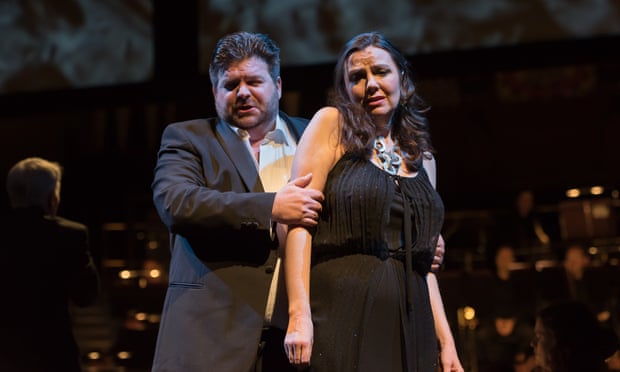 |
| Michael Wienius and Lee Bisset as Siegmund and Sieglinde |
Of the singers, the women were the trump cards: Kelly Cae Hogan's Brünnhilde treading a good line between strength and youthful high spirits, and Less Bisset's Sieglinde projecting a compelling vulnerability. The assembled valkyries in the famous Act 3 were as near ideal as one could imagine.
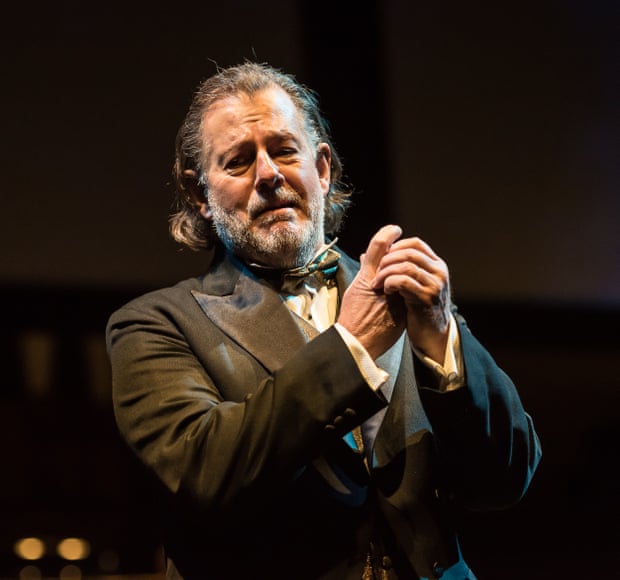 |
| Robert Hayward as Wotan |
Sunday, 3 July 2016
Scholl and Karamazov at Wigmore Hall
John Dowland Behold a wonder here
Thomas Campion My sweetest Lesbia, let us live and love
John Dowland Come away, come sweet love
Edin Karamazov Lute improvisations
John Dowland I saw my Lady weep
In darkness let me dwell
Time stands still
Edin Karamazov Lute improvisations
John Dowland Can she excuse my wrongs
Say, love if ever thou didst find
Now, O now I needs must part
George Frideric Handel Cantata: Nel dolce tempo HWV135
Edin Karamazov Lute improvisations on Bach
AnonDown by the Salley Gardens
I am a poor wayfaring stranger
O Waly Waly
Leo Brouwer Balada de un dia de julio
Andreas Scholl, countertenor
Edin Karamazov, lute
Wigmore Hall, London, 30 June 2016
****************
This was familiar repertoire from Andreas Scholl, and the evening had a certain cosiness before a warmly attentive Wigmore audience.
In many ways the lute improvisations of Edin Karamazov were the spice
that kept it going. Inward, delicate and flexible, these culminated in an
adaptation of the C Major cello suite of Bach.
Scholl is a wonder to listen to, with a purity of tone and delivery that in the Wigmore acoustic had its perfect match. It worked best in the folk songs towards the end. He is not overly dramatic, and there was a hint of sameness with each passing piece. Each given the Scholl treatment.
So an evening that did not quite add up to more than its parts. But very fine parts they were.
Thomas Campion My sweetest Lesbia, let us live and love
John Dowland Come away, come sweet love
Edin Karamazov Lute improvisations
John Dowland I saw my Lady weep
In darkness let me dwell
Time stands still
Edin Karamazov Lute improvisations
John Dowland Can she excuse my wrongs
Say, love if ever thou didst find
Now, O now I needs must part
George Frideric Handel Cantata: Nel dolce tempo HWV135
Edin Karamazov Lute improvisations on Bach
AnonDown by the Salley Gardens
I am a poor wayfaring stranger
O Waly Waly
Leo Brouwer Balada de un dia de julio
Andreas Scholl, countertenor
Edin Karamazov, lute
Wigmore Hall, London, 30 June 2016
****************
This was familiar repertoire from Andreas Scholl, and the evening had a certain cosiness before a warmly attentive Wigmore audience.
 |
| Andreas Scholl and Edin Karamazov |
Scholl is a wonder to listen to, with a purity of tone and delivery that in the Wigmore acoustic had its perfect match. It worked best in the folk songs towards the end. He is not overly dramatic, and there was a hint of sameness with each passing piece. Each given the Scholl treatment.
So an evening that did not quite add up to more than its parts. But very fine parts they were.
Monday, 25 April 2016
Karita Mattila a knockout in Janáček
Leos Janáček: Jenůfa – opera (1904)
Adriana Kohútková soprano, Jenufa
Karita Mattila soprano, Kostelnicka Buryjovka
Jaroslav Brezina tenor, Steva Buryja
Ales Briscein tenor, Laca Klemen
Svatopluk Sem baritone, Stárek (foreman)
Yvona Skvárová mezzo-soprano, Starenka Buryjovka (grandmother)
Lucie Silkenová mezzo-soprano, Karolka
Ludek Vele bass, Rychtár (mayor)
Jana Hrochová mezzo-soprano, Rychtárka (mayor's wife)
Marta Reichelová soprano, Jano
Katerina Jalovcová mezzo-soprano, Pastuchyna (herdswoman)
Katerina Kneziková soprano, Barena (servant girl)
Czech Philharmonic Choir Brno
Czech Philharmonic
Jirí Bélohlávek conductor
Royal Festival Hall, London, 18 April 2016
****************
How well the music comes to life in these concert performances. Janacek composed a vivid score for this dark tale of love, death and winter set in a Moravian village. It is equal parts dramatic and lyrical and Behohlavek ensured both were given their due. The Czech Philharmonic were in fine form projecting detail throughout and careful not to overwhelm the singers in the big moments.
There was drama in the casting. Adriana Kohutkova sang Jenufa, and excellently. However at her side was one of the role's most famous exponents - Karita Mattila - but now singing the role of the Kostelnicka (step-mother). Mattila was in full diva mode, not even acknowledging Kohutkova sitting next to her. The central vocal quartet was completed by the strong voices of Jaroslav Brezina as the cynical Steva and the fine mix of yearning and discomfort of Ales Briscein's Laca.
In Act 1 the lyrical approach of the Czech's paid full dividends as the delightfully characterful writing came shining through. In music in which idiomatic Czech language is essential, the Brno choir were ideal.
Mattila has a fabulous voice with a penetrating quality and a tone like stretched silk. Presumably the role is still new to her as she was buried in the score at times. But my goodness how she flattened the hall with the big Act 2 moments. Having horribly drowned the child of Jenufa, she was totally compelling as the winter winds blew into the room, personal and moral anguish overwhelmed her and she felt the "icy hand of death, tearing at my heart".
Amid such emotion one forgave some irritations. Non-existent or incomprehensible surtitles, and a curious reluctance for singers to relate to each other on even a basic level when the plot asked for it. By the end Laca and Jenufa were finally making eye contact, as some happiness in the story was at last achieved.
Adriana Kohútková soprano, Jenufa
Karita Mattila soprano, Kostelnicka Buryjovka
Jaroslav Brezina tenor, Steva Buryja
Ales Briscein tenor, Laca Klemen
Svatopluk Sem baritone, Stárek (foreman)
Yvona Skvárová mezzo-soprano, Starenka Buryjovka (grandmother)
Lucie Silkenová mezzo-soprano, Karolka
Ludek Vele bass, Rychtár (mayor)
Jana Hrochová mezzo-soprano, Rychtárka (mayor's wife)
Marta Reichelová soprano, Jano
Katerina Jalovcová mezzo-soprano, Pastuchyna (herdswoman)
Katerina Kneziková soprano, Barena (servant girl)
Czech Philharmonic Choir Brno
Czech Philharmonic
Jirí Bélohlávek conductor
Royal Festival Hall, London, 18 April 2016
****************
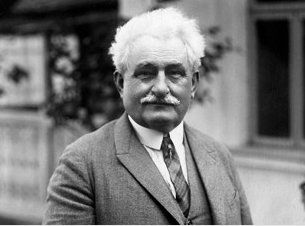 |
| Leos Janacek |
There was drama in the casting. Adriana Kohutkova sang Jenufa, and excellently. However at her side was one of the role's most famous exponents - Karita Mattila - but now singing the role of the Kostelnicka (step-mother). Mattila was in full diva mode, not even acknowledging Kohutkova sitting next to her. The central vocal quartet was completed by the strong voices of Jaroslav Brezina as the cynical Steva and the fine mix of yearning and discomfort of Ales Briscein's Laca.
 |
| Karita Mattila |
In Act 1 the lyrical approach of the Czech's paid full dividends as the delightfully characterful writing came shining through. In music in which idiomatic Czech language is essential, the Brno choir were ideal.
Mattila has a fabulous voice with a penetrating quality and a tone like stretched silk. Presumably the role is still new to her as she was buried in the score at times. But my goodness how she flattened the hall with the big Act 2 moments. Having horribly drowned the child of Jenufa, she was totally compelling as the winter winds blew into the room, personal and moral anguish overwhelmed her and she felt the "icy hand of death, tearing at my heart".
Amid such emotion one forgave some irritations. Non-existent or incomprehensible surtitles, and a curious reluctance for singers to relate to each other on even a basic level when the plot asked for it. By the end Laca and Jenufa were finally making eye contact, as some happiness in the story was at last achieved.
Monday, 25 January 2016
Francois-Xavier Roth conducts Wagner, Berg, Mahler
Richard Wagner Prelude to Act 1, Parsifal
Alban Berg Seven Early Songs
Gustav Mahler Symphony No. 5
London Symphony Orchestra
Camilla Tilling soprano
Francois-Xavier Roth conductor
Barbican Hall, London 21 January 2016
****************
"After Romanticism" was the title of the concert, and certainly in the resonance-free acoustic of London's Barbican Hall, Parsifal had never sounded so abstract and modern. Wagner's long musical lines of religious mysticism stepped abruptly into silence. Not for the first time the excellence of the LSO strings was striking.
Berg followed, the words vividly interpreted by soprano Camilla Tilling even if she rarely projected her voice far into the hall. And then to Mahler after the interval. Roth writes of this period of the end of the 19th and start of 20th centuries fascinating him and throughout this reading he seemed intent on emphasising the strangeness of Mahler's new sound world. Written in 1901-2 this sprawling masterwork baffled contemporaries and Roth was inviting us back into that jarring first encounter.
Organic dimensions were recessed and the sheer weirdness of the orchestration at for example the close of the second movement, was striking. This is a personal favourite amongst Mahler's uneven symphonic output, but I found myself with sacrilegious thoughts. Surely 10 minutes could be cut from the Scherzo and not be missed? Does the finale really work, and doesn't it also carry a lot of fat?
At the crucial adagietto, it was all a bit calculating for this love poem. At the climax Roth's baton-less hands flailed at the air, part Stokowski, part claws. It was a visual counterpart to a moment that wanted a more delicate approach.
So a night of mixed results. But Roth is clearly a conductor of strong ideas, and with the LSO strings on majestic form this night will linger in the mind.
Alban Berg Seven Early Songs
Gustav Mahler Symphony No. 5
London Symphony Orchestra
Camilla Tilling soprano
Francois-Xavier Roth conductor
Barbican Hall, London 21 January 2016
****************
"After Romanticism" was the title of the concert, and certainly in the resonance-free acoustic of London's Barbican Hall, Parsifal had never sounded so abstract and modern. Wagner's long musical lines of religious mysticism stepped abruptly into silence. Not for the first time the excellence of the LSO strings was striking.
18.jpg) |
| Francois-Xavier Roth |
Berg followed, the words vividly interpreted by soprano Camilla Tilling even if she rarely projected her voice far into the hall. And then to Mahler after the interval. Roth writes of this period of the end of the 19th and start of 20th centuries fascinating him and throughout this reading he seemed intent on emphasising the strangeness of Mahler's new sound world. Written in 1901-2 this sprawling masterwork baffled contemporaries and Roth was inviting us back into that jarring first encounter.
Organic dimensions were recessed and the sheer weirdness of the orchestration at for example the close of the second movement, was striking. This is a personal favourite amongst Mahler's uneven symphonic output, but I found myself with sacrilegious thoughts. Surely 10 minutes could be cut from the Scherzo and not be missed? Does the finale really work, and doesn't it also carry a lot of fat?
At the crucial adagietto, it was all a bit calculating for this love poem. At the climax Roth's baton-less hands flailed at the air, part Stokowski, part claws. It was a visual counterpart to a moment that wanted a more delicate approach.
So a night of mixed results. But Roth is clearly a conductor of strong ideas, and with the LSO strings on majestic form this night will linger in the mind.
Sunday, 20 December 2015
Patricia Petibon lives it up at Wigmore Hall
Patricia Petibon soprano
Susan Manoff piano
Recital: "La Belle Excentrique"
Songs and piano solos by:
Reynaldo Hayn
Erik Satie
Manuel Rosenthal
Gabriel Faure
Francis Poulenc
Fernando J Obradors
Manuel de Falla
Joaquin Turina
Joseph Canteloube
Leonard Bernstein
George Gershwin
Agustín Lara
Wigmore Hall, London, 16 December 2015
****************
A pianist wearing an elephant nose? A soprano in a chef's hat and apron? Rubber ducks, balls and assorted ridiculous paraphenalia pulled out of the piano and flung into the well-heeled Wigmore audience? This was not an ordinary song recital.
Patricia Petibon was making her Wigmore Hall debut with a highly original programme of turn of the 20th century music. The range was enormous from deeply felt and exquisitely realised laments, to fiery Spanish showpieces, to the gloriously eccentric creations of Satie and Rosenthal. This in itself was bewildering for the audience as the tone went from high art to farce with hardly a break between.
Petibon has a very fine voice, able to ripple and flutter through treachorous texts and fill the room with glorious ringing tones. To this she adds a highly expressive face and a marvellous sense of fun. How many times do we hear and see the ironic creations of Erik Satie given straight-laced; the humour po-faced; apart from a smirk at the end from the performer the demeanour little different from if it was a Hugo Wolf recital.
Petibon and her partner in crime Manoff would have none of this. The culmination was in a fabulous performance of Leonard Bernstein's setting of La Bonne Cuisine - a cookery book totally not intended to be song lyrics. Bernstein's setttings of Plum Pudding, Ox-tails and Rabbit were savoured, relished. Was this a recital, or a student revue, or old fashioned cabaret?
Petibon is a true original and let's hope we see more of her in London. Until then anyone unfamilar with her art could do no better than her wonderful performance on an Opus Arte DVD with Les Arts Florrisants in Rameau's Les Indes Galante.
Susan Manoff piano
Recital: "La Belle Excentrique"
Songs and piano solos by:
Reynaldo Hayn
Erik Satie
Manuel Rosenthal
Gabriel Faure
Francis Poulenc
Fernando J Obradors
Manuel de Falla
Joaquin Turina
Joseph Canteloube
Leonard Bernstein
George Gershwin
Agustín Lara
Wigmore Hall, London, 16 December 2015
****************
A pianist wearing an elephant nose? A soprano in a chef's hat and apron? Rubber ducks, balls and assorted ridiculous paraphenalia pulled out of the piano and flung into the well-heeled Wigmore audience? This was not an ordinary song recital.
 |
| Patricia Petibon |
Petibon has a very fine voice, able to ripple and flutter through treachorous texts and fill the room with glorious ringing tones. To this she adds a highly expressive face and a marvellous sense of fun. How many times do we hear and see the ironic creations of Erik Satie given straight-laced; the humour po-faced; apart from a smirk at the end from the performer the demeanour little different from if it was a Hugo Wolf recital.
Petibon and her partner in crime Manoff would have none of this. The culmination was in a fabulous performance of Leonard Bernstein's setting of La Bonne Cuisine - a cookery book totally not intended to be song lyrics. Bernstein's setttings of Plum Pudding, Ox-tails and Rabbit were savoured, relished. Was this a recital, or a student revue, or old fashioned cabaret?
Petibon is a true original and let's hope we see more of her in London. Until then anyone unfamilar with her art could do no better than her wonderful performance on an Opus Arte DVD with Les Arts Florrisants in Rameau's Les Indes Galante.
Friday, 10 July 2015
Prague Spring 2015 - Mahler Symphony No. 3
Mahler: Symphony No. 3
After the fall of
communism the orchestra’s quality had dwindled, but Jiri Belohlavek has
masterminded the turnaround in the fortunes of the Czech Phil since he
took it over again in 20012. It is of course famous for its Czech music –
Dvorak, Smetana, Janacek - but its qualities also well suited
this night’s programme of Mahler’s Third Symphony.
The
mighty Third is written on a massive scale of 6 movements, with
depictions of the natural and spiritual world at its core. The creamy
strings were a glory to listen to when they led the soaring melodies of
the first and last movements.
Czech Philharmonic
Jiří Bělohlávek, conductor
Smetana Hall, Prague, 22 May 2015
**************
The Prague Spring music festival is an institution in the Czech capital and it was a privilege to hear the resurgent Czech Philharmonic orchestra in the marvellously resonant Smetana Hall.
,_Prague_-_9006.jpg/1280px-Smetana_Hall_at_the_Municipal_House_(Obecni_Dum),_Prague_-_9006.jpg) |
| The Smetana Hall in Prague |
 |
Jiří Bělohlávek |
The
primal nature of the eruptions in the first movement were also
particularly arresting in this hall which has a wooden floor on the
first floor up within the town hall complex. The brass sound loomed up from the
back of the orchestra and together with the percussion created a
vibration that could be felt coming up through the legs of your seat.
Only
the off-stage horn solo was not entirely achieved in the Scherzo. The on-stage string
sound was heavy and obscured the distant calls. However Belohlavek’s
interpretation was assured throughout, and very satisfying at its conclusion.
 |
| Steinbach am Attersee, Austria where Mahler wrote some of the Third Symphony |
Subscribe to:
Posts (Atom)