Showing posts with label Royal Festival Hall. Show all posts

Saturday, 4 May 2019

Janine Jansen scales the heights

Brahms: Violin Concerto
Bruckner: Symphony No.3 (vers. 1877) 
London Philharmonic Orchestra
Vladimir Jurowski conductor
Janine Jansen violin


Royal Festival Hall, London, 3 May 2019
**********************
The concert was billed as "Alpine Journeys", but inevitably the Festival Hall allowed not a bit of mist to develop around all those Brucknerian ostinati.  Jurowski's Bruckner was controlled, sculpted and with that acoustic, not a bit abrupt. Some of this effect may have come from the 1877 version of the symphony presented here by Jurowski.  The last movement in particular had more flow in the later 1889 revision. 


The frenzies were quite ferocious in the Scherzo and Finale but the polkas and landlers had no spring to them, and overall the effect was a little too literal, if thrillingly exact.

The real vistas of the evening came from Janine Jansen's Brahms.  The Brahms Violin Concerto, in a neat bit of programming, was premiered in 1879 and so nearly contemporaneous with the Bruckner.  Jansen plays with real muscle but is distinguished by her responsiveness to the music her fellow musicians, and her ability to inflect rhythm and tone from note to note.  Her high lines are clear but delicate and the lightness of tone brought to mind Ravel in the midst of Brahms.  Now that marks out a master violinist.


Janine Jansen


Sunday, 3 March 2019

Radu Lupu acclaimed in Beethoven

Beethoven: Coriolan Overture
Beethoven: Piano Concerto No.4
Rachmaninov: Symphony No.2 
Philharmonia Orchestra
Paavo Järvi conductor
Radu Lupu piano

Royal Festival Hall, London 3 February 2019
****************

Based on decades of exalted musicianship, Radu Lupu is very much in the cult-status category in Europe.  The rarity of his visits to London ensured a packed Festival Hall for his concerto, and also some empty seats after the interval.

His musical prestige has for long also been a source of pride for his native Romania and this concert was accompanied by a foreword from the Romanian government during its current 6 month presidency of the Council of the EU.

Not that all of this has in any way affected the man. This evening will live long in the memory for Radu Lupu's direct, unaffected truth-telling. His physical presence on stage with his straight backed chair that of a genial monk, occasionally glancing at his figures with mild surprise they'd hit a wrong note, generally engaged with the music and his colleagues in the orchestra.

Lupu's particular magic was a wonderful match for Beethoven's Fourth Concerto.  Happy to play genuine pianissimos his approach emphasised the delicacy and clarity of the music, far removed from the thicker sonorities that are the norm.  His soundworld remains a delight from its distinctively pearly treble notes to the beautifully weighted harmonies of the bass.  Following enthusiastic acclaim, a perfectly judged encore of Brahms' Intermezzo Op 117/1 followed.

Beside all this Paavo Jarvi's approach to the Beethoven Coriolan Overture was studied rather than dramatic and the more successful Rachmaninov built up in slabs of bold, direct interpretation. A refusal to linger may have tempered the emotion at times, but of course this symphony does not lack for that.  The Philharmonia's woodwind did not have their most characterful night, but the strings and brass played with great depths of tone and drama, and what can be a wayward symphony developed towards a very satisfying sense of culmination at the end.
Radu Lupu

Monday, 4 June 2018

Rattle says farewell to Berlin

Jörg Widmann: Tanz auf dem Vulkan (UK premiere)
Lutosławski: Symphony No.3
Brahms: Symphony No.1


Berliner Philharmoniker 
Simon Rattle conductor

31 May 2018, Royal Festival Hall, London *************
In 2018, Simon Rattle's tenure at the helm of the Berliner Philharmoniker comes to a close,  Rattle heads to the London Symphony Orchestra and Russian conductor Kirill Petrenko takes his place in Berlin. 

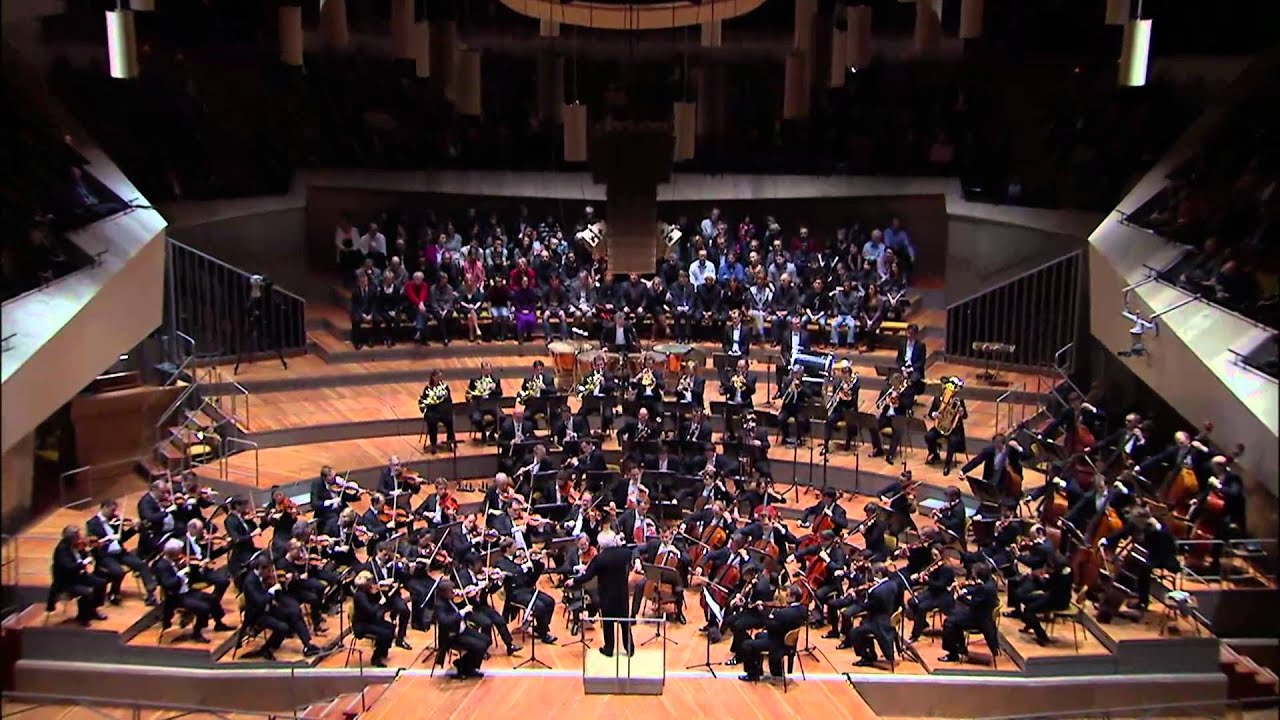
The last London concert for Rattle and the Berliners was a snap-shot of his life in Berlin.  Admirably championing newer music while accommodating the traditional core repertoire of this famous orchestra in intelligent if not life-changing interpretations.

No sooner had the orchestra finished tuning when it launched into a jazzy theme and on rushed Rattle with stagey expressions of annoyance.  Then the "proper" music was started.  Only at the end does the jazzy music return and conductor walk off stage while the orchestra finishes.  All nicely done in this short new work from Jörg Widmann: Tanz auf dem Vulkan ("Dance on the Volcano").

Then it was the Polish composer Witold Lutoslawski's Third Symphony, premiered in 1983.  It is a very fine work structured around a repeated motif with clear references to the famous opening of Beethoven's Fifth Symphony.  This returns to divide up the sections of the 30 minute piece, many of which thrillingly use "aleatory" writing where the players have freedom to play their sections at their own speeds.  It all culminates in an almost tonal climax of considerable emotion.  The performance was of great poise, clarity and virtuosity.

Johannes Brahms
And then to Brahms, his first symphony certainly not his best but whose outer movements pack a great emotional punch.  From the start the refinement of the orchestral sound was glorious, the strings very weighty and built from the double basses up in classic Brahmsian fashion.  Were the strings a little too numerous?  Perhaps at times they seemed to overpower the woodwind.  And then there was a developing concern that it was all a little rounded and cultured, albeit in a super-refined way. 


But no, we had simply been set up for the coda, the whole concert waiting for the final minutes when we were taken to another level and treated to a truly extraordinary sound: blended, bronzed and with seemingly infinite reserves of tonal depth and sonority.  It was engulfing, uplifting and more than a little awe-inspiring.  Thank you Berliner Philharmoniker.
Sinon Rattle and the Berliner Philharmoniker

Monday, 15 May 2017

Respighi from the Orchestra of Santa Cecilia

Rossini: Overture, The Siege of Corinth
Tchaikovsky: Piano Concerto No.1
Respighi: Fountains of Rome; Pines of Rome 
Orchestra of Santa Cecilia Rome
Sir Antonio Pappano conductor
Yuja Wang piano
Royal Festival Hall, London, 11 May 2017
******************
Antonio Pappano's Santa Cecilia orchestra has been making its mark on the international scene in recent years, but the orchestra's history goes back over a century to 1908.  Its string sound is on the lean side but with plenty of texture; a natural platform for an outstanding set of woodwind soloists.  The repertoire was focused on Italy, with a Rossini overture to start (always welcome) and the better two of the Roman Tryptich of Respighi.  This orchestra has special claims to these pieces having premiered them both in the early twentieth century.  It is highly pictorial music, from its depictions of flowing water to the moods of dawn and dusk.  There was no doubting the sensitivity of Pappano's approach and the superb contributions of his woodwind.  For the ground-pounding conclusion with the Roman Legions marching in triumph into Rome, Pappano stationed the brass high around the hall for extra surround sound effect.  A cinematic touch for the music that launched a thousand movie soundtracks.
 
Antonio Pappano conducts the Santa Cecilia Orchestra

A wonderfully withdrawn Valse Triste of Sibelius led into Rossini concluding the evening with the second encore of the William Tell overture.

Earlier, Yuja Wang had displayed all her supersonic piano technique in the Tchaikovsky piano concerto.  Tchaikovsky wrote a notoriously episodic concerto, and Pappano and Wang did nothing to fix that particular problem.  All moments were given their full indulgence, whether rapt reflection or thunderous attack.  Anything resembling an onward musical flow was lost, from which the big loser was the conclusion of the first movement which was stripped of all majesty and became yet another moment of display.  As so often the second movement fared well and Wang was genuinely thrilling in the finale.  The encores were memorable: a very fine Schubert/Liszt Gretchen at the Spinning Wheel, and then the jazzed up hyper-virtuoso version of Mozart's Rondo all Turca was a show stopper for which an inevitable ovation followed.

Sunday, 5 February 2017

Martha Argerich: supreme musician

Aram Khachaturian: Adagio of Spartacus and Phrygia, Dance of the Gaditanian Maidens and Victory of Spartacus, Spartacus, Suite No.1 & 2.
Sergey Prokofiev: Piano Concerto No.3
Dmitry Shostakovich: Symphony No.5 in D minor

St Petersburg Philharmonic Orchestra
Yuri Temirkanov, conductor
Martha Argerich, piano

Royal Festival Hall, London,
*****************

This spectacular concert offered Russia's pre-eminent orchestra playing a Shostakovich symphony which it premiered in 1937. If that was not enough, they were joined by the legendary Martha Argerich for the Prokofiev Third Concerto - a work which no-one on the planet plays better. 
Martha Argerich, then.  Photo: Priska Ketterer
Unlike some other ageing virtuosi, Argerich remains in magnificent shape.  Now in her 70s, her fingers retain their steel and how her hands flicker and flash over the keys.  Her musicianship can genuinely be described as a wonder - instinctive, in the moment, of the greatest sensitivity and alive to every nuance in the score and the musicians around her. 

Her Prokofiev is close to an ideal with its power, lyricism and subtlety.  One example can suffice: in the last moment after the orchestra blooms into a lush melody Prokofiev "steps on the throat of his own song" as the piano enters with a mysterious and pointedly sarcastic interlude.  What introspection and shades of colour Argerich provided here: mesmerising. 
Martha Argerich, now.  Photo: Neumeister

Such is Argerich's reputation for cancellations the packed Hall was cheering as she came on stage.  Famous pianists abounded in the audience,  Nikolai Lugansky and Stephen Kovacevich among them. At the end all were on their feet.  Taking her bows, and afterwards backstage, she seemed more relaxed than in years past.  We were treated to Liszt's arrangement of Schumann's song Widmung as an encore.  

After the interval, the St Petersburgh gave a powerful Shostakovich Fifth.  It was a broad interpretation from Temirkanov, lacking the last ounce of intensity from where I was sitting.  The pay off came in the third movement Largo which underlined the romantic underpinnings of this giant of 20th century music.  
Evgeny Mravinsky who conducted the premiere of Shostakovich's 5th Symphony, together with the composer.
It was left to the encore to display the full glory of the St Petersburgh strings, the conclusion of Prokofiev's Cinderella ballet showing off a bottomless tonal depth to the sound.  Quite awesome and a fitting conclusion to a most memorable afternoon.
The St Petersburgh Philharmonic at home.

Saturday, 28 January 2017

Jurowski keeps his nerve amidst uneven Fidelio

Beethoven : Fidelio (Semi-staged, with an English narration)
 
Anja Kampe, Leonore
Ben Johnson, Jaquino
Kristinn Sigmundsson, Rocco
Pavlo Hunka, Don Pizarro
Robert Dean Smith, Florestan
Ronan Collett, Don Fernando
Sofia Fomina, Woglinde

Simon Williams, narrator
Helen Ryan, narrator
Daniel Slater, director 

Vladimir Jurowski, conductor
London Philharmonic Orchestra
London Voices

21 January 2017, Royal Festival Hall, London
*****************

As ever with this opera, Beethoven's massive musical strength and belief in his message trumped all limitations.  The final choral frenzy fairly blazed with joy and hope as the London Voices lined up at the front with the soloists.

There was more than a little relief that we'd made it.  At the end of Act 1, the audience had witnessed an opera presented as a rehearsal with faux-relaxed soloists sprawled behind the orchestra and the director on stage giving instructions.  The orchestra was in civvies with Jurowski sitting on the floor as the auditorium filled up. The message seemed to be, these people are just like us. And indeed, the 1st Act is primarily domestic melodrama, with an underlying dramatic tension provided be Leonore's presence in disguise as a boy, searching for her husband. 

Vladimir Jurowski
More disturbingly, two narrators hovered, offering reflective commentary on the action and the character's psychological states.  It might have worked. After all Bach used a similar effect in the St Matthew Passion, and Fidelio has more than a passing resemblance to an oratorio.  Others have gone down this track before, notably I saw a spectacular Fidelio at the Proms with an Edward Said penned commentary.


But not with the half-baked philosophy of the text this time around, and the night's increasingly shambolic delivery by the narrators.  Was that the silliest thing I just heard on the Festival Hall stage, or did the actor just mess up her line? Pizzaro didn't get enough love as a child.  He was a forerunner of Stalin and Eichmann.  Even a random quote from Tertullian. 

Thankfully the splendid musical virtues of the evening could not be obscured, particularly in Act 2 when all on stage returned with more formal dress and presentation in keeping with the opera's turn to the serious.  Jurowski directed a taut and edgy Act 2 overture and turned up the heat even more for the finale.  Kristinn Sigmundsson's towering presence as Rocco was, more than usual, the fulcrum of the drama and Robert Dean Smith, stepping in at late notice, a subtle Florestan even if a bit tight of voice.

And there was Anja Kampe, the most committed of soloists.  Her every London appearance is a pleasure and her Leonore was unmissable, even if she occasionally strained at the top of her register.  She was every inch the hero of the opera.
Anja Kampe

This was the first concert in a Southbank series "Belief and Beyond Belief".  Jurowski wanted to start with a humanist masterpiece rather than an explicitly religious one.  He and director marked out Hope as the focus of the piece. Who could disagree, and we all need a bit of that in today's world. 

Saturday, 15 October 2016

B list Philharmonia

Richard Wagner: Overture, Die Meistersinger von Nürnberg
Sergey Rachmaninov: Piano Concerto No.2 
Gustav Holst: The Planets

Philharmonia Orchestra
Damian Iorio conductor
Ronan O'Hora piano
City of London Choir

14 October 2016, Royal Festival Hall, London
*******************

The story goes that the Royal Philharmonic Orchestra reached its nadir a decade or so back when it was performing on the same night in London and Manchester.   The Philharmonia is hardly in crisis, but lends its name and a B list to evenings such as this.

While it's off the books of its official season, nothing was disastrous, or memorable, from this Philharmonia Orchestra.  A general adequacy prevailed.  Its counterpart was an audience of insistent applauders, destroying every atmospheric coda, and presumably as welcome as an internet troll for the conductor.

In many ways the Wagner was the most cogent performance of the evening.  The Rachmaninov featured a fluid soloist in Ronan O'Hora, and an unwelcome star performance from an alarmingly loud clarinet in the Adagio.  The clarinet threatened to overwhelm our unpreposessing pianist - surely a Rachmaninov first.  But it could not spoil a movement in which O'Hora bewitched an audience otherwise prone to distraction.   


Holst's The Planets could not help but engage, with Saturn particularly finely done.  But orchestral balance was a constant problem for conductor Damian Iorio.  The conclusion of Mars was white noise plus timpani.  Jupiter was jolly, and unwieldy.

Bizarrely, tickets for this were more expensive than the real Philharmonia concerts.  So if no musical memories will linger, I can feel a charitable donation has been made to the orchestra's balance sheet for the year.  

Monday, 25 April 2016

Karita Mattila a knockout in Janáček

Leos Janáček: Jenůfa – opera (1904)

Adriana Kohútková soprano, Jenufa
Karita Mattila soprano, Kostelnicka Buryjovka
Jaroslav Brezina tenor, Steva Buryja
Ales Briscein tenor, Laca Klemen
Svatopluk Sem baritone, Stárek (foreman)
Yvona Skvárová mezzo-soprano, Starenka Buryjovka (grandmother)
Lucie Silkenová mezzo-soprano, Karolka
Ludek Vele bass, Rychtár (mayor)
Jana Hrochová mezzo-soprano, Rychtárka (mayor's wife)
Marta Reichelová soprano, Jano
Katerina Jalovcová mezzo-soprano, Pastuchyna (herdswoman)
Katerina Kneziková soprano, Barena (servant girl)
Czech Philharmonic Choir Brno
Czech Philharmonic
Jirí Bélohlávek conductor
 

Royal Festival Hall, London, 18 April 2016
****************

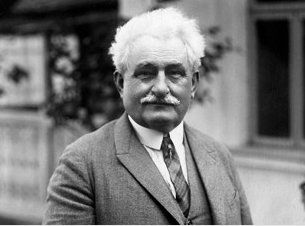
Leos Janacek
How well the music comes to life in these concert performances.  Janacek composed a vivid score for this dark tale of love, death and winter set in a Moravian village.  It is equal parts dramatic and lyrical and Behohlavek ensured both were given their due.  The Czech Philharmonic were in fine form projecting detail throughout and careful not to overwhelm the singers in the big moments. 

There was drama in the casting.  Adriana Kohutkova sang Jenufa, and excellently.  However at her side was one of the role's most famous exponents - Karita Mattila - but now singing the role of the Kostelnicka (step-mother).  Mattila was in full diva mode, not even acknowledging Kohutkova sitting next to her.  The central vocal quartet was completed by the strong voices of Jaroslav Brezina as the cynical Steva and the fine mix of yearning and discomfort of Ales Briscein's Laca.
Karita Mattila

In Act 1 the lyrical approach of the Czech's paid full dividends as the delightfully characterful writing came shining through.  In music in which idiomatic Czech language is essential, the Brno choir were ideal.

Mattila has a fabulous voice with a penetrating quality and a tone like stretched silk.   Presumably the role is still new to her as she was buried in the score at times.  But my goodness how she flattened the hall with the big Act 2 moments.  Having horribly drowned the child of Jenufa, she was totally compelling as the winter winds blew into the room, personal and moral anguish overwhelmed her and she felt the "icy hand of death, tearing at my heart".

Amid such emotion one forgave some irritations.  Non-existent or incomprehensible surtitles, and a curious reluctance for singers to relate to each other on even a basic level when the plot asked for it.  By the end Laca and Jenufa were finally making eye contact, as some happiness in the story was at last achieved.

Tuesday, 2 June 2015

Brahms from Budapest

Wolfgang Amadeus Mozart: Overture, The Magic Flute 
Wolfgang Amadeus Mozart: Piano Concerto No.9 in E flat, K.271 
Johannes Brahms: Symphony No.1

Budapest Festival Orchestra 
Iván Fischer conductor 
Maria João Pires piano

Royal Festival Hall, London, 20 May 2015
*******************


Maria Joao Pires
This fantastic orchestra again brought an enormously cultured and intelligent programme to London’s Royal Festival Hall.

The opening Magic Flute overture of Mozart set the bar high.  The interpretation was detailed and well prepared.  Phrases were rounded with care, and sonorities were rich without losing the essential lightness of touch that this work requires.

With Maria Joao Pires as soloist in the Mozart 9th concerto there was never going to be a turn towards heaviness after the overture.  Pires draws you in, her simplicity of utterance feeling almost radical. In the chamber-like interplay between soloist and orchestra in the last movement Pires and Fisher were in their element; fine musicians, totally engaged in the score.  Her luminous encore from Schumann's Waldszenen rounded off her performance in true Pires fashion: eloquent, humble, haunting.

If one was to have any doubts about the exalted nature of the evening, it was the Brahms First Symphony that provided them.  Fisher and the Budapest players have a thoroughly considered view of this score.  Each phrase and detail was placed within an overall arc to the interpretation.  These are the kind of qualities you get from a Mariss Jansons or Krystian Zimerman also.  However there was a nagging suspicion that for all its sonic beauty and sculpted phrases and paragraphs, the last movement lacked a sense of abandonment when required.  Can surging excitement in music be so carefully prepared?

The encore was just wonderful.  The musicians put down their instruments and began to swap positions.  It then became clear the men and women were dividing into two halves standing around the conductor’s podium.  Fisher then directed the orchestra – now a choir – in an a capella Brahms motet.  The Budapest Festival Orchestra never fail to delight.

Monday, 27 April 2015

Argerich and Barenboim - a golden duo

Ludwig van Beethoven: Piano Concerto No.1
Richard Strauss: Ein Heldenleben

Staatskapelle Berlin 
Daniel Barenboim conductor 
Martha Argerich piano

20 April 2015, Royal Festival Hall, London
***************

A concert featuring Martha Argerich and Daniel Barenboim?  Who could resist?  And with Stephen Kovacevich in the audience there were at least three master pianists at the Royal Festival Hall on the night.  This concert was burdened with the highest expectations, but for those who had travelled from far and wide to attend there was to be no disappointment.

The Beethoven First Piano Concerto commenced with the most hushed of openings from the excellent Berlin Staatskapelle, before blooming into a wonderful tutti.  The golden string section rippling attractively without over-romanticisation.  This classical approach was taken up by Argerich and a totally engaging performance developed.  Martha Argerich is probably incapable of being dull.  The subtle variation and weighting of passages, the crystalline attack on notes and chords, were sublime.
 

And the musicianship needed to be of a top level. The interpretation was daringly broad, at times almost static, but saved by the massive artistic command of the musicians and the sheer delight of the musicality of the performance.  How exquisite to hear such interplay, the free flowing meeting of musical minds.
 

That the performance was met with an ovation was perhaps to be expected.  What followed was not.  Out came an extra piano stool and Barenboim and Argerich proceeded to give a thoroughly leisurely account of Schubert’s Rondo for piano 4 hands.  The two pianists sat close together at the piano across almost 10 minutes of golden melody.  Unforgettable.
 

The Berlin Staatskapelle rounded off the evening with a very fine account of Strauss’ Ein Heldenleben.  The concertmaster was the most relaxed of violin soloists depicting the Hero’s wife, and Barenboim coaxed a satisfying shape and sonority to the quasi-Wagnerian conclusion.

Saturday, 11 October 2014

Karl-Heinz Steffens a more than capable replacement

Beethoven Leonore Overture No. 3
Mendelssohn Violin Concerto
Beethoven Symphony No. 5 in C Minor

Karl-Heinz Steffens conductor
Frank Peter Zimmermann violin
Philharmonia Orchestra


Royal Festival Hall, London, 2 October 2014 
*****************

This was to have been the 85th birthday concert for Christoph von Dohnanyi.  He was the Philharmonia Orchestra's Principal Conductor for ten years from 1997, before being appointed Honorary Conductor for Life.  Alas, ill health forced his withdrawal just days before and Karl-Heinz Steffens stepped in.  A new name for me, he was the Berliner Philharmoniker's chief clarinet for many years before taking to the podium in 2007.

Steffens brought a robust and high-spirited approach to the podium.  Clearly revelling in the triumphant moments, a little less willing to let the more lyrical elements breath.  His sense of pacing was unerring throughout, even if the famous Beethoven Fifth did not create any moments of real magic.

Karl-Heinz Steffens

Frank Peter Zimmerman was as usual a superb soloist.  This was not the lightest or fastest of readings, but he was particularly concerned to bring out the "vertical" elements of the score when the violin part is built out of the orchestral score.  Very satisfying and representative of a highly intelligent evening of music-making.

Sunday, 23 March 2014

Skrowaczewski's Bruckner at 90

Felix Mendelssohn: Violin Concerto 
Anton Bruckner: Symphony No.3 (vers. 1888-9, ed. Novak)

London Philharmonic Orchestra 
Stanislaw Skrowaczewski conductor 
Benjamin Beilman violin

Royal Festival Hall, London, 14 March 2014
*******************
Stanislaw Skrowaczewski

Like great wine, great conductors frequently reveal new layers of musicianship later in life.  Stanislaw Skrowaczewski turned 90 last year and has spent a lifetime learning his Bruckner; the last time I saw him conduct was 20 years ago and also in the Bruckner 3rd Symphony.  This was a memorable evening at the Festival Hall.

We were clearly in safe hands from the start of the Bruckner.  A composer as well as conductor, Skrowaczewski shaped phrases
with calm assurance.  His is an unhurried style, unafraid of that distinctively Brucknerian symphonic punctuation.  Neither does he overheat.  The Third was allowed to build logically without exaggerated dynamics and the heavy underlining that drive many a "super-cosmic" interpretation. 


The London Philharmonic were solid partners, albeit not anyone's first choice in this repertoire. The brass were strong but over-bright and the strings lacking that extra depth of strength and tone.  Indeed a glance towards the back decks of the violins revealed some timid bowing and heads buried in scores. 

Earlier, 24 year old Benjamin Beilman had thrown into relief Skrowaczewski's 90 years.  He gave a strong, direct and muscular reading of Mendelssohn's wonder concerto for violin.  He has real poise which communicated best in the Andante.  It was left to the conducter again here to draw out some luminous moments from the woodwind.  90 and going strong.

Tuesday, 25 February 2014

Kalinnikov shines again with the LPO

Balakirev Islamey (Oriental Fantasy)
Khachaturian Piano Concerto
Kalinnikov Symphony No. 1

Osmo Vänskä conductor
Marc-André Hamelin piano
London Philharmonic Orchestra

19 February 2014, Royal Festival Hall, London
********************

The evening opened with the rather depressing sounds of Alfredo Casella’s arrangement for orchestra of Balakirev’s Islamey.  The original work is the piano show-piece par excellence and brims with rhythmic elan.  The Casella version smudged all the impact with minimal benefit from so-called “orchestral colour”.  The London Philharmonic were nowhere near drilled enough to save it.

No-one could accuse Marc-Andre Hamelin of lack of clarity.  His steely fingers and bright tonal palette dazzled in the Kachaturian Piano Concerto.  Hamelin of course knows no fears when it comes to the virtuoso concerto repertoire, whether established or obscure.  These days the Kachaturian concerto hovers somewhere between the two.  The intelligence of this performance could not alleviate its moments of bombast, nor the impression that Prokofiev might have somehow stolen the manuscript and inserted some of his own writing while Kachaturian wasn’t looking.  Somehow it did not convince.  And this may be partly because, for all his prodigious piano technique, Hamelin plays with a detached, “objective” virtuosity.


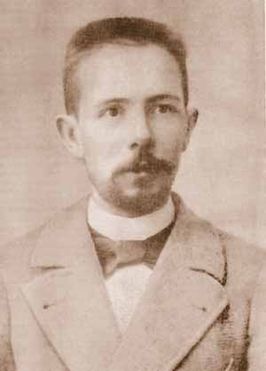
Vasily Kalinnikov
But the evening took flight after the interval.  This was my first encounter with the First Symphony of Vasily Kalinnikov and what a very fine work it is.  Completed in the Crimea in 1896 when he was 30 , it was immediately picked up and performed in Kiev, Moscow, Vienna, Berlin and Paris. Sadly, Kalinnikov’s health was fragile and he died at age 35, leaving behind a reputation as one of the great unfulfilled talents of Russian music.

This reputation largely stands on the Symphony No. 1 which is a constant delight to the ear from start to finish. Vanska and the LPO made an excellent case for the work, which bursts with melody handled with grace and subtlety.  The opening of the Andante is musical magic, with a lightness and purity that took the breath away.  The freshness and youthful yearning of the symphony is enormously attractive. As if a Russian Schumann was at work.  But one who could orchestrate.

Saturday, 12 October 2013

Wilfred Owen's poetry silences the Festival Hall

Benjamin Britten: War Requiem (1962)

London Philharmonic Orchestra 
Vladimir Jurowski conductor 
Evelina Dobraceva soprano 
Ian Bostridge tenor 
Matthias Goerne baritone 
Neville Creed conductor (chamber orchestra) 
London Philharmonic Choir 
Trinity Boys Choir

Royal Festival Hall, London 12 October 2013

*****************
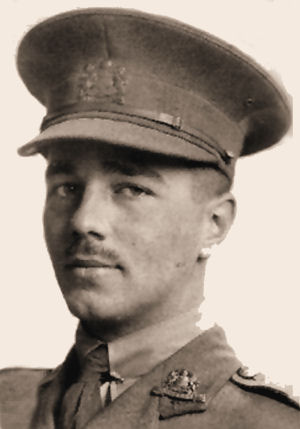
Wilfred Owen

A solid evening's work from the LPO under Jurowski, even if it was not as searing as might have been expected.  On a first hearing, there was a nagging feeling this work is not more than the sum of its undeniably impressive parts.

There was much to admire, led by Wilfred Owen's moving First World War poetry which Britten ingeniously intersperses throughout the Latin Requiem mass.  In the Offertorium there was this stunning undercutting of the Biblical story of the sacrifice of Abram's son:

Then Abram bound the youth with belts and straps,
And builded parapets and trenches there,
And stretched forth the knife to slay his son.
When lo! an angel called him out of heaven,
Saying, Lay not thy hand upon the lad,
Neither do anything to him. Behold,
A ram, caught in a thicket by its horns;
Offer the Ram of Pride instead of him.

But the old man would not so,
but slew his son, -
And half the seed of Europe, one by one.


Very fine indeed were the two poetry soloists Ian Bostridge and Matthias Goerne, with Bostridge leading with his plangent voice and compelling fusion of melody and word. Vladimir Jurowski and Neville Creed directed with clarity and feeling.  Elsewhere the LPO chorus were well balanced without really taking flight, while the off-stage boys choir were virtually inaudible at critical moments.

It was left to Bostridge (unforgettable in "Move him into the sun..." and the Agnus Dei) and Goerne to deliver the high points, not least in the closing of the Libera Me and its call to sleep.  This work delivers a powerful message of pacifism and Jurowski might have held the final silence for longer than the 20 seconds he chose.

Wilfred Owen's poem "Strange Meeting" featured in the Libera Me 


Sunday, 6 October 2013

Vitality and verve from Orchestra Mozart

Beethoven: Leonora Overture No. 2, Op. 72a
Beethoven: Piano Concerto No. 2 in B flat, Op. 19
Beethoven: Symphony No. 4 in B flat, Op. 60


Orchestra Mozart

Bernard Haitink, conductor
Maria Joao Pires, piano

Bernard Haitink

Royal Festival Hall, London, 1 October 2013
***************

In the end Artistic Director Claudio Abbado was not able to join the Orchestra Mozart due to health concerns.  But impressive back-up came from the equally fine conductor Bernard Haitink and a splendid partner in soloist Maria Joao Pires.

This concert was a bizarrely managed bit of scheduling by London's Southbank Centre in which only the presence of Orchestra Mozart itself was a constant.  It started with an attractive Haydn/Mozart/Beethoven programme which then became all-Beethoven.  Then Pires dropped out as soloist to be replaced by Martha Argerich.  Abbado was subsequently forced to cancel his concerts for 2 months, including a tour of Japan.  Argerich simultaneously cancelled and Haitink stepped in at short notice with the suddenly available again Pires.

Orchestra Mozart is a chamber ensemble formed in 2004.  With Abbado as Artistic Director and Diego Matheuz as Principal Guest Conductor (he recently took up the same position with the Melbourne Symphony) it does not want for star conductors.  No doubt with this influence it also plays with the front rank of today's soloists.  And among its own ranks are some famous names such as Wolfram Christ, previously principal viola with the Berlin Philharmonic Orchestra.
Wolfram Christ


Pires, a gold standard these days in the classical piano concerti, was in vintage form in the Beethoven Second Piano Concerto after a slightly hard edged start.  Her finely pitched delivery of the hanging notes at the close of the slow movement was mesmerising.  


With youth and technical prowess combined, the Orchestra Mozart strings brought great verve and vigour to their playing, not least in a thrilling Egmont Overture served as an encore.  The woodwind added fine individuality in their contributions to leave only an overall sense that the darker aspects of the works were slightly underplayed.  However the sunny Fourth Symphony was a delight from beginning to end, and there was no want of drama and heroic Beethovenian struggle in the overtures that book-ended the concert and which Haitink shaped with a sure hand.  This season is Haitink’s 60th as conductor, during which he will turn 85.  Long may orchestras benefit from his wisdom. 

Pianist Maria Joao Pires

Martha Argerich - not available