Showing posts with label London Symphony Orchestra. Show all posts

Saturday, 25 November 2017

Rattle champions Haydn

Wagner Prelude and Liebestod from Tristan and Isolde
Bartok Piano Concerto No. 2
Haydn An imaginary orchestral journey

London Symphony Orchestra
Denis Kozhukhin, piano
Simon Rattle, conductor

Barbican Hall, London 11 July 2017
****************
Simon Rattle’s commitment to Haydn’s genius produced a memorable Barbican night.  For him this was a reprise of a concert in Berlin stringing together movements from various Haydn works into “An Imaginary Orchestral Journey”.  This type of thing has also been successfully done to Rameau by Marc Minkowski.
The Esterhazy Palace, Haydn's long-term home


As well as giving a more prominent platform for part of the “7 Last Words of Christ”, Symphonies 64, 6, 46, 60, 45, and 90 were excerpted as well as The Creation, The Seasons and the obscure L'Isola Disabitata. There was some lovely moments of fantasy, not least when the little known mechanical organ took centre stage.  Haydn wrote 17 pieces for mechanical organs, one of which was featured here before Rattle paused proceedings to listen to these little constructions being broadcast unadulterated from various locations around the Barbican Hall. Somehow both arch and evocative all at the same time.
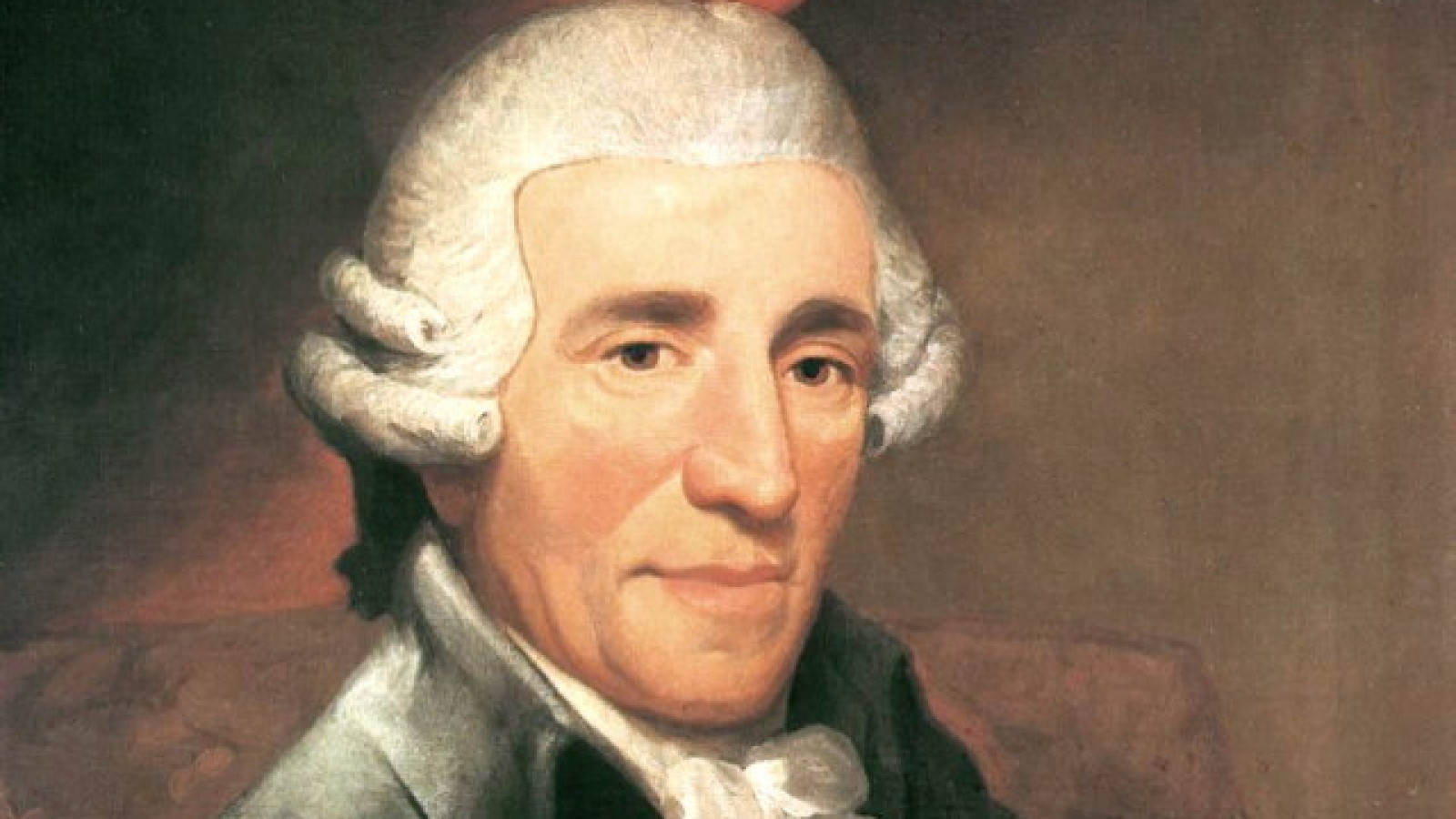
Joseph Haydn


Saturday, 25 February 2017

Jonas Kaufmann's Die Walküre

Richard Wagner
Prelude to Tristan und Isolde
Wesendock
Lieder
Act I from Die Walküre 

Jonas Kaufmann tenor
London Symphony Orchestra
Jonas Kaufmann
Antonio Pappano conductor
Karita Mattila soprano
Eric Halfvarson bass

Barbican Hall, London, 8 February 2017
*******************

Jonas Kaufmann's Barbican residency across 4 concerts continued with a much-anticipated Wagner evening.  And it was inevitably the Walkure First Act that dominated proceedings. 

For this he was joined by the no less formidable Karita Mattila as well as Pappano leading the LSO.  The LSO threw us into a most vivid storm after which we heard Kaufmannn's Siegmund emerge.  This was sophisticated Wagner, marked by an intensely lyrical line.  How glorious to hear the role properly sung, rather than shouted.  Wintersturme never sounded more beautiful.

The down-side was that a truly heroic impact was missing from the closing pages of this wonderful slow-burner of an Act. For some true Wagnerian abandon one had to turn to Mattila.  She was less in control, more squally, but delivered an authentic emotional punch.  Standing next to her, both in physical and vocal gesture, Kaufmann gave the impression of pacing himself and guarding his voice for the concerts to come.  That said, the cries of Walse, Walse were thrillingly sustained.

For the evening's complete performance Eric Halfvarson's Hunding was surely as close to ideal as it is possible to hope for.  From cracking bottom notes to physical menace he dominated everything he did.  Not even the weird placement of Pappano directly between him and the other two soloists could spoil the dramatic effect.

Pappano may not be a master of the long line, but the LSO built up a great head of steam in the exhilarating conclusion. Could someone not have set up the singers a more comfortable distance from his podium and those arms so frequently whirling like windmills?   In the first half, the Tristan Prelude did not catch fire but the Wesendonk Lieder again showed off the fine, lyrical beauty of Kaufmann's sophisticated tenor voice.  

Karita Mattila


Monday, 25 January 2016

Francois-Xavier Roth conducts Wagner, Berg, Mahler

Richard Wagner  Prelude to Act 1, Parsifal
Alban Berg  Seven Early Songs
Gustav Mahler  Symphony No. 5
 
London Symphony Orchestra
Camilla Tilling soprano
Francois-Xavier Roth conductor

Barbican Hall, London 21 January 2016

**************** 

"After Romanticism" was the title of the concert, and certainly in the resonance-free acoustic of London's Barbican Hall, Parsifal had never sounded so abstract and modern.  Wagner's long musical lines of religious mysticism stepped abruptly into silence.  Not for the first time the excellence of the LSO strings was striking. 
Francois-Xavier Roth

Berg followed, the words vividly interpreted by soprano Camilla Tilling even if she rarely projected her voice far into the hall.  And then to Mahler after the interval.  Roth writes of this period of the end of the 19th and start of 20th centuries fascinating him and throughout this reading he seemed intent on emphasising the strangeness of Mahler's new sound world.  Written in 1901-2 this sprawling masterwork baffled contemporaries and Roth was inviting us back into that jarring first encounter.  

Organic dimensions were recessed and the sheer weirdness of the orchestration at for example the close of the second movement, was striking.  This is a personal favourite amongst Mahler's uneven symphonic output, but I found myself with sacrilegious thoughts.  Surely 10 minutes could be cut from the Scherzo and not be missed?  Does the finale really work, and doesn't it also carry a lot of fat?  

At the crucial adagietto, it was all a bit calculating for this love poem.  At the climax Roth's baton-less hands flailed at the air, part Stokowski, part claws.  It was a visual counterpart to a moment that wanted a more delicate approach. 

So a night of mixed results.  But Roth is clearly a conductor of strong ideas, and with the LSO strings on majestic form this night will linger in the mind.

Friday, 14 November 2014

Siberian bear tames Barbican

BALAKIREV Russia
RACHMANINOV Piano Concerto No 2
RACHMANINOV Symphony No 3


Valery Gergiev conductor
Denis Matsuev piano
London Symphony Orchestra


Barbican Hall, London, 13 N0vember 2014

***************

'The Siberian bear with the fastest paws in the Arctic and perhaps anywhere else'.  This is the quote Denis Matsuev's publicity used in advance of the night.  It's the kind of circus copy that Debussy lampooned:

"The attraction of the virtuoso for the public is very like that of the circus for the crowd. There is always a hope that something dangerous may happen: Mr. X may play the violin with Mr. Y on his shoulders; or Mr. Z may conclude his piece by lifting the piano with his teeth."

Matsuev does not need it really because his partnership with Valery Gergiev and the London Symphony Orchestra in Rachmaninov's 2nd Piano Concerto was exceptional.   Matsuev was in total command, his style virile and assertive, but the weighting also well graduated. 
His tone is big and what a pleasure to hear the piano part rippling with such muscularity against the orchestra at full volume.  The interpretation felt totally authentic and committed, and the LSO responded with warmth and virtuosity. 

The whole thing was an unalloyed joy.  A performance well in the Argerich or, dare this blog say it, Richter category.  He received tumultuous applause afterwards, which was rewarded with a very expansive Rachmaninov A minor Etude-Tableau Opus 39/2.

This was framed by a potpourri of Russian themes from Balakirev, and the late Third Symphony of Rachmaninov.  Was it that it was heard during the aftershock of Matsuev, or is this late statement from a tiring composer simply not very good?

Friday, 22 November 2013

Barbican audience eavesdrop on LSO rehearsal

Berlioz Romeo and Juliet

Olga Borodina mezzo-soprano
Kenneth Tarver tenor
Evgeny Nikitin bass-baritone
London Symphony Chorus
London Symphony Orchestra

Valery Gergiev conductor


13 November 2013, Barbican Hall, London
************

Valery Gergiev is taking his London Symphony Orchestra for another dash through a chunk of repertoire.  This time it's Berlioz for the Gergievation, with over three nights reeling off concerts featuring Harold in Italy, Romeo et Juliette and the Symphonie Fantastique respectively.

Valery Gergiev
No, wait.  It's better than that.  Try this for an early November all-Berlioz schedule:
6th: Romeo and Juliet at London's Barbican
7th: The Damnation of Faust at Barbican
8th: Symphonie Fantastique at Brno, Czech Republic
9th: Symphonie Fantastique at St Poelten, Austria
10th: Symphonie Fantastique at Essen, Germany
11th: rest day (phew!)
12th: Harold in Italy at Barbican
13th: Romeo and Juliet again at Barbican
14th: Symphonie Fantastique at Barbican
15th: rest day
16th: Symphonie Fantastique in Paris
17th: Romeo and Juliet in Paris

Does this make for good music making?  Maybe by the time they get to Paris on the evidence of this performance.  I was trying them out with the second performance of Berlioz's magnificent Romeo and Juliet at the Barbican.  As is well known, Berlioz adored Shakespeare.  His response to Romeo and Juliet was as original as it was successful.  He called it a symphony and it is the central orchestral movements that carry the main weight fo protraying the play.  Feeling it pointless to try and set chunks of dialogue to music he framed the work in a vocal prologue and finale for chorus and two soloists.

Having recently heard Beethovenian Brahms now it was the turn to hear Berlioz under the Beethoven influence.  And what great writing this is.  Successive orchestral sections on the Capulet Ball, Balcony Scene, Queen Mab, Juliet's Funeral Convoy and finally Romeo at the Capulet's Tomb.


Olga Borodina
Olga Borodina left one wanting more of her luxury voice and Kenneth Tarver handled  his Queen Mab solo with an ideal feather-light touch.  Evgeny Nikitin by contrast sounded a little out of his comfort zone but the choruses were generally excellent.

With the stage draped in microphones for the planned disc from these concerts, was Gergiev's attitude to balance more thinking of the recording than the live performance?  At the gorgeous bursting forth as the small chorus describes the Balcony Scene in the Prologue, the orchestra completely swamped the voices.  A major failing for those of us in the hall, but easily fixed at the mixing desk later. 

What a curious evening's music making this was.  Gergiev's legendary grip only revealed itself in a riveting performance of Juliet's Funeral Convoy.  But for the most part it felt tentative; part final rehearsal, part public concert, part studio recording session.  How Chailly's recent super-prepared Brahms contrasted with this work-in-progress Berlioz.  

Wednesday, 22 August 2012

Prom 52 - Cinderella complete at Proms for first (and last?) time

Prokofiev: Cinderella - complete ballet (1945)
London Symphony Orchestra
Valery Gergiev conductor

22 August 2012, Royal Albert Hall, London
******************

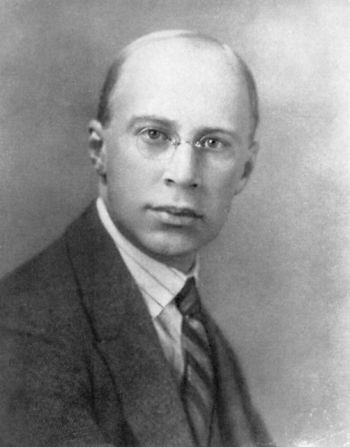
Sergei Prokofiev
A concert performance of an evening-length ballet is normally enough to set you running for the hills.  But if the ballet is by Prokofiev or Tchaikovsky then it is an entirely different matter.  And if Valery Gergiev is conducting then we have grown accustomed to it being a highlight of the festival.

Valery Gergiev
Gergiev brought his London Symphony Orchestra to the summer Proms festival in the middle of a mini-European tour together.  16 - 19 August saw them performing 4 nights at the Edinburgh Festival in a complete Brahms and Szymanowski symphonies cycle that will be repeated in London in the coming Barbican season.  After tonight's Cinderella, they play 3 consecutive nights at Festivals in Salzburg and Lucerne.  The LSO then heads off to play with other conductors while Gergiev continues onto Stockholm direct for 3 more nights, then returns to the Edinburgh Festival with the Mariinsky for several more nights to round off August.  As it happens conducting Cinderella again.

Such are the schedules of the summer festivals, but what of tonight?  Could they pull a Cinderella without dancers off?  In a word, no. Cinderella is a delightful score and contains some of the greatest moments in Prokofiev's output, such as the stunning midnight clock music and the Act 1 waltz.  Prokofiev's enormous melodic gift combined with his edgy modernism provides the alchemy that lifts this ballet out of the ordinary.  But it does not have the long dramatic lines that Romeo or Sleeping Beauty have and the first Act in particular suffers greatly without the visual dimension, much of it full of sardonic humour as Cinderella's two stepsisters Skinny and Dumpy quarrel.

So, with these artists it was never going to be less than a quality performance, but it did not scale the heights.  History would have told them that no one had done this ballet complete in concert at the Proms before.  Gennady Rozhdestvensky did conduct Act 2 complete once - a sounder choice.
 
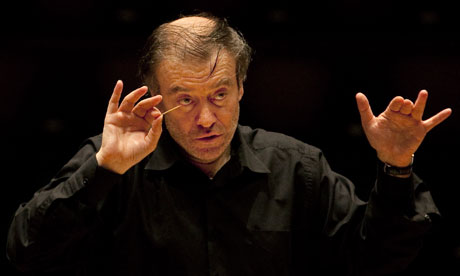
And I must comment on the toothpick.  I've grown accustomed to Gergiev directing orchestras without a baton; just his famous fluttering fingers.  He does sometimes use a full length baton.  But tonight he was using a thin 10cm long stick in his right hand.  Have the LSO complained they can't follow his beat?  After all which of the fluttering fingers is marking time?  In his toothpick, there was at least a (tiny) point for the players to focus on.

Peter O'Byrne