Showing posts with label London Philharmonic Orchestra. Show all posts

Saturday, 4 May 2019

Janine Jansen scales the heights

Brahms: Violin Concerto
Bruckner: Symphony No.3 (vers. 1877) 
London Philharmonic Orchestra
Vladimir Jurowski conductor
Janine Jansen violin


Royal Festival Hall, London, 3 May 2019
**********************
The concert was billed as "Alpine Journeys", but inevitably the Festival Hall allowed not a bit of mist to develop around all those Brucknerian ostinati.  Jurowski's Bruckner was controlled, sculpted and with that acoustic, not a bit abrupt. Some of this effect may have come from the 1877 version of the symphony presented here by Jurowski.  The last movement in particular had more flow in the later 1889 revision. 


The frenzies were quite ferocious in the Scherzo and Finale but the polkas and landlers had no spring to them, and overall the effect was a little too literal, if thrillingly exact.

The real vistas of the evening came from Janine Jansen's Brahms.  The Brahms Violin Concerto, in a neat bit of programming, was premiered in 1879 and so nearly contemporaneous with the Bruckner.  Jansen plays with real muscle but is distinguished by her responsiveness to the music her fellow musicians, and her ability to inflect rhythm and tone from note to note.  Her high lines are clear but delicate and the lightness of tone brought to mind Ravel in the midst of Brahms.  Now that marks out a master violinist.


Janine Jansen


Tuesday, 25 February 2014

Kalinnikov shines again with the LPO

Balakirev Islamey (Oriental Fantasy)
Khachaturian Piano Concerto
Kalinnikov Symphony No. 1

Osmo Vänskä conductor
Marc-André Hamelin piano
London Philharmonic Orchestra

19 February 2014, Royal Festival Hall, London
********************

The evening opened with the rather depressing sounds of Alfredo Casella’s arrangement for orchestra of Balakirev’s Islamey.  The original work is the piano show-piece par excellence and brims with rhythmic elan.  The Casella version smudged all the impact with minimal benefit from so-called “orchestral colour”.  The London Philharmonic were nowhere near drilled enough to save it.

No-one could accuse Marc-Andre Hamelin of lack of clarity.  His steely fingers and bright tonal palette dazzled in the Kachaturian Piano Concerto.  Hamelin of course knows no fears when it comes to the virtuoso concerto repertoire, whether established or obscure.  These days the Kachaturian concerto hovers somewhere between the two.  The intelligence of this performance could not alleviate its moments of bombast, nor the impression that Prokofiev might have somehow stolen the manuscript and inserted some of his own writing while Kachaturian wasn’t looking.  Somehow it did not convince.  And this may be partly because, for all his prodigious piano technique, Hamelin plays with a detached, “objective” virtuosity.


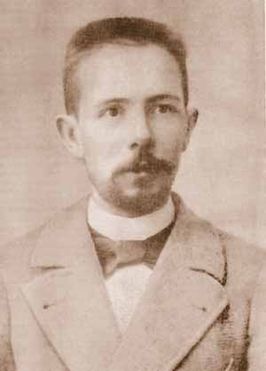
Vasily Kalinnikov
But the evening took flight after the interval.  This was my first encounter with the First Symphony of Vasily Kalinnikov and what a very fine work it is.  Completed in the Crimea in 1896 when he was 30 , it was immediately picked up and performed in Kiev, Moscow, Vienna, Berlin and Paris. Sadly, Kalinnikov’s health was fragile and he died at age 35, leaving behind a reputation as one of the great unfulfilled talents of Russian music.

This reputation largely stands on the Symphony No. 1 which is a constant delight to the ear from start to finish. Vanska and the LPO made an excellent case for the work, which bursts with melody handled with grace and subtlety.  The opening of the Andante is musical magic, with a lightness and purity that took the breath away.  The freshness and youthful yearning of the symphony is enormously attractive. As if a Russian Schumann was at work.  But one who could orchestrate.

Saturday, 12 October 2013

Wilfred Owen's poetry silences the Festival Hall

Benjamin Britten: War Requiem (1962)

London Philharmonic Orchestra 
Vladimir Jurowski conductor 
Evelina Dobraceva soprano 
Ian Bostridge tenor 
Matthias Goerne baritone 
Neville Creed conductor (chamber orchestra) 
London Philharmonic Choir 
Trinity Boys Choir

Royal Festival Hall, London 12 October 2013

*****************
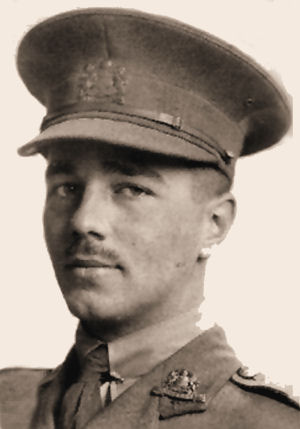
Wilfred Owen

A solid evening's work from the LPO under Jurowski, even if it was not as searing as might have been expected.  On a first hearing, there was a nagging feeling this work is not more than the sum of its undeniably impressive parts.

There was much to admire, led by Wilfred Owen's moving First World War poetry which Britten ingeniously intersperses throughout the Latin Requiem mass.  In the Offertorium there was this stunning undercutting of the Biblical story of the sacrifice of Abram's son:

Then Abram bound the youth with belts and straps,
And builded parapets and trenches there,
And stretched forth the knife to slay his son.
When lo! an angel called him out of heaven,
Saying, Lay not thy hand upon the lad,
Neither do anything to him. Behold,
A ram, caught in a thicket by its horns;
Offer the Ram of Pride instead of him.

But the old man would not so,
but slew his son, -
And half the seed of Europe, one by one.


Very fine indeed were the two poetry soloists Ian Bostridge and Matthias Goerne, with Bostridge leading with his plangent voice and compelling fusion of melody and word. Vladimir Jurowski and Neville Creed directed with clarity and feeling.  Elsewhere the LPO chorus were well balanced without really taking flight, while the off-stage boys choir were virtually inaudible at critical moments.

It was left to Bostridge (unforgettable in "Move him into the sun..." and the Agnus Dei) and Goerne to deliver the high points, not least in the closing of the Libera Me and its call to sleep.  This work delivers a powerful message of pacifism and Jurowski might have held the final silence for longer than the 20 seconds he chose.

Wilfred Owen's poem "Strange Meeting" featured in the Libera Me