Showing posts with label Bruckner. Show all posts

Saturday, 4 May 2019

Janine Jansen scales the heights

Brahms: Violin Concerto
Bruckner: Symphony No.3 (vers. 1877) 
London Philharmonic Orchestra
Vladimir Jurowski conductor
Janine Jansen violin


Royal Festival Hall, London, 3 May 2019
**********************
The concert was billed as "Alpine Journeys", but inevitably the Festival Hall allowed not a bit of mist to develop around all those Brucknerian ostinati.  Jurowski's Bruckner was controlled, sculpted and with that acoustic, not a bit abrupt. Some of this effect may have come from the 1877 version of the symphony presented here by Jurowski.  The last movement in particular had more flow in the later 1889 revision. 


The frenzies were quite ferocious in the Scherzo and Finale but the polkas and landlers had no spring to them, and overall the effect was a little too literal, if thrillingly exact.

The real vistas of the evening came from Janine Jansen's Brahms.  The Brahms Violin Concerto, in a neat bit of programming, was premiered in 1879 and so nearly contemporaneous with the Bruckner.  Jansen plays with real muscle but is distinguished by her responsiveness to the music her fellow musicians, and her ability to inflect rhythm and tone from note to note.  Her high lines are clear but delicate and the lightness of tone brought to mind Ravel in the midst of Brahms.  Now that marks out a master violinist.


Janine Jansen


Thursday, 10 April 2014

Bruckner Ninth from the Concertgebouw Orchestra

Beethoven Piano Concerto No 1 (1800)
Bruckner Symphony No 9 (1896)

Royal Concertgebouw Orchestra Amsterdam
Mariss Jansons
conductor
Lars Vogt piano


Barbican Hall, London, 5 April 2014
*****************
The final concert of the Jansons/Concertgebouw Orchestra 3 day residency at the Barbican started with Beethoven's perennnially fresh First Piano Concerto.  At the piano was the thoughtful, refined and impish pianism of Lars Vogt.  As with the other nights the soloist was beyond reproach.  Vogt had particular fun projecting the Beethovenian humour in the first movement coda: teasing the audience with when it was going to end, and striving for maximum surprise when Beethoven throws out fortissimo chords after quiet interludes.  The Concertgebouw Orchestra were again attentive and cultured partners, with anything that the clarinet or oboe touched turning to musical gold.

And so the visit concluded with the last Bruckner symphony - the mighty, unfinished 9th.   What a composition this is and how very worthy a successor of that other D Minor work - the Beethoven Ninth Symphony.  The Barbican crowd was expectant– not least Jansons’ wife and the Concertgebouw Orchestra’s manager seated next to me.  

This was again a performance of exalted technical quality and Jansons’ usual attention to detail.  Speeds were brisk, and in the Scherzo there was some bizarre handling of tempo at the start which slowed up for the pounding bass notes, before regaining the original tempo as the first violins re-entered.  It was obviously prepared as such, but why?  The great Adagio developed to a massive climax and the final closing notes were wonderfully sustained by strings and brass.  What a sound the Concertgebouw Orchestra produce when on their game.

Mariss Jansons
This Bruckner residency never fell below the very high standards to be expected from the Jansons/Concertgebouw dream-team.  Jansons approach was beautifully crafted and detailed.  The sheer beauty of sound on offer will not be easily forgotten.  Ultimately that this was not a revelatory experience comes down to Jansons not being the most natural of Brucknerians.  Movements did not accumulate like they do at their best, tempi were a little too forced to allow maximum expression, and the structural sense was not as assured as that of a Skrowaczewski.   
 
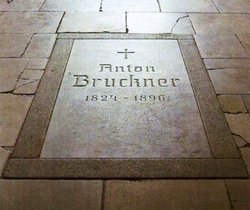
Bruckner's gravestone


The applause at the end from the Barbican audience after the Bruckner was long and enthusiastic, but stopped short of a standing ovation.  Probably about right.   In the end it was the concerti that struck one as closer to ideal.  Thinking back over the three partnerships with Lars Vogt, Truls Mork and Frank Peter Zimmermann, I wouldn’t change a single aspect of any of them.


Saturday, 5 April 2014

Jansons' Bruckner residency at the Barbican

Mozart Violin Concerto in G major (1775)
Bruckner Symphony No 4 in E flat (1880)


Royal Concertgebouw Orchestra Amsterdam
Mariss Jansons
conductor
Frank Peter Zimmermann violin


Barbican Hall, London, 3 April 2014

****************
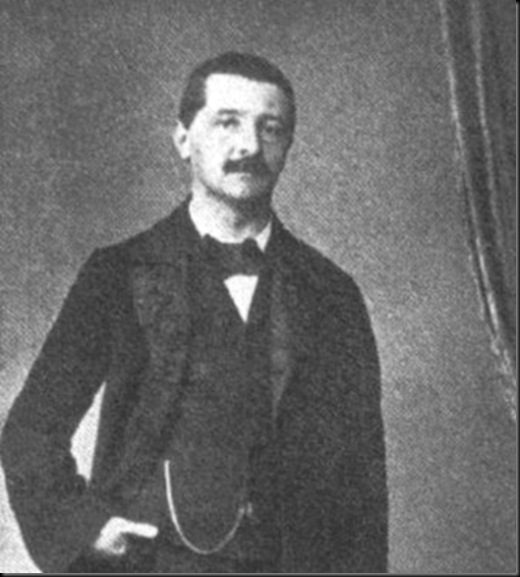
Anton Bruckner
The great Mariss Jansons is best known for his interpretations of composers like Sibelius, Dvorak, Mahler, Tchaikovsky, Shostakovich and Beethoven.  However in recent years he has increased his attention for Austrian composer Anton Bruckner.  Was it his brush with death 18 years ago that triggered this, when he had a heart attack on the podium conducting La Boheme?  Whatever the case, this most spiritual of composers was front and centre for the 3 concert residency of Jansons and his Royal Concertgebouw Orchestra at London's Barbican. Each night, the great symphonies 4, 7 and 9 were leavened by 3 classical concerti of Mozart, Haydn and Beethoven.

Having Frank Peter Zimmerman, Jansons and this wonder-orchestra lavishing such attention on one of Mozart's lesser moments was certainly an indulgence.  But when the performance was so graceful, relaxed and poised, it came to seem a blessing rather than a waste.  Zimmerman was equally refined and intimate in his Bach encore.

The Bruckner Fourth Symphony so strongly evokes  German romantic moments set in forests and valleys, one can understand why a descriptive programme circulated on its release referencing hunting scenes, knight processions, medieval worlds...  Its opening must be one of music's most famous - a distant horn sounding across the musical landscape.

But that start was not auspicious.  The first horn splitting several notes only bars in.  Was it the ultra-dry Barbican Hall that unsettled him?  Bruckner wanted his symphonies played in cathedrals with their long reverberations.  Acoustically, the Barbican is a kind of anti-Bruckner hall. Whatever the case, the orchestra seemed to be slightly tentative and adjusting to the sound of the hall in the first movement.  

With the second movement the sound changed entirely: more blended, filling the hall more naturally.  In this movement, the nocturnal funeral march, almost imperceptibly Jansons drew us in until something at once beautiful and disquieting was in control.  This was his genius to draw out not only the village-pastoral simplicity of the dance motifs (here truly enjoyed) but also the ghostly, spirit-inhabited underworld of the Austrian forests of legend.  

Jansons' Bruckner starts off on the human scale.  His best moments were frequently bringing out the simple, village delights.  But this Andante brought an authentic sense of unease.  Its pastoral spirituality encountered the numinous but also the unknown, malevolent spirits of the mythic forest world, where humans can be tempted and brought undone.  It was classic Jansons: drawing out and making plain the logic, beauty and power of the "lesser" internal moments of the big symphonies.

The Scherzo was then on the surface the world of hunting calls, but also carrying a disturbing quality.  Jansons was totally at ease in the contrasting trio; bucolic and exuberant.  His Bruckner is not "cosmic", gazing down from the planets.  He embraces the pastoral v spiritual contrasts in the music but also attempts to make their rhetorical register not too far apart.

The great struggle to find a conclusion which is the last movement then carried extra weight of meaning after the darker experiences of those internal movements.  And this was Bruckner, so all of the previous 60 minutes then emptied into the great final coda, here quite electrifying.  The whole unfolding darkly, as if (as Jansons said in a recent interview) “God was wagging his figure at the the world. He was saying ‘you better be careful, you will be penalised if you continue in that direction’”.   Here the orchestra sound was at its finest: eloquent, rounded, the woodwind and brass playing through the string sound.  These Bruckner codas are some of the finest music on earth, and this performance entirely worthy of it.

Sunday, 23 March 2014

Skrowaczewski's Bruckner at 90

Felix Mendelssohn: Violin Concerto 
Anton Bruckner: Symphony No.3 (vers. 1888-9, ed. Novak)

London Philharmonic Orchestra 
Stanislaw Skrowaczewski conductor 
Benjamin Beilman violin

Royal Festival Hall, London, 14 March 2014
*******************
Stanislaw Skrowaczewski

Like great wine, great conductors frequently reveal new layers of musicianship later in life.  Stanislaw Skrowaczewski turned 90 last year and has spent a lifetime learning his Bruckner; the last time I saw him conduct was 20 years ago and also in the Bruckner 3rd Symphony.  This was a memorable evening at the Festival Hall.

We were clearly in safe hands from the start of the Bruckner.  A composer as well as conductor, Skrowaczewski shaped phrases
with calm assurance.  His is an unhurried style, unafraid of that distinctively Brucknerian symphonic punctuation.  Neither does he overheat.  The Third was allowed to build logically without exaggerated dynamics and the heavy underlining that drive many a "super-cosmic" interpretation. 


The London Philharmonic were solid partners, albeit not anyone's first choice in this repertoire. The brass were strong but over-bright and the strings lacking that extra depth of strength and tone.  Indeed a glance towards the back decks of the violins revealed some timid bowing and heads buried in scores. 

Earlier, 24 year old Benjamin Beilman had thrown into relief Skrowaczewski's 90 years.  He gave a strong, direct and muscular reading of Mendelssohn's wonder concerto for violin.  He has real poise which communicated best in the Andante.  It was left to the conducter again here to draw out some luminous moments from the woodwind.  90 and going strong.