Showing posts with label Wagner. Show all posts

Saturday, 8 December 2018

Wagner in Melbourne

Wagner Die Meistersinger von Nurnberg

Michael Kupfer-Radecky Hans Sachs
Stefan Vinke Walther von Stolzing
Natalie Aroyan Eva
Warwick Fyfe Sixtus Beckmesser

Opera Australia Chorus
Orchestra Victoria
Kasper Holten director
Pietari Inkinen conductor

State Theatre, Melbourne November 2018
**************

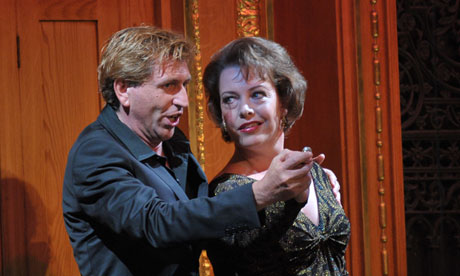
What a pleasure to be back in the State Theatre with its glorious curtain, troubling acoustic echo, and a most satisfying production of Wagner's Meistersinger.

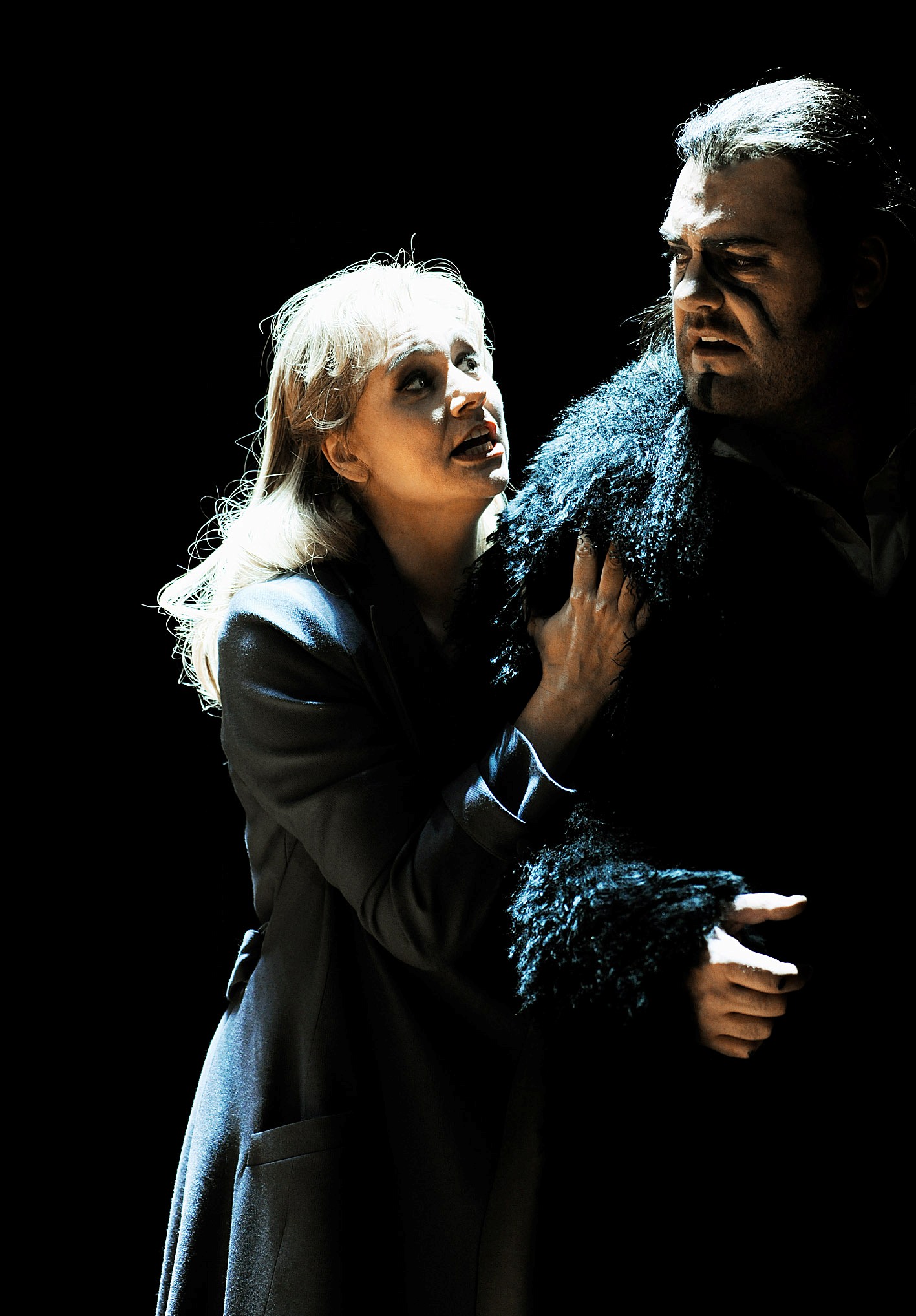
Seen by Wagner as a pair to his Tannhauser, both feature singing competitions with Die Meistersinger receiving extra lashings of German pride and nationalism. The conclusion where Hans Sach (up until that point a sympathetic character) warns all and sundry of the dangers of nasty foreigners jars and the production tried to carve it out by flooding the stage in harshly cold lighting at that point.  Was the idea that it was not really part of the rest of the opera?  That we could leave it to one side?

The set was a monumental marble construction with traditional liveryman garb for the Mastersinger members.  Walther's biker look seemed a bit odd but he is meant to be the outsider, albeit an aristocractic one.

The production was well sung across the board, with Warwick Fyfe's Beckmesser strong in voice and characterisation, and Michael Kupfer-Radecky projecting humanity and doubt as Hans Sachs wrestles with his demons.  It's coup de theatre came at the end with a roundly annoyed Eva storming off stage as Walther (who had promised to run away with her) is convinced to join the mastersingers men's club and respect German tradition.

This was at the end of the glorious 2 hour Third Act, which takes off to a whole other level of musical quality after Acts 1 and 2.  One among so many examples of Wagner's overwhelming artistic genius.

Eva before Walther fails her
The State Theatre's curtain


Saturday, 25 February 2017

Jonas Kaufmann's Die Walküre

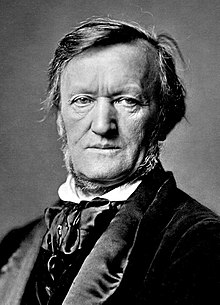
Richard Wagner
Prelude to Tristan und Isolde
Wesendock
Lieder
Act I from Die Walküre 

Jonas Kaufmann tenor
London Symphony Orchestra
Jonas Kaufmann
Antonio Pappano conductor
Karita Mattila soprano
Eric Halfvarson bass

Barbican Hall, London, 8 February 2017
*******************

Jonas Kaufmann's Barbican residency across 4 concerts continued with a much-anticipated Wagner evening.  And it was inevitably the Walkure First Act that dominated proceedings. 

For this he was joined by the no less formidable Karita Mattila as well as Pappano leading the LSO.  The LSO threw us into a most vivid storm after which we heard Kaufmannn's Siegmund emerge.  This was sophisticated Wagner, marked by an intensely lyrical line.  How glorious to hear the role properly sung, rather than shouted.  Wintersturme never sounded more beautiful.

The down-side was that a truly heroic impact was missing from the closing pages of this wonderful slow-burner of an Act. For some true Wagnerian abandon one had to turn to Mattila.  She was less in control, more squally, but delivered an authentic emotional punch.  Standing next to her, both in physical and vocal gesture, Kaufmann gave the impression of pacing himself and guarding his voice for the concerts to come.  That said, the cries of Walse, Walse were thrillingly sustained.

For the evening's complete performance Eric Halfvarson's Hunding was surely as close to ideal as it is possible to hope for.  From cracking bottom notes to physical menace he dominated everything he did.  Not even the weird placement of Pappano directly between him and the other two soloists could spoil the dramatic effect.

Pappano may not be a master of the long line, but the LSO built up a great head of steam in the exhilarating conclusion. Could someone not have set up the singers a more comfortable distance from his podium and those arms so frequently whirling like windmills?   In the first half, the Tristan Prelude did not catch fire but the Wesendonk Lieder again showed off the fine, lyrical beauty of Kaufmann's sophisticated tenor voice.  

Karita Mattila


Friday, 2 August 2013

Prom 20 - Stemme's Brunnhilde crowns a triumphant Ring from Barenboim and the Staatskapelle Berlin

Wagner: Götterdämmerung (semi-staged)
 
Nina Stemme soprano (Brünnhilde)
Andreas Schager tenor (Siegfried)
Mikhail Petrenko bass (Hagen)
Gerd Grochowski baritone (Gunther)
Anna Samuil soprano (Guntrune/ Third Norn)
Johannes Martin Kränzle baritone (Alberich)
Waltraud Meier mezzo-soprano (Waltraute/ Second Norn)
Margarita Nekrasova mezzo-soprano (First Norn)
Aga Mikolaj soprano (Woglinde)
Maria Gortsevskaya mezzo-soprano (Wellgunde)
Anna Lapkovskaja mezzo-soprano (Flosshilde)
Royal Opera Chorus
Staatskapelle Berlin
Daniel Barenboim conductor 


Royal Albert Hall, London, 28 July 2013
*******************
To start at the end, this quite magnificent presentation of Wagner’s Der Ring des Nibelungen culminated in a spine-tingling Immolation Scene from Nina Stemme’s Brunnhilde.  Positioned at the Albert Hall organ loft high above the glorious Staatskapelle Berlin, she approached an ideal for this role.  Her technique and projection was rock solid combined with her now customary warmth and insight.  It was a resounding send-off: she instructs a funeral pyre be erected for the murdered Siegfried, having attained new self-awareness bids compassionate farewell to her father Wotan, and rides her horse Grane into the fire. 
Barenboim and Waltraud Meir as Waltraute

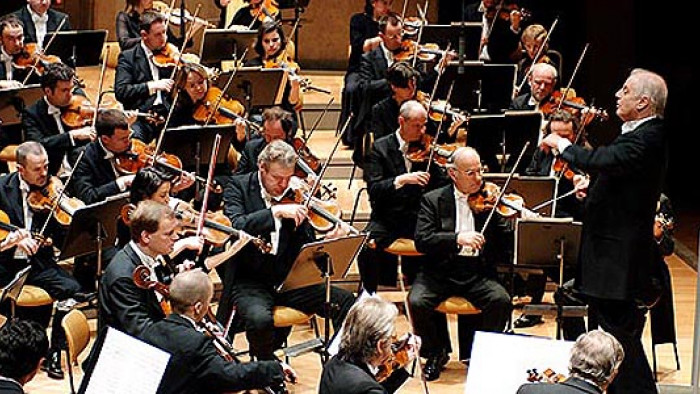
Barenboim then led his orchestra through the final golden pages of Wagner’s 16 hour, 4 opera journey, the Staatskapelle yet again producing thrilling levels of tonal depth and expressiveness.  As the final chord died away, Barenboim’s hand was held aloft and the packed Albert Hall sat in silence for a full 15 seconds.  Then thunderous acclaim.

Barenboim addressed the audience, praising it for its rapt silence throughout The Ring as well as giving a special farewell to the Staatskapelle’s concertmaster – Wolf-Dieter Batzdorf - who was retiring after 40 years.

Before then another luxury cast had joined Stemme in bringing Wagner’s flawed but great opera to life.   It is fundamental to understanding and indeed tolerating the unique musical achievement that is The Ring that its libretto was in fact written backwards.  Wagner first wrote the libretto of an opera to be called Siegfried’s Death.  He then expanded it to describe Siegfried’s back story as two operas which ultimately became Siegfried and Gotterdammerung.  But Wagner then was moved to include the story of Brunnhilde, which added The Valkyrie to the collection of operas.  Then finally he wanted to include a fuller version of the story of Wotan, which added the preliminary evening of The Rheingold.    While Wagner re-edited the full four opera libretto as a whole this backwards expansion explains why there are some inconsistencies and also why the audience is often being told things it already knows.  
Andreas Schager and Nina Stemme in the Prologue

So, Twilight begins with an extended Prologue which goes over some previous happenings.  Siegfried and Brunnhilde reprise their rapture from Act 3 of Siegfried and the Norns mull over the whole storyline of The Ring.  Thankfully Wagner's music is little short of genius, with Siegfried and Brunnhilde's scene and Siegfried's Rhine Music musically overwhelming.

This famously awkward and contradictory conclusion to The Ring was then greatly helped by Andreas Schager’s physically plausible and dashing Siegfried, channelling Errol Flynn, and Mikhail Petrenko’s darkly attractive Hagen who brought glamour and dramatic impact to the villain’s role. Both were ably supported by Anna Samuil as Gutrune and Gerd Grochowski as the spineless Gunther. 

Waltraud Meier as Waltraute created one of the evening’s big highlights with a riveting dialogue with Brunnhilde in Act 1.  She drew the listener into her long narrative of the plight of the gods, and brought a huge emotional charge to her distraught departure from the rock, having failed to convince Brunnhilde to return the ring to the Rhinemaidens. 

Throughout this performance of The Ring, the central revelation has been the commitment and quality of sound of the Staatskapelle Berlin.  Combined with the extraordinary potency and drama of Wagner’s music, listening to them was as continuously engaging and eloquent as the score itself.  Some slightly tired entries towards the end took nothing away from their conquest of the Albert Hall.  No one who attended these Wagner evenings will ever forget it.


The Royal Albert Hall, awaiting Act III

Peter O'Byrne


Saturday, 27 July 2013

Prom 18 - Barenboim Ring continues with Siegfried

Wagner: Siegfried (semi-staged)
 
Lance Ryan tenor (Siegfried) 
Nina Stemme soprano (Brünnhilde)
Terje Stensvold baritone (Wanderer)
Peter Bronder tenor (Mime)
Johannes Martin Kränzle baritone (Alberich) 
Eric Halfvarson bass (Fafner)
Rinnat Moriah soprano (Woodbird)
Anna Larsson mezzo-soprano (Erda) 
Staatskapelle Berlin
Daniel Barenboim conductor 
Royal Albert Hall, London, 26 July 2013
*************************

Daniel Barenboim's sure hand on this first complete Ring at the Proms continued with an engrossing Siegfried.

The driving force in this came from dramatically compelling performances from Canadian heldentenor Lance Ryan, as the young hero Siegfried who does not know the meaning of fear, and Peter Bronder as the dwarf Mime who is bringing Siegfried up in the forest who was energetically characterised from the start, scheming and wailing, part villain, part pathetic figure.

The opera naturally turns on its Siegfried and what a difficult character it is to bring off.  As Wagner's libretto has him, he can be a very unsympathetic character, a brainless beefcake, enjoying his tormenting of Mime a little too much.  Certainly Ryan's portrayal veered in this direction initially with his wilful, adolescent Siegfried, but he built considerable complexity as Siegfried questions Mime and learns across the opera more of his parents and himself. His Act 2 disturbed the onward impulse of the opera, but it injected some fine humour into proceedings through the "Forest Murmurs" section as he interacted with the on-stage orchestra.  For his horn calls to the wood bird, the first french horn of the wonderful Staatskapelle Berlin came out front to deliver it impeccably.  "Got any others?" Ryan quipped. Audience laughter, during a Ring!
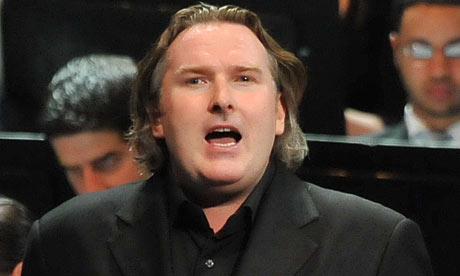
Lance Ryan


Come Act 3, things moved onto new levels in a whole range of ways.  The great fault line in the music of The Ring of course comes at this point.  Wagner, having written the music of Rheingold, The Valkyrie and Acts 1 and 2 of Siegfried, left it for 12 years during which he wrote Tristan and The Mastersingers and his compositional genius advanced enormously.  The mighty Siegfried Act 3 prelude is music on another planet, and The Wanderer (Terje Stensvold) returned in more expansive mood than his rather one-speed contributions to that point and together with Erda (Anna Larrson) deepened the emotions at this point.  With Nina Stemme's entrance as Brunnhilde we were again reminded of her great artistry.  She is a complete Brunnhilde, powerful on the top register but with great warmth and quality across the full vocal range. 

Barenboim may have not been as successful as in the stunningly good Valkyrie on Tuesday at maintaining an underlying pulse to the evening, but the Staatskapelle Berlin were again a marvel.  The burnished brass were absolutely outstanding and the woodwind section sublime whether in conjuring up the forest sounds of Act 2 or blending subtly with the singer's vocal lines.  The horns were flawless and had an extraordinary capacity, though only 5 metres from my seat, to sound as if 100 metres distant, over a hill.  All promises well for Sunday's conclusion in The Twilight of the Gods.

Peter O'Byrne


Wednesday, 24 July 2013

Prom 15: Staatskapelle Berlin, Barenboim and Kampe in stellar Die Walküre

Prom 15: Staatskapelle Berlin, Barenboim and Kampe in stellar Die Walküre

Wagner: Die Walküre (concert performance)

Bryn Terfel bass-baritone (Wotan)
Eric Halfvarson bass (Hunding)
Simon O'Neill tenor (Siegmund)
Anja Kampe soprano (Sieglinde)
Nina Stemme soprano (Brünnhilde)
Ekaterina Gubanova mezzo-soprano (Fricka)
Sonja Mühleck soprano (Gerhilde)
Carola Höhn soprano (Ortlinde)
Ivonne Fuchs mezzo-soprano, (Waltraute)
Anaïk Morel mezzo-soprano, (Schwertleite)
Susan Foster soprano, (Helmwige)
Leann Sandel-Pantaleo mezzo-soprano, (Siegrune)
Anna Lapkovskaja mezzo-soprano, (Grimgerde)
Simone Schröder mezzo-soprano, (Rossweisse)
Staatskapelle Berlin
Daniel Barenboim conductor


Royal Albert Hall, London, 23 July 2013

*************************

The plush Staatskapelle Berlin inspired by the masterly direction of Daniel Barenboim and a first-choice cast including an electrifying Anja Kampe, delivered a memorable Die Walkure at the Proms last night.

Daniel Barenboim has taken to not so much giving concerts in London as much as masterminding events.  Previous highlights have been a complete Beethoven piano sonatas cycle  (2008), complete Beethoven symphonies cycle (2012), and a series of Mozart Piano concertos & Bruckner symphonies (2012).  Now he brings the first ever Proms The Ring of the Nibelung: Wagner's great pinnacle of opera writing consisting of three 4 hour operas The Valkyrie, Siegfried and Twilight of the Gods, preceded by the 2 hour "preliminary evening" of The Rhinegold.
 

This was a classic Proms experience; great artists performing a big work with very reasonable prices – a quarter of the norm for a staged version.  In the aftermath of a certain royal birth the previous day, this was democracy. 
Berlin Staatskapelle and Daniel Barenboim

Barenboim brought the Staatskapelle Berlin orchestra he is the music director of for The Ring, but on each of the 4 nights there are varying casts.  And the hero of The Valkyrie was undoubtedly the Staatskapelle – revealed as a great Wagner orchestra.  What does that mean?  Well, it has a burnished tone and a complete absence of rough edges in its sound. At times it sounded like one instrument, not an ensemble of 100, which always marks out the best orchestras.  Horns emerge from massed woodwind, oboes blend with strings, harps underpin unobtrusively the total sound.  And all this is important in Wagner because his music is characterised by a continuously evolving, shimmering, transforming tapestry of sound.  

Richard Wagner

Blessed with seats level with the orchestra and virtually sitting at the back of the second violins, there were countless moments of jaw-dropping beauty. Time and again the ear was distracted from the stellar singers to admire yet another moment of insight from the orchestra.  The culmination was a sound of breathtaking aural lushness at the conclusion with Brunnhilde asleep on the rock surrounded by the flickering magic fire.


So what is the story of The Ring?  Well it can be told in many ways but two primary themes are that it is about human love and compassion and its struggle against social laws and conventions, and about the replacement of one social order – that of the gods – with a new one.


In The Valkyrie this plays out through a sequence of key relationships.  First, Sieglinde is stuck in a loveless marriage with Hunding and meets and runs off with her twin brother Siegmund (Act 1).  Second, Wotan is stuck in a loveless marriage with Fricka who – being the goddess of marriage – demands the death of Sieglinde and Siegmund.  This, Wotan very reluctantly agrees as he is the father of both Siegmund and Sieglinde.  Third, Wotan is very close to another daughter, the valkyrie Brunnhilde.  He instructs her to carry out Fricka’s wishes (Act 2). However Brunnhilde thinks she knows what her father really wants and instead saves Sieglinde.  Wotan, with no option, punishes Brunnhilde by leaving her asleep on a rock for the first man to come across her to be her husband.  But in the long and profoundly moving conclusion to Act 3, overcome by compassion and admiration for Brunnhilde’s spirit, Wotan changes the sentence so that she is surrounded by a wall of magic fire that only a man who knows no fear will be able to penetrate.
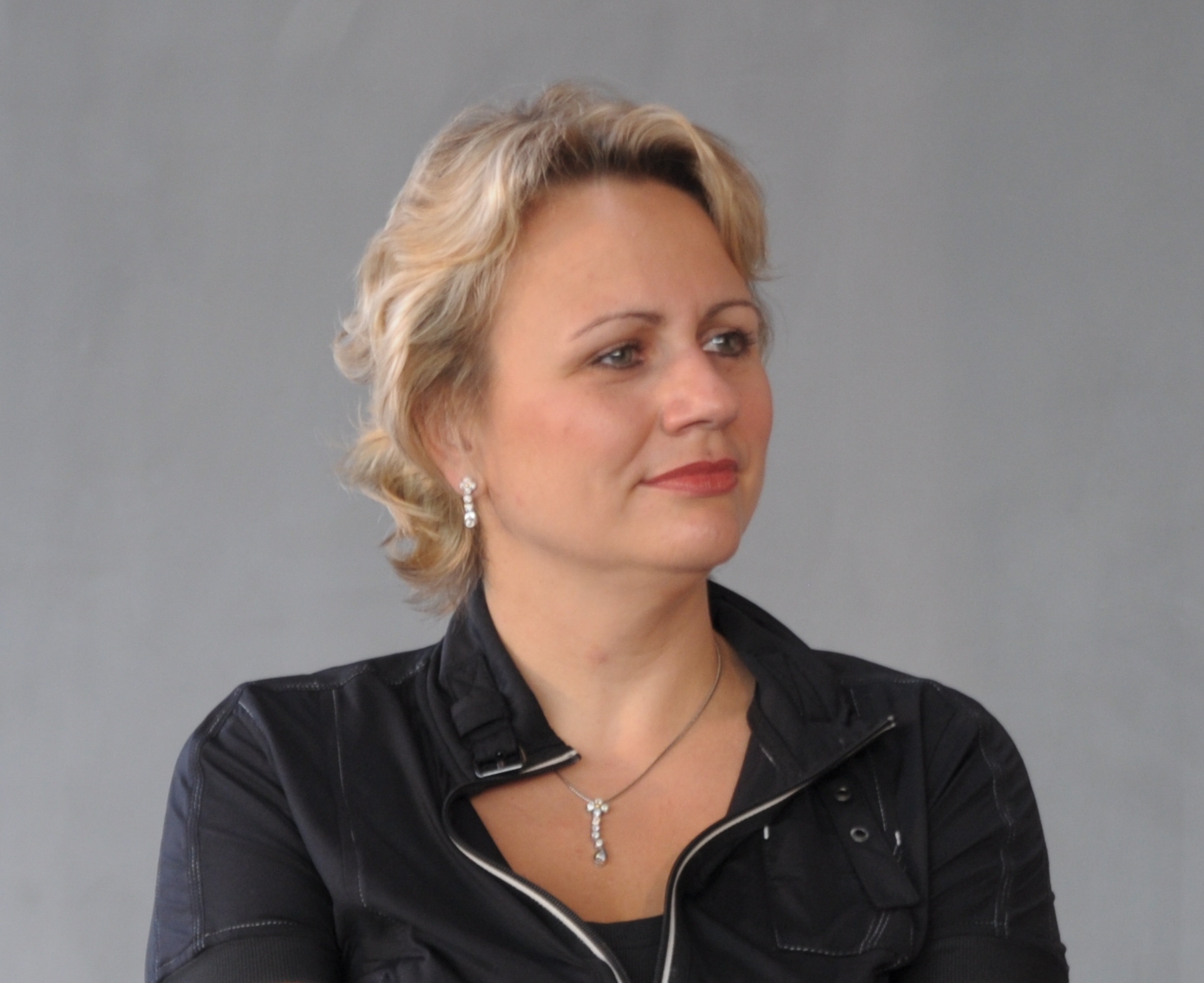
Anja Kampe

Throughout the performance, Barenboim’s direction was very satisfying, delivering  concentration and space for the long arcs of music to breath. Generally broad tempi did not prevent Wagner’s moments of uber-excitement to deliver: the Act 1 prelude storm, climax of Act 1 and Sieglinde’s farewell to Brunnhilde in Act 3 (impressively broadened) standing out.

These particular moments also had another connection: Anja Kampe was on the stage.  Having made quite some impression in December as Senta, she here confirmed her reputation for ringing high notes and artistic fearlessness.  She may lack the vocal warmth of some, but in Wagner she delivers powerful singing and utter commitment.  It was completely thrilling and her reception at the end for her solo bow had to be heard to be believed.  A tumult, even for the effusive Proms audience.


Nina Stemme
Bryn Terfel
Nina Stemme  as Brunnhilde was a nuanced presence, well paced and with a wide vocal range.  Bryn Terfel’s Wotan commanded the stage with the outsize personality we have come to expect.  Terfel chewed up the words with gusto, but seemed fractionally more weary than weighty come the end.    Simon O’Neill was evidently struggling with a cold.  One constantly suspects he will prove too vocally lightweight for Wagner, but his artistry shone through with a fine heroic quality to his Siegmund.
Simon O'Neill


This was luxury casting, and backed up with the Staatskapelle’s magic carpet of sound and Barenboim’s sure hand, the night was thrilling, exhausting and ultimately transporting. 


Peter O'Byrne

Sunday, 23 December 2012

Terfel, Kampe, Salminen - a Wagnerian triumvirate

Richard Wagner: The Flying Dutchman (concert performance)


Baritone Bryn Terfel

Bryn Terfel The Dutchman
Anja Kampe Senta
Matti Salminen Daland
Martin Homrich Erik
Fabio Trumpy Steersman
Liliana Nikiteanu Mary

Zurich Opera Orchestra 
Zurich Opera Chorus
Alain Altinoglu conductor


15 December 2012, Royal Festival Hall, London
****************
Anja Kampe


This performance of Wagner’s opera came straight from the Zurich Opera House.  As a result this was not one of those stilted concert performances which howls for sets and props.  The singers immediately created engaging relationships with eachother and the Festival Hall stage.  When underpinned by Wagner’s orchestral narrative, the evening was as enthralling as any staged version.

The Steersman and Captain Daland brought out humour as well as atmosphere from the opening and only Mistress Mary was an awkward presence, seemingly in two minds whether to act out her role as a very coquettish 50 year old, or hold true to more formal conventions of concert performance.


Wagner’s opera tells the tale of the Flying Dutchman, doomed to sail the seas until the day of
Richard Wagner
judgment unless he is redeemed by the love of a true woman.  He can return to land every 7 years to find such a person and the opera starts as he meets Daland, discovers he has a daughter Senta and strikes a bargain that he will give the father all his dazzling treasure in return for marrying her.  And – who would have thought - Senta has a picture of the Flying Dutchman on her wall. She spurns the advances of the hunter Erik in preference for awaiting the doomed man.  She is ecstatic on the Dutchman’s arrival but in the end the Dutchman suspects she has failed him and sails off.  Senta proves her love by throwing herself from a cliff into the sea as the opera ends.

Alain Altinoglu was directing this performance and was unfussy and direct throughout.  This brought greatest benefits when the orchestra reaches full frenzy as the human and ghostly ship crews dialogue in the final act.  Elsewhere it was not a reading of the score to set pulses racing.  Probably just as well though, because the singers were setting the air alight.

The evening had been marketed with Bryn Terfel as the headline act.  What we actually received was a spectacular triumvirate of Wagner singers: Terfel sharing the stage with two unforgettable performances from Anja Kampe as Senta and Matti Salminen as Daland.  When the three sang together at the climax of Act 3 this was clearly a vintage Wagner evening.

Matti Salminen

Salminen was the first on stage and his interpretation combined a powerful voice (a little hoarse sounding although he is a ship captain) with a wry and engaging interpretation of the character.  He brought a depth to the role that took it beyond the simple opportunism that it suggests. The Steersman was nicely clear and true.


The entrance of Terfel ratcheted up the temperature.  This was a vocal masterclass as Terfel introduced the audience to the Dutchman’s massive existential angst.  His delivery of the repeated calling for the end of the world was unforgettable.  As ever his voice combined power with great attention to the words and a remarkable ability to speak very directly to the listener.    

Kampe and Terfel together in the Zurich production

So far, all was going very well indeed.  Then Act II began.  After a bumpy spinning chorus and that slightly jarring Mary, Anja took control.  Even before she sang she seemed to radiate the type of indwelling confidence that a Senta should have.  After all she ignores all advice around her to wait for and then commit herself to a cursed ghost.  Once she was singing it became clear that she had a powerful voice combined with real artistic bravery.  She evidently has a few Sieglinde’s under her belt – I would pay good money to hear that on this showing.  She was far from flawless – suffering a power-failure in the Act 2 duet with the Terfel – but she sang with a generosity and abandon which suited the role very well.  Some Sentas may bring a more girl-ish aspect to both voice and acting, but Anja’s sledgehammer high notes at the opera’s conclusion were electric.  She all but knocked holes in the back of the hall. 


If Senta delivered the greatest thrills and spills Terfel’s Dutchman is difficult to imagine being bettered.  The intensity of his stage presence and singing was breath-taking and when he and Senta finally clinch, the moment was remarkable for its strangeness: Senta seemingly in a trance, the Dutchman consumed with not missing his chance at redemption. Tender it was not.  This was a triumph and a golden Wagner night.

 
Opera House Zurich (above) or Royal Festival Hall (below): which would you choose?

Sunday, 26 August 2012

Prom 57 - Bach feeds 5000

Wagner: Parsifal – Act 3 Prelude and Good Friday Music
Berg: Violin Concerto
Richard Strauss: Der Rosenkavalier – suite
Ravel: La valse

Gustav Mahler Jugendorchester
Daniele Gatti conductor
Frank Peter Zimmermann violin 

26 August 2012, Royal Albert Hall, London
******************

The Gustav Mahler Youth Orchestra was founded in 1986 by Claudio Abbado and draws its members from the UK to Russia.   With the normal Proms programme, concert-goers were handed a separate programme covering the GMYO's 2012 Summer Tour.  Having two parallel programmes was actually quite instructive.  The GMYO's was a heavily corporate production on the orchestra's 25th anniversary, complete with words from the sponsors, president etc, and even a rather earnest Mission Statement ("Talent with professionalism, Musicianship without borders, Dedication and enthusiasm", in case you were wondering).  There were also some nice clashes: the GMYO was "the leading youth orchestra in the world" in its own brochure, but only "one of the world's leading youth orchestras" in the Proms programme.

Parsifal at Bayreuth in 2010 conducted by Daniele Gatti.  Photo: Enrico Nawrath
Gatti chose Wagner and Parsifal to open the concert.  In 2010 he directed the opera at Bayreuth and is booked to return again to the Wagner mecca. The GMYO sections are impressive units, and Gatti coaxed a nicely blended sound out of the group as a whole, although some on the woodwind were rather under-projecting their solo lines.  The concluding sections of this luminous music were beautifully shaped by conductor and orchestra.

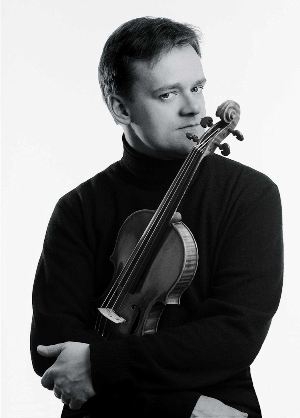
Frank Peter Zimmermann
Alban Berg
With the Berg we were in for a treat with Frank Peter Zimmermann playing the solo part. Even after many listenings, Berg's melancholy and disturbing Violin Concerto has lost none of its mysterious power.  Sub-titled "To The Memory of an Angel", it was composed following the death at 18 of the daughter of close friends. The heart of the work comes as Berg quotes Bach's chorale Es ist genug ("It is enough!") in the woodwind.   And Bach reappeared, unexpectedly, as the highlight of the evening.  Zimmermann delivered an encore, the gently rocking Andante of Bach's A Minor Solo Violin Sonata.  It is music of simple, profound genius, and it was indescribably moving to see the Albert Hall - that 5000 capacity Colosseum - unified and transfixed by Zimmermann's hushed lullaby. 

The second half brought a cavalcade of waltzes.  First up was the pastiche of doubtful authenticity taken from Richard Strauss' opera Der Rosenkavalier.  Here too the competing programme notes diverged.  Did Strauss have no involvement in it and probably would have disliked it (Proms notes) or did he compose it possibly with some assistance from others such as Artur Rodzinski (GMYO notes)?  Personally I prefer the Proms version, as Strauss would surely have loathed the way it does not follow his own poetic conclusion to the opera but instead reprises high spirits from Act 2, and some of the gear changes between contrasted operatic moments are laughably insensitive. 

Things were taken to a whole extra level of sophistication with Ravel's masterwork La valse.  It was conceived as a homage to the great waltzes of Johann Strauss, but the First World War intervened and by its completion in 1920 Ravel had rounded it off with a violent climax which breaks the waltz with a terse, military conclusion.  It is a classic example (along with Bolero) of Ravel setting up a strictly rhythmic musical structure which then goes haywire at the end.  The GMYO brought an impressive, lithe sophistication to the piece with excellent contributions from the brass section, but Gatti rushed his fences at the end which substituted a frenzy for what should be a shocking change of rhythm - a virtual waltz-murder.
Peter O'Byrne