Showing posts with label Die Walkure. Show all posts

Saturday, 25 February 2017

Jonas Kaufmann's Die Walküre

Richard Wagner
Prelude to Tristan und Isolde
Wesendock
Lieder
Act I from Die Walküre 

Jonas Kaufmann tenor
London Symphony Orchestra
Jonas Kaufmann
Antonio Pappano conductor
Karita Mattila soprano
Eric Halfvarson bass

Barbican Hall, London, 8 February 2017
*******************

Jonas Kaufmann's Barbican residency across 4 concerts continued with a much-anticipated Wagner evening.  And it was inevitably the Walkure First Act that dominated proceedings. 

For this he was joined by the no less formidable Karita Mattila as well as Pappano leading the LSO.  The LSO threw us into a most vivid storm after which we heard Kaufmannn's Siegmund emerge.  This was sophisticated Wagner, marked by an intensely lyrical line.  How glorious to hear the role properly sung, rather than shouted.  Wintersturme never sounded more beautiful.

The down-side was that a truly heroic impact was missing from the closing pages of this wonderful slow-burner of an Act. For some true Wagnerian abandon one had to turn to Mattila.  She was less in control, more squally, but delivered an authentic emotional punch.  Standing next to her, both in physical and vocal gesture, Kaufmann gave the impression of pacing himself and guarding his voice for the concerts to come.  That said, the cries of Walse, Walse were thrillingly sustained.

For the evening's complete performance Eric Halfvarson's Hunding was surely as close to ideal as it is possible to hope for.  From cracking bottom notes to physical menace he dominated everything he did.  Not even the weird placement of Pappano directly between him and the other two soloists could spoil the dramatic effect.

Pappano may not be a master of the long line, but the LSO built up a great head of steam in the exhilarating conclusion. Could someone not have set up the singers a more comfortable distance from his podium and those arms so frequently whirling like windmills?   In the first half, the Tristan Prelude did not catch fire but the Wesendonk Lieder again showed off the fine, lyrical beauty of Kaufmann's sophisticated tenor voice.  

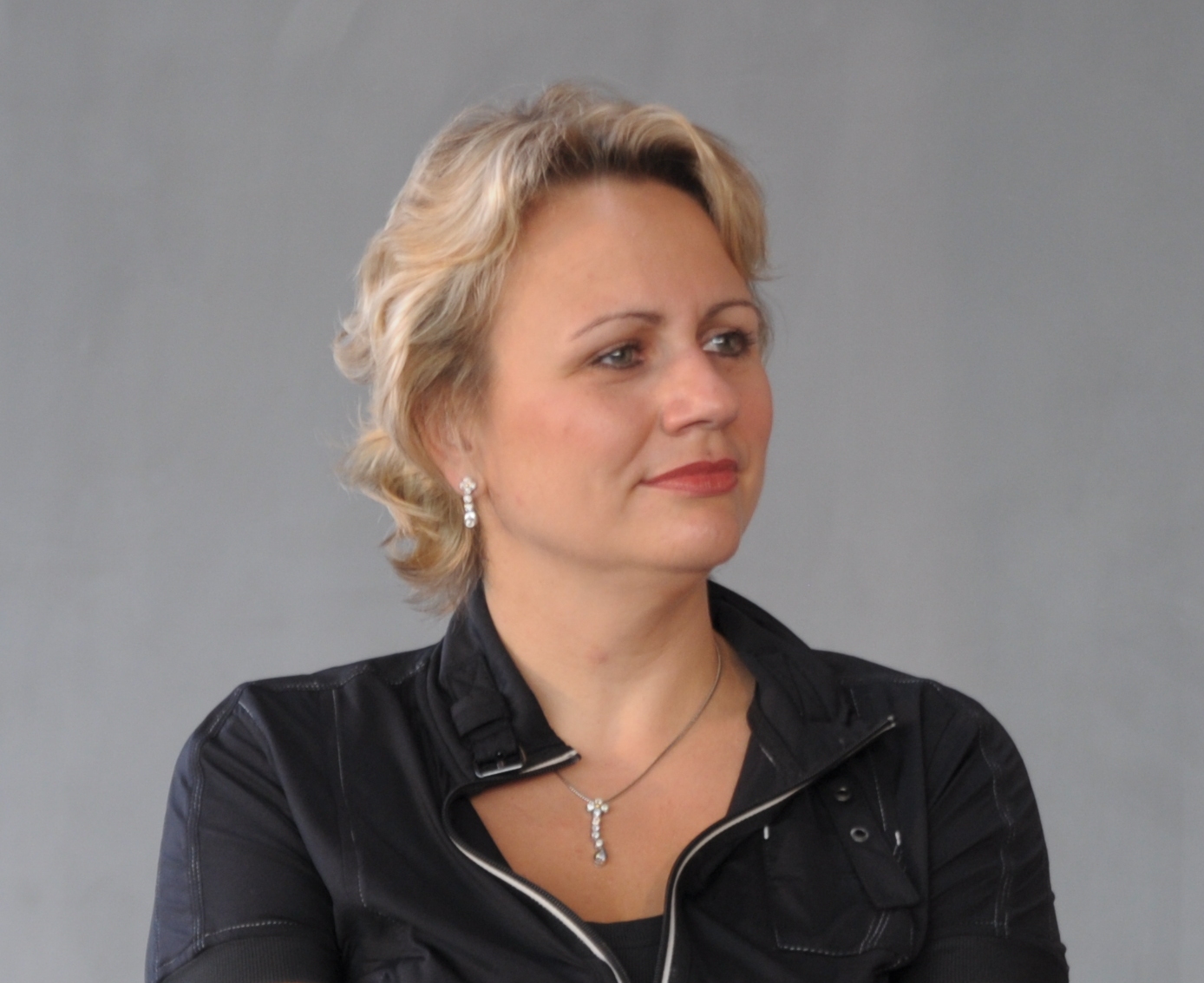
Karita Mattila


Wednesday, 24 July 2013

Prom 15: Staatskapelle Berlin, Barenboim and Kampe in stellar Die Walküre

Prom 15: Staatskapelle Berlin, Barenboim and Kampe in stellar Die Walküre

Wagner: Die Walküre (concert performance)

Bryn Terfel bass-baritone (Wotan)
Eric Halfvarson bass (Hunding)
Simon O'Neill tenor (Siegmund)
Anja Kampe soprano (Sieglinde)
Nina Stemme soprano (Brünnhilde)
Ekaterina Gubanova mezzo-soprano (Fricka)
Sonja Mühleck soprano (Gerhilde)
Carola Höhn soprano (Ortlinde)
Ivonne Fuchs mezzo-soprano, (Waltraute)
Anaïk Morel mezzo-soprano, (Schwertleite)
Susan Foster soprano, (Helmwige)
Leann Sandel-Pantaleo mezzo-soprano, (Siegrune)
Anna Lapkovskaja mezzo-soprano, (Grimgerde)
Simone Schröder mezzo-soprano, (Rossweisse)
Staatskapelle Berlin
Daniel Barenboim conductor


Royal Albert Hall, London, 23 July 2013

*************************

The plush Staatskapelle Berlin inspired by the masterly direction of Daniel Barenboim and a first-choice cast including an electrifying Anja Kampe, delivered a memorable Die Walkure at the Proms last night.

Daniel Barenboim has taken to not so much giving concerts in London as much as masterminding events.  Previous highlights have been a complete Beethoven piano sonatas cycle  (2008), complete Beethoven symphonies cycle (2012), and a series of Mozart Piano concertos & Bruckner symphonies (2012).  Now he brings the first ever Proms The Ring of the Nibelung: Wagner's great pinnacle of opera writing consisting of three 4 hour operas The Valkyrie, Siegfried and Twilight of the Gods, preceded by the 2 hour "preliminary evening" of The Rhinegold.
 

This was a classic Proms experience; great artists performing a big work with very reasonable prices – a quarter of the norm for a staged version.  In the aftermath of a certain royal birth the previous day, this was democracy. 
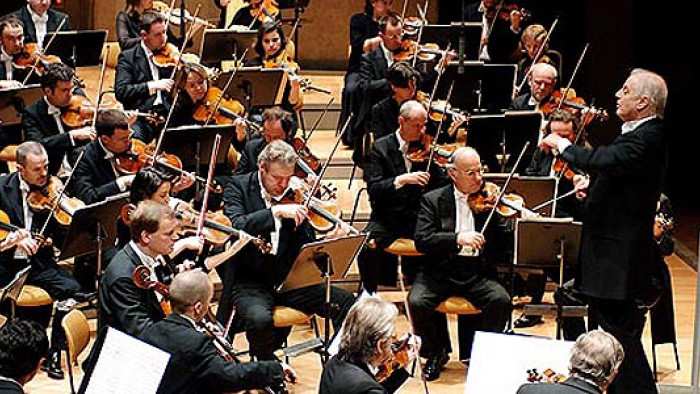
Berlin Staatskapelle and Daniel Barenboim

Barenboim brought the Staatskapelle Berlin orchestra he is the music director of for The Ring, but on each of the 4 nights there are varying casts.  And the hero of The Valkyrie was undoubtedly the Staatskapelle – revealed as a great Wagner orchestra.  What does that mean?  Well, it has a burnished tone and a complete absence of rough edges in its sound. At times it sounded like one instrument, not an ensemble of 100, which always marks out the best orchestras.  Horns emerge from massed woodwind, oboes blend with strings, harps underpin unobtrusively the total sound.  And all this is important in Wagner because his music is characterised by a continuously evolving, shimmering, transforming tapestry of sound.  

Richard Wagner

Blessed with seats level with the orchestra and virtually sitting at the back of the second violins, there were countless moments of jaw-dropping beauty. Time and again the ear was distracted from the stellar singers to admire yet another moment of insight from the orchestra.  The culmination was a sound of breathtaking aural lushness at the conclusion with Brunnhilde asleep on the rock surrounded by the flickering magic fire.


So what is the story of The Ring?  Well it can be told in many ways but two primary themes are that it is about human love and compassion and its struggle against social laws and conventions, and about the replacement of one social order – that of the gods – with a new one.


In The Valkyrie this plays out through a sequence of key relationships.  First, Sieglinde is stuck in a loveless marriage with Hunding and meets and runs off with her twin brother Siegmund (Act 1).  Second, Wotan is stuck in a loveless marriage with Fricka who – being the goddess of marriage – demands the death of Sieglinde and Siegmund.  This, Wotan very reluctantly agrees as he is the father of both Siegmund and Sieglinde.  Third, Wotan is very close to another daughter, the valkyrie Brunnhilde.  He instructs her to carry out Fricka’s wishes (Act 2). However Brunnhilde thinks she knows what her father really wants and instead saves Sieglinde.  Wotan, with no option, punishes Brunnhilde by leaving her asleep on a rock for the first man to come across her to be her husband.  But in the long and profoundly moving conclusion to Act 3, overcome by compassion and admiration for Brunnhilde’s spirit, Wotan changes the sentence so that she is surrounded by a wall of magic fire that only a man who knows no fear will be able to penetrate.
Anja Kampe

Throughout the performance, Barenboim’s direction was very satisfying, delivering  concentration and space for the long arcs of music to breath. Generally broad tempi did not prevent Wagner’s moments of uber-excitement to deliver: the Act 1 prelude storm, climax of Act 1 and Sieglinde’s farewell to Brunnhilde in Act 3 (impressively broadened) standing out.

These particular moments also had another connection: Anja Kampe was on the stage.  Having made quite some impression in December as Senta, she here confirmed her reputation for ringing high notes and artistic fearlessness.  She may lack the vocal warmth of some, but in Wagner she delivers powerful singing and utter commitment.  It was completely thrilling and her reception at the end for her solo bow had to be heard to be believed.  A tumult, even for the effusive Proms audience.


Nina Stemme
Bryn Terfel
Nina Stemme  as Brunnhilde was a nuanced presence, well paced and with a wide vocal range.  Bryn Terfel’s Wotan commanded the stage with the outsize personality we have come to expect.  Terfel chewed up the words with gusto, but seemed fractionally more weary than weighty come the end.    Simon O’Neill was evidently struggling with a cold.  One constantly suspects he will prove too vocally lightweight for Wagner, but his artistry shone through with a fine heroic quality to his Siegmund.
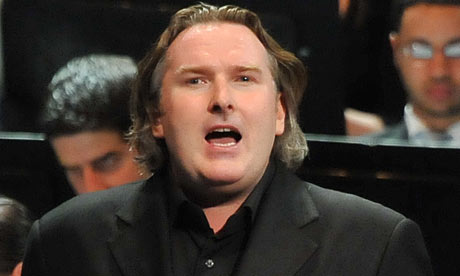
Simon O'Neill


This was luxury casting, and backed up with the Staatskapelle’s magic carpet of sound and Barenboim’s sure hand, the night was thrilling, exhausting and ultimately transporting. 


Peter O'Byrne