Friday, 22 November 2013

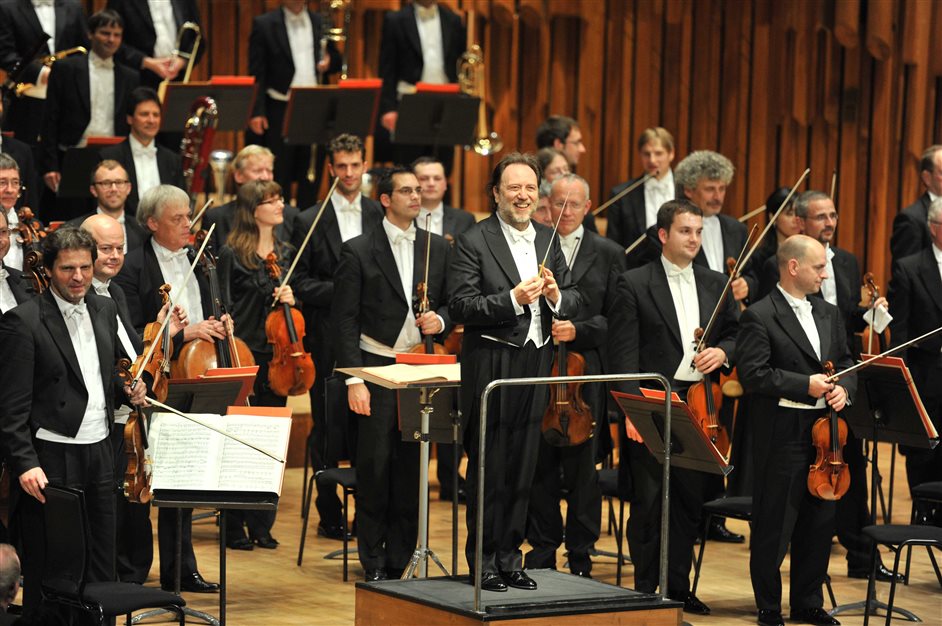
Barbican audience eavesdrop on LSO rehearsal

Berlioz Romeo and Juliet

Olga Borodina mezzo-soprano
Kenneth Tarver tenor
Evgeny Nikitin bass-baritone
London Symphony Chorus
London Symphony Orchestra

Valery Gergiev conductor


13 November 2013, Barbican Hall, London
************

Valery Gergiev is taking his London Symphony Orchestra for another dash through a chunk of repertoire.  This time it's Berlioz for the Gergievation, with over three nights reeling off concerts featuring Harold in Italy, Romeo et Juliette and the Symphonie Fantastique respectively.

Valery Gergiev
No, wait.  It's better than that.  Try this for an early November all-Berlioz schedule:
6th: Romeo and Juliet at London's Barbican
7th: The Damnation of Faust at Barbican
8th: Symphonie Fantastique at Brno, Czech Republic
9th: Symphonie Fantastique at St Poelten, Austria
10th: Symphonie Fantastique at Essen, Germany
11th: rest day (phew!)
12th: Harold in Italy at Barbican
13th: Romeo and Juliet again at Barbican
14th: Symphonie Fantastique at Barbican
15th: rest day
16th: Symphonie Fantastique in Paris
17th: Romeo and Juliet in Paris

Does this make for good music making?  Maybe by the time they get to Paris on the evidence of this performance.  I was trying them out with the second performance of Berlioz's magnificent Romeo and Juliet at the Barbican.  As is well known, Berlioz adored Shakespeare.  His response to Romeo and Juliet was as original as it was successful.  He called it a symphony and it is the central orchestral movements that carry the main weight fo protraying the play.  Feeling it pointless to try and set chunks of dialogue to music he framed the work in a vocal prologue and finale for chorus and two soloists.

Having recently heard Beethovenian Brahms now it was the turn to hear Berlioz under the Beethoven influence.  And what great writing this is.  Successive orchestral sections on the Capulet Ball, Balcony Scene, Queen Mab, Juliet's Funeral Convoy and finally Romeo at the Capulet's Tomb.


Olga Borodina
Olga Borodina left one wanting more of her luxury voice and Kenneth Tarver handled  his Queen Mab solo with an ideal feather-light touch.  Evgeny Nikitin by contrast sounded a little out of his comfort zone but the choruses were generally excellent.

With the stage draped in microphones for the planned disc from these concerts, was Gergiev's attitude to balance more thinking of the recording than the live performance?  At the gorgeous bursting forth as the small chorus describes the Balcony Scene in the Prologue, the orchestra completely swamped the voices.  A major failing for those of us in the hall, but easily fixed at the mixing desk later. 

What a curious evening's music making this was.  Gergiev's legendary grip only revealed itself in a riveting performance of Juliet's Funeral Convoy.  But for the most part it felt tentative; part final rehearsal, part public concert, part studio recording session.  How Chailly's recent super-prepared Brahms contrasted with this work-in-progress Berlioz.  

Saturday, 2 November 2013

Kavakos and Chailly bring rapturous close to Gewandhausorchester residency

Brahms Violin Concerto in D, Op. 77
Brahms Symphony No 4 in E Minor, Op. 98

Gewandhausorchester Leipzig
Riccardo Chailly
conductor 

Leonidas Kavakos violin

30 October 2013, Barbican Hall, London
*************

The four concert Brahms cycle presented by Ricardo Chailly and his Leipzig Gewandhaus Orchestra over the last week concluded on Wednesday with the same exalted levels of musicianship as the previous evenings.

Which is the greatest romantic violin concerto?  Well the Brahms sits at the top or high on anyone's list.  From simple opening to thrilling acceleration into the march rhythm coda in the finale, this concerto rather tends to knock all comers for six. How would Leonidas Kavakos fare after his patchy participation in last week's Double Concerto? 
Leonidas Kavakos

Well, it was happily an experience of an entirely different order. The Gewandhausorchester opened the concerto with quiet simplicity and a very broad tempo.  From his first entry Kavakos was precise and hyper-sensitive to his every note and Chailly the most intensely collaborative of conductors. This culminated in a daringly broad but completely riveting cadenza of the first movement, delivered to a raptly silent Barbican.  The orchestra re-entered rolling out the most fabulous of sonic magic carpets while Kavakos' violin soared over the top.  Perfection.

The Andante that followed reminded us that other great soloists were in the hall.  The Gewandhausorchester's principal oboe, not for the first time during this Barbican residency,  opened with a ridiculously creamy solo.  It was something of a disappointment when the violin had to take over the melody.  The entire woodwind section of the Gewandhausorchester play with a distinctive group sound: rich, even plummy, and with a heightened expressiveness that constantly brings to mind the human voice.

And we should have known that anyone who, like Kavakos, has played Paganini's own 18th century Guarneri violin (nicknamed "Il Cannone"!), would be in touch with his demonic side.  The Allegro finale abounded in gypsy abandon and thrilled to the end.  Together with Volodos the previous week, this Brahms cycle has featured two soloists in the very top bracket.

After we had recovered during the interval, these Leipzig evenings concluded with Brahms' most taught and tense symphony - the Fourth.  Not one to loiter to long over an interlude, Chailly's directness brought huge emotional drive to the first movement's climax with the french horns implacable.  By contrast, the famous flute solo in the Allegro energico was intensely expressive, indeed delivered in a flexible almost operatic style in striking contrast to the streamlined approach to the rest of the Passacaglia finale.  A thrilled Barbican audience acclaimed this wonderful orchestra's achievement.


Ricardo Chailly
Looking back over these concerts, this was clearly a great orchestra at the top of its game.   The level of preparation of the symphonies was also exceptional.  Maybe in London we are a touch too prepared to accept our orchestras winging it a little?  This Leipzig orchestra demonstrated the benefits of having a clear and well rehearsed conception of the work, combined with focus and verve on the night.

Then there are the virtues of Chailly's Brahms: mid-weight, lithe and sleek - combined with the tone, transparency and balance of this Leipzig band.  This delivered the most spectacular benefits in the First Symphony which can get a bit bloated in other conductor's hands.    

And ironically Chailly's overall directness of utterance and refusal to slacken the pace delivered some of its biggest payloads at the moments where there was pause for thought.  The most prominent of these were the solos from the woodwind in the andantes of the First and Fourth Symphonies, and Volodos and the orchestra together at the end of the Second Piano Concerto's Andante.  And then there was Kavakos and the Gewandhausorchester in the close of the Violin Concerto's first movement; a transcendant moment beyond criticism.

Wednesday, 30 October 2013

Volodos and the Leipzig Gewandhaus Orchestra continue Brahms-fest

Brahms Piano Concerto No 2 in B flat major, Op. 83
Brahms Symphony No 2 in D, Op. 73
 

Gewandhausorchester Leipzig
Riccardo Chailly
conductor
Arcadi Volodos piano


23 October 2013, Barbican, London
**************
The Chailly/Leipzig Gewandhaus Orchestra Brahms cycle continued on Wednesday with a hugely impressive combination of the 2nd Piano Concerto and 2nd Symphony.

The first thing to note (again) of Arcadi Volodos is his musicality.  He appears a natural chamber musician, listening intently to the orchestra’s contributions and responding, as alive to the meditative moments as those of high drama.  Deep into the great slow movement he and Chailly brought the music into a trance-like state, and elsewhere he embellished the solo cello line delicately.  That famous cello solo in the Andante sounded a trifle flat and thin to me.  The french horns also had some entries to forget.  But as with the previous night there was much to enjoy from the Gewandhausorchester, not least the satin sheen that the strings summoned up in the mystical moments of the first movement.
Arcadi Volodos accepts his triumph at the Barbican

Volodos of course also possesses one of the piano world’s most marvellous mechanisms, and dispatched whole passages of Brahms’ famously tortuous writing with outrageous aplomb.  His double-speed race to the conclusion of the scherzo formed a pendant with the orchestra’s similar speed up to conclude the Brahms First Symphony the night before.  It is to be hoped that Volodos continues to appear regularly in London.  He is simply one of the most gifted and interesting pianists alive.

After the interval the Brahms symphony cycle continued with his Second, written in a more pastoral vein than the Beethoven-on-steroids First. Having agonised for 20+ years over his first, the Second was delivered in under a year.   This is Brahms’ most lyrical symphony but also contains some of his most exhilarating moments.  Long a bit of a Cinderella symphony for me, I finally made friends with it earlier in the year so this concert was not to be missed. 


All the quality and preparation from the previous evening were again in evidence here.  The french horns were back on form, the second violins were flexing their muscle in the vigorous development sections, and the interpretation was again excellently rehearsed and shaped.  The finale was exhilarating in its panache and precision.  To hear such volume and power combined with a continuously translucent and balanced sound was a marvel.  


But don’t seek this orchestra out for any Hungarian Dances.  Whether it was the interventionism of Chailly or the disdain of an orchestra in pursuit of more cultured things, this First Hungarian Dance of Brahms joined the long history of encores that added nothing but subtracted a little from the memory of a Brahms evening of the first rank.
Chailly and the venerable Gewandhausorchester in the Brahms 2nd Symphony


Tuesday, 29 October 2013

Chailly's Brahms cycle opens at the Barbican

Brahms Double Concerto in A Minor, Op. 102
Brahms Symphony No 1 in C Minor, Op. 68
 

Gewandhausorchester Leipzig
Riccardo Chailly
Gewandhauskapellmeister
Leonidas Kavakos violin

Enrico Dindo cello

22 October 2013, Barbican, London
*************

One of the highlights of this London season is the Brahms Symphonies and Concertos cycle of Ricardo Chailly and his Leipzig Gewandhaus Orchestra.  This orchestra is one of Europe’s most venerable with a history stretching back over 200 years.  Along the way it also has connections  to Brahms himself via Arthur Nikisch who directed the orchestra's first Brahms cycle in 1913/14 and who Brahms heard conduct his symphonies.  

Johannes Brahms
Cellist Enrico Dindo
Concert 1 of the 4 started with the Double Concerto and First Symphony.  Leonidas Kavakos and Enrico Dindo were the intermittently engaging soloists in the concerto, and forcefully projected the heroic elements in the score.  Kavakos I have heard before but Dindo was new, bringing a strong sense of personality to his playing and highlighting the feeling of recitative and aria that underpins much of the writing.  Less successful were the more chamber aspects of this work.  The orchestral contribution was very fine as we have come to expect from previous visits, although the woodwind sounded unusually distant relative to the strings and soloists.  A conscious effect?

"I shall never write a symphony" Brahms stated, aged 37.   And the First Symphony had a famously long gestation period.  It was all Beethoven's fault.  "You've no idea what it feels like with such a giant marching behind you" he said.  Nevertheless after 21 years and much encouragement, this majestic work was premiered.

Chailly’s Brahms is highly distinctive.  Not for him the dense, monumental effects of others.  His hallmarks are a sound of shape, transparency,  rhythmic spring, and strong onward momentum.  This performance of Brahms' First Symphony was clearly very well rehearsed.  The orchestra and conductor have just released a recording of the 4 symphonies and are in the middle of touring them to London, Vienna, Paris etc… At times Chailly exaggerated the indicating of entries from sections, as if to say “Look what a delicious detail we have drawn out here!”  But I should not be ungrateful.  There were frequent moments when the ear marvelled at a neatly rounded off phrase here, a smooth gear change there.  All was targeted towards maximising the transparency and balance of the sound, revealing detail and lifting the rhythm.  The pizzicato from the eight double basses was as notable as their wonderful growling pedal notes.  The sound from the string sections was at times so smoothly and sumptuously toned it seemed to be lifting the orchestra into a realm of Ideal Brahmsian performance.  

There were three moments that made the jaw drop.  In the thick of the first movement’s tumultuous development the sequence of gleaming entries thrown amongst the various string sections shone like silver. Then the great melody of the finale sounded as fresh as the day it was written. And the glorious coda?  Well this delivered the night’s biggest thrill when the orchestra accelerated dramatically into the final pages.  

Ricardo Chailly and the Leipzig Gewandhausorchester at the Barbican

Saturday, 12 October 2013

Wilfred Owen's poetry silences the Festival Hall

Benjamin Britten: War Requiem (1962)

London Philharmonic Orchestra 
Vladimir Jurowski conductor 
Evelina Dobraceva soprano 
Ian Bostridge tenor 
Matthias Goerne baritone 
Neville Creed conductor (chamber orchestra) 
London Philharmonic Choir 
Trinity Boys Choir

Royal Festival Hall, London 12 October 2013

*****************
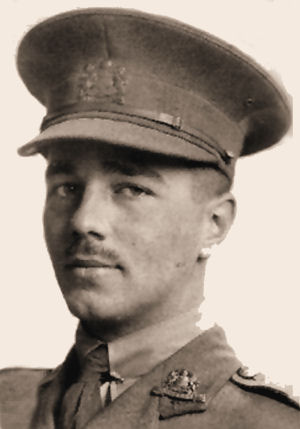
Wilfred Owen

A solid evening's work from the LPO under Jurowski, even if it was not as searing as might have been expected.  On a first hearing, there was a nagging feeling this work is not more than the sum of its undeniably impressive parts.

There was much to admire, led by Wilfred Owen's moving First World War poetry which Britten ingeniously intersperses throughout the Latin Requiem mass.  In the Offertorium there was this stunning undercutting of the Biblical story of the sacrifice of Abram's son:

Then Abram bound the youth with belts and straps,
And builded parapets and trenches there,
And stretched forth the knife to slay his son.
When lo! an angel called him out of heaven,
Saying, Lay not thy hand upon the lad,
Neither do anything to him. Behold,
A ram, caught in a thicket by its horns;
Offer the Ram of Pride instead of him.

But the old man would not so,
but slew his son, -
And half the seed of Europe, one by one.


Very fine indeed were the two poetry soloists Ian Bostridge and Matthias Goerne, with Bostridge leading with his plangent voice and compelling fusion of melody and word. Vladimir Jurowski and Neville Creed directed with clarity and feeling.  Elsewhere the LPO chorus were well balanced without really taking flight, while the off-stage boys choir were virtually inaudible at critical moments.

It was left to Bostridge (unforgettable in "Move him into the sun..." and the Agnus Dei) and Goerne to deliver the high points, not least in the closing of the Libera Me and its call to sleep.  This work delivers a powerful message of pacifism and Jurowski might have held the final silence for longer than the 20 seconds he chose.

Wilfred Owen's poem "Strange Meeting" featured in the Libera Me 


Sunday, 6 October 2013

Vitality and verve from Orchestra Mozart

Beethoven: Leonora Overture No. 2, Op. 72a
Beethoven: Piano Concerto No. 2 in B flat, Op. 19
Beethoven: Symphony No. 4 in B flat, Op. 60


Orchestra Mozart

Bernard Haitink, conductor
Maria Joao Pires, piano

Bernard Haitink

Royal Festival Hall, London, 1 October 2013
***************

In the end Artistic Director Claudio Abbado was not able to join the Orchestra Mozart due to health concerns.  But impressive back-up came from the equally fine conductor Bernard Haitink and a splendid partner in soloist Maria Joao Pires.

This concert was a bizarrely managed bit of scheduling by London's Southbank Centre in which only the presence of Orchestra Mozart itself was a constant.  It started with an attractive Haydn/Mozart/Beethoven programme which then became all-Beethoven.  Then Pires dropped out as soloist to be replaced by Martha Argerich.  Abbado was subsequently forced to cancel his concerts for 2 months, including a tour of Japan.  Argerich simultaneously cancelled and Haitink stepped in at short notice with the suddenly available again Pires.

Orchestra Mozart is a chamber ensemble formed in 2004.  With Abbado as Artistic Director and Diego Matheuz as Principal Guest Conductor (he recently took up the same position with the Melbourne Symphony) it does not want for star conductors.  No doubt with this influence it also plays with the front rank of today's soloists.  And among its own ranks are some famous names such as Wolfram Christ, previously principal viola with the Berlin Philharmonic Orchestra.
Wolfram Christ


Pires, a gold standard these days in the classical piano concerti, was in vintage form in the Beethoven Second Piano Concerto after a slightly hard edged start.  Her finely pitched delivery of the hanging notes at the close of the slow movement was mesmerising.  


With youth and technical prowess combined, the Orchestra Mozart strings brought great verve and vigour to their playing, not least in a thrilling Egmont Overture served as an encore.  The woodwind added fine individuality in their contributions to leave only an overall sense that the darker aspects of the works were slightly underplayed.  However the sunny Fourth Symphony was a delight from beginning to end, and there was no want of drama and heroic Beethovenian struggle in the overtures that book-ended the concert and which Haitink shaped with a sure hand.  This season is Haitink’s 60th as conductor, during which he will turn 85.  Long may orchestras benefit from his wisdom. 

Pianist Maria Joao Pires

Martha Argerich - not available

Friday, 2 August 2013

Prom 20 - Stemme's Brunnhilde crowns a triumphant Ring from Barenboim and the Staatskapelle Berlin

Wagner: Götterdämmerung (semi-staged)
 
Nina Stemme soprano (Brünnhilde)
Andreas Schager tenor (Siegfried)
Mikhail Petrenko bass (Hagen)
Gerd Grochowski baritone (Gunther)
Anna Samuil soprano (Guntrune/ Third Norn)
Johannes Martin Kränzle baritone (Alberich)
Waltraud Meier mezzo-soprano (Waltraute/ Second Norn)
Margarita Nekrasova mezzo-soprano (First Norn)
Aga Mikolaj soprano (Woglinde)
Maria Gortsevskaya mezzo-soprano (Wellgunde)
Anna Lapkovskaja mezzo-soprano (Flosshilde)
Royal Opera Chorus
Staatskapelle Berlin
Daniel Barenboim conductor 


Royal Albert Hall, London, 28 July 2013
*******************
To start at the end, this quite magnificent presentation of Wagner’s Der Ring des Nibelungen culminated in a spine-tingling Immolation Scene from Nina Stemme’s Brunnhilde.  Positioned at the Albert Hall organ loft high above the glorious Staatskapelle Berlin, she approached an ideal for this role.  Her technique and projection was rock solid combined with her now customary warmth and insight.  It was a resounding send-off: she instructs a funeral pyre be erected for the murdered Siegfried, having attained new self-awareness bids compassionate farewell to her father Wotan, and rides her horse Grane into the fire. 
Barenboim and Waltraud Meir as Waltraute

Barenboim then led his orchestra through the final golden pages of Wagner’s 16 hour, 4 opera journey, the Staatskapelle yet again producing thrilling levels of tonal depth and expressiveness.  As the final chord died away, Barenboim’s hand was held aloft and the packed Albert Hall sat in silence for a full 15 seconds.  Then thunderous acclaim.

Barenboim addressed the audience, praising it for its rapt silence throughout The Ring as well as giving a special farewell to the Staatskapelle’s concertmaster – Wolf-Dieter Batzdorf - who was retiring after 40 years.

Before then another luxury cast had joined Stemme in bringing Wagner’s flawed but great opera to life.   It is fundamental to understanding and indeed tolerating the unique musical achievement that is The Ring that its libretto was in fact written backwards.  Wagner first wrote the libretto of an opera to be called Siegfried’s Death.  He then expanded it to describe Siegfried’s back story as two operas which ultimately became Siegfried and Gotterdammerung.  But Wagner then was moved to include the story of Brunnhilde, which added The Valkyrie to the collection of operas.  Then finally he wanted to include a fuller version of the story of Wotan, which added the preliminary evening of The Rheingold.    While Wagner re-edited the full four opera libretto as a whole this backwards expansion explains why there are some inconsistencies and also why the audience is often being told things it already knows.  
Andreas Schager and Nina Stemme in the Prologue

So, Twilight begins with an extended Prologue which goes over some previous happenings.  Siegfried and Brunnhilde reprise their rapture from Act 3 of Siegfried and the Norns mull over the whole storyline of The Ring.  Thankfully Wagner's music is little short of genius, with Siegfried and Brunnhilde's scene and Siegfried's Rhine Music musically overwhelming.

This famously awkward and contradictory conclusion to The Ring was then greatly helped by Andreas Schager’s physically plausible and dashing Siegfried, channelling Errol Flynn, and Mikhail Petrenko’s darkly attractive Hagen who brought glamour and dramatic impact to the villain’s role. Both were ably supported by Anna Samuil as Gutrune and Gerd Grochowski as the spineless Gunther. 

Waltraud Meier as Waltraute created one of the evening’s big highlights with a riveting dialogue with Brunnhilde in Act 1.  She drew the listener into her long narrative of the plight of the gods, and brought a huge emotional charge to her distraught departure from the rock, having failed to convince Brunnhilde to return the ring to the Rhinemaidens. 

Throughout this performance of The Ring, the central revelation has been the commitment and quality of sound of the Staatskapelle Berlin.  Combined with the extraordinary potency and drama of Wagner’s music, listening to them was as continuously engaging and eloquent as the score itself.  Some slightly tired entries towards the end took nothing away from their conquest of the Albert Hall.  No one who attended these Wagner evenings will ever forget it.


The Royal Albert Hall, awaiting Act III

Peter O'Byrne