Saturday, 7 December 2019

Dvorak and Beethoven from the Hungarians

Dvořák Legends, Op 59 No 5; Ukolebavka (lullaby) from Four Choruses, Op 29 No 2; Slavonic Dance, Op 72 No 8 
Beethoven Piano Concerto No 5
Dvořák Symphony No 8
Budapest Festival Orchestra
Iván Fischer, conductor
Sir András Schiff, piano
Barbican Hall, London, 30 November 2019
*************
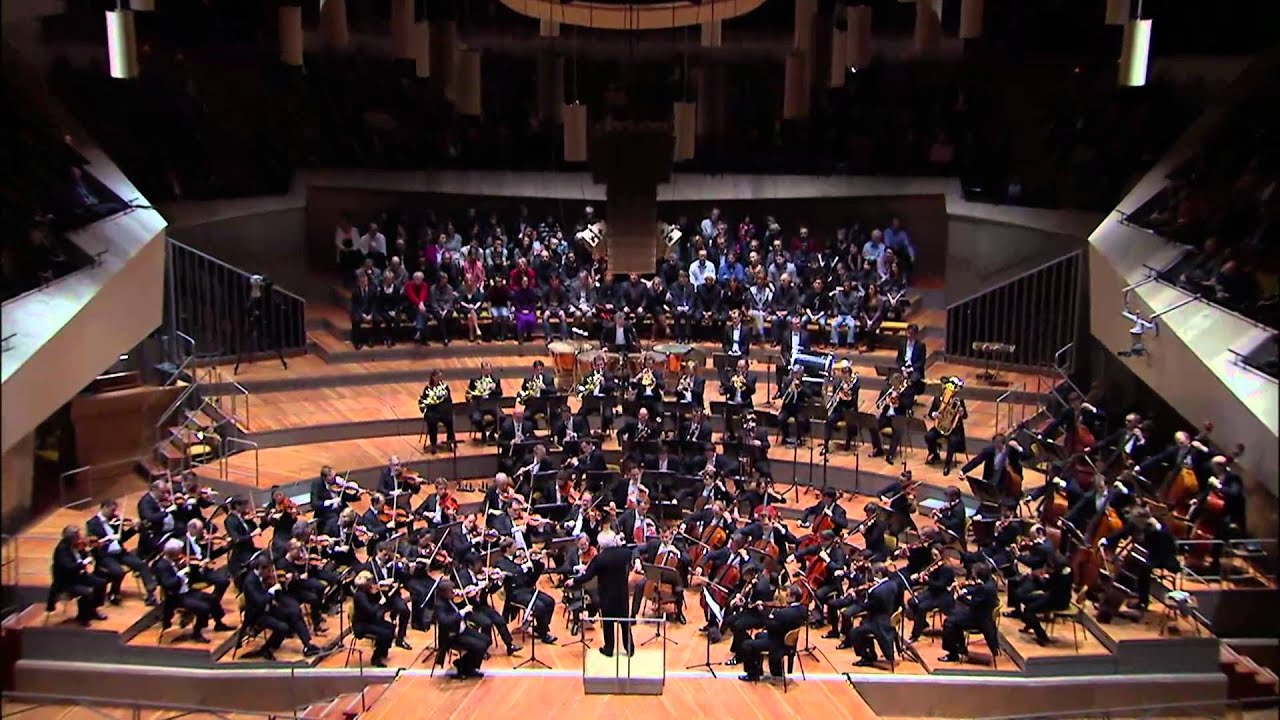
The Budapest Festival Orchestra never fail to delight, and under the inspired directorship of Ivan Fischer, this proved the case again.  With 6 double bases arrayed at the back, the string sound gleamed supported by rich tonal depth during the opening Dvorak Legend

There is nothing this orchestra can't do, so they then stood and delivered an excellent a capella rendition of a Dvorak lullaby for chorus.  Sensitive, balanced and a perfect contrast, and yet another example of the Budapest players' capacity to deftly enliven the traditional classical concert.

Joined by the ultra authoritative musicianship of András Schiff, the Beethoven Emperor Piano Concerto sounded as fresh as the day it was written.  The orchestra continued it's plush sound while Schiff consistently brought out the harmonic writing to surprise the ear.  How simple Schiff made other soloists sound with only eyes for the right hand melody.  The outer movements were thrilling in their structural command and the clarity of his vision.  Although no single approach can encompass this work, and perhaps in the slow movement Schiff's more prosaic approach missed that last ounce of poetry.

Schiff has become more of a cult figure with every year, and he treated us to an extended encore - the first movement of Beethoven's Waldstein Sonata no less - with the repeats.  Rhythmically electrifying and a little showy in its "look at me" internal highlighting.  But it was an encore after all.

Finally the sunny Dvorak 8th Symphony.  It is an episodic work compared to the 7th or 9th, but what episodes.  The Budapest orchestra savoured every one with great care and the flute and oboe contributions were particularly delicious.  The brass get their way at the end but this orchestra always plays with exemplary balance, so it was a triumph with their fellow players.  Long may this orchestra continue.

Saturday, 4 May 2019

Janine Jansen scales the heights

Brahms: Violin Concerto
Bruckner: Symphony No.3 (vers. 1877) 
London Philharmonic Orchestra
Vladimir Jurowski conductor
Janine Jansen violin


Royal Festival Hall, London, 3 May 2019
**********************
The concert was billed as "Alpine Journeys", but inevitably the Festival Hall allowed not a bit of mist to develop around all those Brucknerian ostinati.  Jurowski's Bruckner was controlled, sculpted and with that acoustic, not a bit abrupt. Some of this effect may have come from the 1877 version of the symphony presented here by Jurowski.  The last movement in particular had more flow in the later 1889 revision. 


The frenzies were quite ferocious in the Scherzo and Finale but the polkas and landlers had no spring to them, and overall the effect was a little too literal, if thrillingly exact.

The real vistas of the evening came from Janine Jansen's Brahms.  The Brahms Violin Concerto, in a neat bit of programming, was premiered in 1879 and so nearly contemporaneous with the Bruckner.  Jansen plays with real muscle but is distinguished by her responsiveness to the music her fellow musicians, and her ability to inflect rhythm and tone from note to note.  Her high lines are clear but delicate and the lightness of tone brought to mind Ravel in the midst of Brahms.  Now that marks out a master violinist.


Janine Jansen


Saturday, 16 March 2019

Arcadi Volodos plays it quiet

Schubert Piano Sonata in E major, D157
Schubert Six moments musicaux, D780
Rachmaninov Prelude in C-sharp minor, Op 3 No 2
Rachmaninov Prelude in G-flat major, Op 23 No 10
Rachmaninov Prelude in B minor, Op 32 No 10
Rachmaninov Zdes'Khorosho, Romance Op 21 No 7 (arr Volodos)
Rachmaninov Serenade, Op 3 No 5
Rachmaninov Etude tableau in C minor, Op 33 No 3
Scriabin Mazurka, Op 25 No 3
Scriabin Caresse dansée, Op 57 No 2
Scriabin Enigme, Op 52 No 2
Scriabin Flammes sombres, Op 73 No 2
Scriabin Guirlandes, Op 73 No 1
Scriabin Vers la flamme, Op 72

Arcadi Volodos piano

Barbican Hall, London, 7 March 2019
******************

As a pianist, Arcadi Volodos, is very much sui generis. His pianism of such quality that it is a wonder in itself, as much for its poetic as technical capacity.

He performed the early incomplete D157 Sonata of Schubert with enormous care and a kind of radiant inwardness which made a maximum case for this sonata.  Most memorable was the hypnotic Andante.  Then began what must be one of the slowest performances of the Moments Musicaux in London recital history.  These are magical pieces, and Volodos' willingness to truly play piano was admirable.  But the effect was ever so slightly soporific.

The sequence of Rachmaninov preludes may have been expected to change the tone, but no.  Reflective, exquisitely weighted performances continued.  The B Minor Prelude Op 32/10 could have been written for Volodos' special qualities.  His velvet touch and deep musicianship turned its 5 minutes into a searching, epic experience.  But was not some drama missing?

Scriabin's miniatures are as important as Rachmaninov's to the piano repertoire and here Volodos' apparently limitless palate of colours and intonation spoke authentically.  There is always a question of how to shape these pieces.  Are they short, incomplete statements, or rounded coherent journeys? Volodos gave us supple pianism, but favoured the moment over the whole.

All of which led us to the inexhaustible mysteries of Vers la flamme (Towards the flame).  In many ways the culmination of Scriabin's mystical beliefs, the build towards the flames of destruction (of music? of the world?) was compelling as Scriabin's roulades of tremolos and harmonies rounded off the advertised programme.

This recital certainly did not catch fire.  However it was a fine meditative experience, eavesdropping on a pianist producing magical sounds, while stuck in a slow inward mode throughout.

Arcadi Volodos


Sunday, 3 March 2019

Radu Lupu acclaimed in Beethoven

Beethoven: Coriolan Overture
Beethoven: Piano Concerto No.4
Rachmaninov: Symphony No.2 
Philharmonia Orchestra
Paavo Järvi conductor
Radu Lupu piano

Royal Festival Hall, London 3 February 2019
****************

Based on decades of exalted musicianship, Radu Lupu is very much in the cult-status category in Europe.  The rarity of his visits to London ensured a packed Festival Hall for his concerto, and also some empty seats after the interval.

His musical prestige has for long also been a source of pride for his native Romania and this concert was accompanied by a foreword from the Romanian government during its current 6 month presidency of the Council of the EU.

Not that all of this has in any way affected the man. This evening will live long in the memory for Radu Lupu's direct, unaffected truth-telling. His physical presence on stage with his straight backed chair that of a genial monk, occasionally glancing at his figures with mild surprise they'd hit a wrong note, generally engaged with the music and his colleagues in the orchestra.

Lupu's particular magic was a wonderful match for Beethoven's Fourth Concerto.  Happy to play genuine pianissimos his approach emphasised the delicacy and clarity of the music, far removed from the thicker sonorities that are the norm.  His soundworld remains a delight from its distinctively pearly treble notes to the beautifully weighted harmonies of the bass.  Following enthusiastic acclaim, a perfectly judged encore of Brahms' Intermezzo Op 117/1 followed.

Beside all this Paavo Jarvi's approach to the Beethoven Coriolan Overture was studied rather than dramatic and the more successful Rachmaninov built up in slabs of bold, direct interpretation. A refusal to linger may have tempered the emotion at times, but of course this symphony does not lack for that.  The Philharmonia's woodwind did not have their most characterful night, but the strings and brass played with great depths of tone and drama, and what can be a wayward symphony developed towards a very satisfying sense of culmination at the end.
Radu Lupu

Saturday, 2 February 2019

Fast Wagner

Wagner: Die Walküre
Stuart Skelton tenor, Siegmund
Markus Marquardt bass, Wotan 
Ruxandra Donose mezzo-soprano, Sieglinde 
Stephen Milling bass, Hunding
Claudia Mahnke mezzo-soprano, Fricka
Svetlana Sozdateleva soprano, Brünnhilde

London Philharmonic Orchestra
Vladimir Jurowski conductor
Royal Festival Hall, London 27 January 2019
****************
How often does Act 2 of Die Walküre trump the outer Acts?  This is what happened here where Vladimir Jurowski's fast paced directness, Markus Marquardt's subtle Wotan and Claudia Mahnke's strongly characterised Fricka made for an effortless dramatic experience.  And there to cap it all was Stuart Skelton's superb Siegmund.  The scene when Brunnhilde announces Siegmund's impending death in battle was hypnotic, with Skelton achieving a lyrical expressiveness beyond most.

Skelton was no less wonderful in Act 1, despite Jurowski's almost comically fast speed for Wintersturme.  His cries of Walse! Walse! were thrilling.  In Act 3, the valkyries were vocally uneven, not helped by their positioning in the choir gallery behind the orchestra. The biggest loser from this bit of semi-staging was Sieglinde who had to sing her climactic outpouring of admiration for Brunnhilde in Act 3 from the very back of the stage.

Svetlana Sozdateleva was a solid Brunnhilde, but not entirely on top of the characterisation.  Juroswki's London Philharmonic blended well with the voices, but was a little breathless and the Magic Fire Music at the end of the evening did not transport.  

Stuart Skelton and Ruxandra Donose


Saturday, 8 December 2018

Wagner in Melbourne

Wagner Die Meistersinger von Nurnberg

Michael Kupfer-Radecky Hans Sachs
Stefan Vinke Walther von Stolzing
Natalie Aroyan Eva
Warwick Fyfe Sixtus Beckmesser

Opera Australia Chorus
Orchestra Victoria
Kasper Holten director
Pietari Inkinen conductor

State Theatre, Melbourne November 2018
**************

What a pleasure to be back in the State Theatre with its glorious curtain, troubling acoustic echo, and a most satisfying production of Wagner's Meistersinger.

Seen by Wagner as a pair to his Tannhauser, both feature singing competitions with Die Meistersinger receiving extra lashings of German pride and nationalism. The conclusion where Hans Sach (up until that point a sympathetic character) warns all and sundry of the dangers of nasty foreigners jars and the production tried to carve it out by flooding the stage in harshly cold lighting at that point.  Was the idea that it was not really part of the rest of the opera?  That we could leave it to one side?

The set was a monumental marble construction with traditional liveryman garb for the Mastersinger members.  Walther's biker look seemed a bit odd but he is meant to be the outsider, albeit an aristocractic one.

The production was well sung across the board, with Warwick Fyfe's Beckmesser strong in voice and characterisation, and Michael Kupfer-Radecky projecting humanity and doubt as Hans Sachs wrestles with his demons.  It's coup de theatre came at the end with a roundly annoyed Eva storming off stage as Walther (who had promised to run away with her) is convinced to join the mastersingers men's club and respect German tradition.

This was at the end of the glorious 2 hour Third Act, which takes off to a whole other level of musical quality after Acts 1 and 2.  One among so many examples of Wagner's overwhelming artistic genius.

Eva before Walther fails her
The State Theatre's curtain


Sunday, 16 September 2018

Alexander Karpeyev debut disc


Russian Emigré Composers

Prokofiev Visions fugitives Op.22 Nos. 1,4,8,9,11,14,15,18,19
Medtner Sonata-Ballade Op. 27
Grechaninov Op. 78/1-2, Op. 61/2,5,6
Rachmaninov Nyne otpushchayeshi from the All-Night Vigil Op. 37
Fragments (1917)
Etude-Tableaux Op. 39/7
Stravinsky Three Movements from Petroushka


Students of this blog will recognize this as the disc of the recital that Alexander Karpeyev toured internationally during 2017, the anniversary of the 1917 Russian revolution.  This original and excellent programme features the composers who left Russia immmediately before or after 1917: Prokofiev, Medtner, Grechaninov, Rachmaninov and Stravinsky.

All the music is chosen to illustrate the ‘final flowering’ of these composers between 1910 and 1919.  After leaving Russia, maintaining a distinctive voice was not easy for any of them.  Each of the émigrés developed their own relationship to Russia after leaving.  Prokofiev returned home permenantly after 15 years living in France and the US.  Medtner settled in London while Grechaninov, Rachmaninov and Stravinsky ended up in the US.  All struggled to maintain their creativity after 1917.

Karpeyev is a Medtner specialist and the Sonate-Ballade Op. 27 grows with each listening.  The Finale is particularly winning with its rich melodic inspiration and glittering ornamentation.  The Grechaninov character pieces are all very well characterized, and the recital reaches the apex of its nostalgia for old Russia with a marvelous rendition of the "Nyne otpushchayeshi" from Rachmaninov’s All-Night Vigil and the Etude-Tableaux Op. 39/7 with – what could be more Russian – its climax of pealing bells.

The piano is in very good shape and the recording in St Bartholomew's Church in Brighton sets the piano at a slight distance in a resonant acoustic.  The airy sound does least favours to the Prokofiev Visions Fugitives.  Coupled with a romantic performance, the result is slightly unfocused.

The famous Stravinsky showpiece from Petroushka is given a dazzling performance, awash with colour and very strongly characterized.  There were many details I’d never heard before and the expressiveness was a welcome contrast to the famous speed-fest version from Maurizio Pollini.  Not that Karpeyev is exactly slow, just that the story-telling which is inherent in this score is given more space to weave its magic.

This recording beautifully captures Karpeyev’s qualities and sound world: virtuosity led by musicality of great poetry and refinement.  A very fine debut with no doubt more to come.  

Monday, 4 June 2018

Rattle says farewell to Berlin

Jörg Widmann: Tanz auf dem Vulkan (UK premiere)
Lutosławski: Symphony No.3
Brahms: Symphony No.1


Berliner Philharmoniker 
Simon Rattle conductor

31 May 2018, Royal Festival Hall, London *************
In 2018, Simon Rattle's tenure at the helm of the Berliner Philharmoniker comes to a close,  Rattle heads to the London Symphony Orchestra and Russian conductor Kirill Petrenko takes his place in Berlin. 

The last London concert for Rattle and the Berliners was a snap-shot of his life in Berlin.  Admirably championing newer music while accommodating the traditional core repertoire of this famous orchestra in intelligent if not life-changing interpretations.

No sooner had the orchestra finished tuning when it launched into a jazzy theme and on rushed Rattle with stagey expressions of annoyance.  Then the "proper" music was started.  Only at the end does the jazzy music return and conductor walk off stage while the orchestra finishes.  All nicely done in this short new work from Jörg Widmann: Tanz auf dem Vulkan ("Dance on the Volcano").

Then it was the Polish composer Witold Lutoslawski's Third Symphony, premiered in 1983.  It is a very fine work structured around a repeated motif with clear references to the famous opening of Beethoven's Fifth Symphony.  This returns to divide up the sections of the 30 minute piece, many of which thrillingly use "aleatory" writing where the players have freedom to play their sections at their own speeds.  It all culminates in an almost tonal climax of considerable emotion.  The performance was of great poise, clarity and virtuosity.

Johannes Brahms
And then to Brahms, his first symphony certainly not his best but whose outer movements pack a great emotional punch.  From the start the refinement of the orchestral sound was glorious, the strings very weighty and built from the double basses up in classic Brahmsian fashion.  Were the strings a little too numerous?  Perhaps at times they seemed to overpower the woodwind.  And then there was a developing concern that it was all a little rounded and cultured, albeit in a super-refined way. 


But no, we had simply been set up for the coda, the whole concert waiting for the final minutes when we were taken to another level and treated to a truly extraordinary sound: blended, bronzed and with seemingly infinite reserves of tonal depth and sonority.  It was engulfing, uplifting and more than a little awe-inspiring.  Thank you Berliner Philharmoniker.
Sinon Rattle and the Berliner Philharmoniker

Sunday, 8 April 2018

Evgeny Kissin hammers the Hammerklavier

Beethoven Sonata No 29 in B flat Hammerklavier

Friday, 16 February 2018

Argerich, Maisky and Jansen at the Barbican

Friday, 9 February 2018

Tosca

Puccini: Tosca
Floria Tosca: Adrianne Pieczonka
Mario Cavaradossi: Joseph Calleja
Baron Scarpia: Gerald Finley
Spoletta: Aled Hall
Cesare Angelotti: Simon Shibambu
Sacristan: Jeremy White
Sciarrone: Jihoon Kim 
 
Royal Opera Chorus 
Orchestra of the Royal Opera House
Dan Ettinger conductor 
 
7 February 2017, Royal Opera House Covent Garden (live broadcast)
***********************
This featured some fine singing from Calleja in particular and an impressively strong characterisation of Tosca from Pieczonka in an otherwise tradiitional production.  But in the cinema the orchestra was projected so forward as to overwhelm the singers and deafen the audience.  When the clarinet solo in e lucevan le stelle drowns out out Cavadorossi, it is time to complain. 

Saturday, 20 January 2018

Primary colours Verdi

Verdi: Rigoletto

Duke of Mantua Michael Fabiano
Rigoletto Dimitri Platanias
Gilda Lucy Crowe

Royal Opera Chorus
Royal Opera Orchestra
Director David McVicar
Revival Director Justin Way
Conductor Alexander Joel


16 January 2018, Royal Opera House, Covent Garden
***************
The plot of Rigoletto is not the last word in subtlety, nor much of a standard bearer for sexual equality.  And Justin Way's approach to the latest revival of David McVicar's Royal Opera production offered no escape.  The Duke of Mantua's court was a lurid place of debasement and sexual exploitation, providing maximum contrast with the innocence of Gilda fresh from her convent.  The sense of dread for her safety was very effectively underlined.  But later her subsequent acceptance and protection of the Duke in all his flaws made little dramatic sense given his plainly horrific behaviour.

Verdi's music is a non-stop delight, clearly one of his most successful scores.  The singing on the whole did not live up to its subtlety.  Dimitri Platanias's Rigoletto was a hugely impressive physical, menacing performance, entirely capable of revenge.  But vocally he projected the more sensitive aspects of the role less successfully.  Lucy Crowe's Gilda had vocal control, but was not fully inside the role. In Caro nome there was no sense of a girl's breathless anxiety, more a singer focusing on her vocal technique.   Michael Fabiano's Duke was by contrast very fine throughout, with a gleaming tone and great command of the stage.

Thursday, 7 December 2017

Recorder overload

Vivaldi Concerti La Notte, L'Inverno, La Pimavera, The Gypsy and the Priest, and RV40.
Works by Giovanni Bassano, Dario Castello, Tomasso Albinoni, Baldassare Galuppi, Guiseppe Tartini, Pietry Locatelli, Biagio Marini, Maurizio Cazzati.

Red Priest

Trinity Church Wimbledon, 21 November 2017
*********************

Red Priest have been a fixture on the Baroque circuit for 20 years, with their refreshing take on the music and the concert ritual itself.  Red Priest was of course the nickname of the flame haired composer Antonio Vivaldi.
  
It’s made up of harpsichordist David Wright, cellist Angela East, violinist Adam Summerhayes and Piers Adams on the recorder.  Amongst these Adams is clearly the leader, happily skipping between soprano, alto and bass recorders, fronting repertoire spanning all the Venetian greats from Vivaldi to Galuppi, much of it arranged for the ensemble.

The concert was the “Venice” instalment in this year’s Wimbledon International Music Festival as part of its "Musical Capitals" theme in 2017.  Despite the undoubted brilliance of Adam’s artistry on the recorders, the relentless recorder-led music lacked variety in the first half.  The performances did not seem to achieve either enough polish or enough fun, falling awkwardly in the middle.  It was a relief when Adam Summerhayes’ violin began to take on more solos as the evening continued.

On the whole the second half proved much more successful, featuring the ensembles rendition of the over-famous Spring concerto of Vivaldi with a healthy injection of fantasy, and culminating in a version of the same composer’s "Gypsy" Concerto given a “wild Romanian” take.

Saturday, 25 November 2017

Rattle champions Haydn

Wagner Prelude and Liebestod from Tristan and Isolde
Bartok Piano Concerto No. 2
Haydn An imaginary orchestral journey

London Symphony Orchestra
Denis Kozhukhin, piano
Simon Rattle, conductor

Barbican Hall, London 11 July 2017
****************
Simon Rattle’s commitment to Haydn’s genius produced a memorable Barbican night.  For him this was a reprise of a concert in Berlin stringing together movements from various Haydn works into “An Imaginary Orchestral Journey”.  This type of thing has also been successfully done to Rameau by Marc Minkowski.
The Esterhazy Palace, Haydn's long-term home


As well as giving a more prominent platform for part of the “7 Last Words of Christ”, Symphonies 64, 6, 46, 60, 45, and 90 were excerpted as well as The Creation, The Seasons and the obscure L'Isola Disabitata. There was some lovely moments of fantasy, not least when the little known mechanical organ took centre stage.  Haydn wrote 17 pieces for mechanical organs, one of which was featured here before Rattle paused proceedings to listen to these little constructions being broadcast unadulterated from various locations around the Barbican Hall. Somehow both arch and evocative all at the same time.
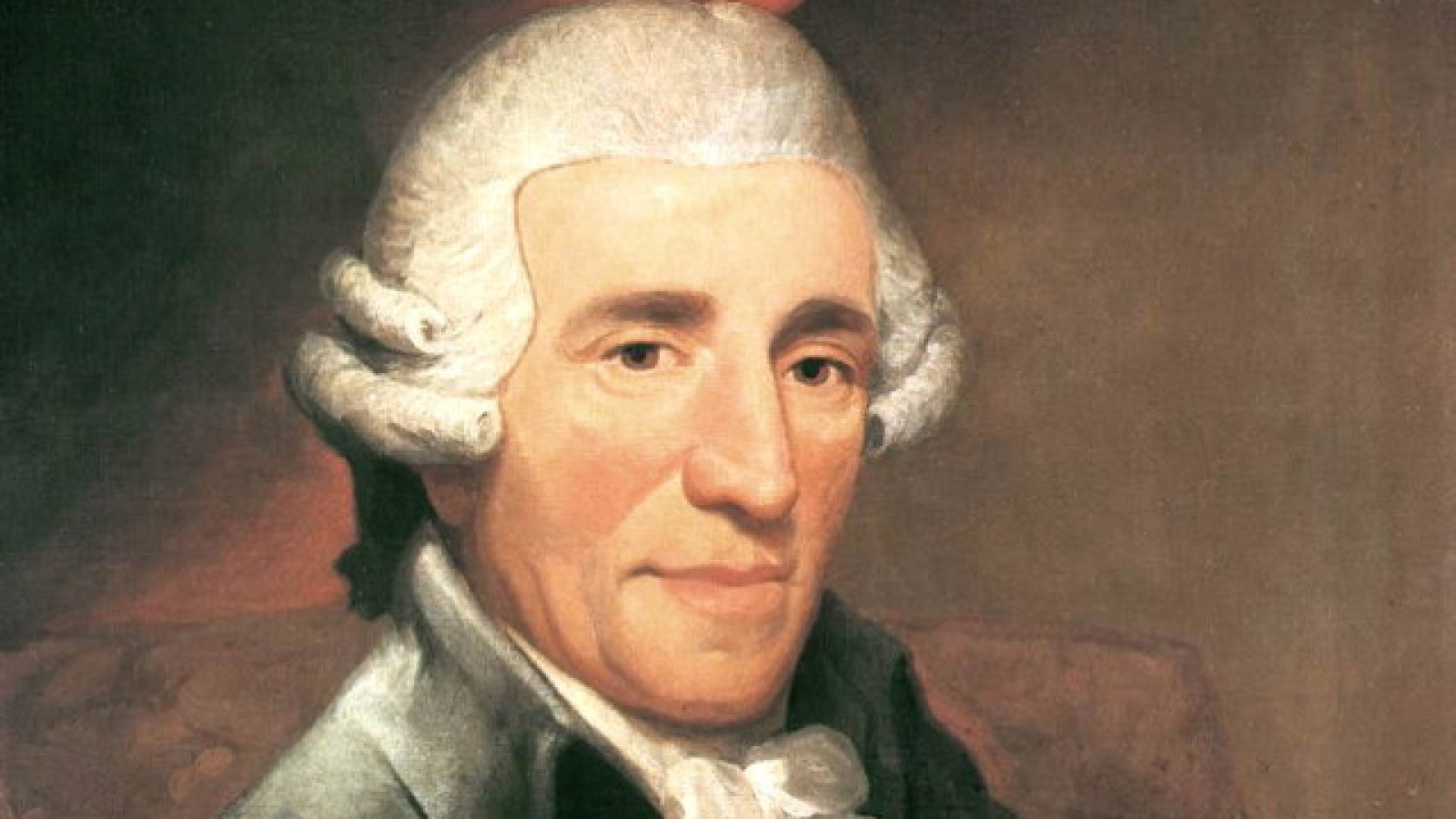
Joseph Haydn


Sunday, 20 August 2017

Michael Boyd's Debussy

Debussy: Pelléas et Mélisande

Pelléas Jonathan McGovern
Mélisande Andrea Carroll
Golaud Paul Gay
Arkel Brian Bannatyne-Scott
Geneviève Susan Bickley
Yniold William Davies
Doctor Dingle Yandell
Shepherd Joseph Padfield

Conductor Jac van Steen
Philharmonia Orchestra
Director Michael Boyd

Garsington Opera Festival, 1 July 2017
************************ 

Debussy's only completed opera is a special one, quite unlike anything else musically in the repertoire.  On an idyllic summer's evening at Garsington Opera on the Getty family estate it was the turn of director Michael Boyd to bring the symbolist opera to life.
Andrea Carroll as Melisande
The setting was an ornate old theatre, seemingly risen again from the bottom of the ocean. Boyd was inspired by old theatres he had seen in Detroit, left in a state of "gloomy, exquisite and overgrown decay".  So, perfect for Pelléas and it provided an inspired setting for a production which was otherwise refreshingly straightforward.

Jac van Steen was a steady hand for the wonderfully atmospheric score with its Debussian take on Mussorgsky and Wagner.  The orchestra had us all entranced, none more so than a woman nearby who spent the entire evening staring at the tympanist's every move.

Andrea Carroll was a very fine Melisande opposite Jonathan McGovern's solid Pelleas.  They were a youthful pairing with excellent support throughout the cast. The production's success was crowned as Acts Four and Five only increased in intensity, and lingered long in the memory.
Garsington Opera's temporary structure

Monday, 26 June 2017

Alexander Karpeyev in full bloom

Recital: "1917 The Final Flowering"

PROKOFIEV Vision Fugitives, Op. 22 Nos. 1, 3, 8-11, 14-15, 18-20
MEDTNER
Sonate-Ballade, Op. 27
GRECHANINOV
Prelude Op. 78 No. 1
Lullaby Op. 78 No. 2
Waltz Op. 61 No. 5
Reproche Op. 61 No. 6
Caprice Op. 61 No. 2
RACHMANINOV
‘Nïne otpuschayeshi’ from All-Night Vigil, Op. 37 (arr. Rachmaninov)
Fragments
Etude-Tableux, Op. 39 No. 7
STRAVINSKY
Three movements from Petrouchka (arr. Stravinsky)

Alexander Karpeyev, piano
Savile Club, London, 22 June 2017
*******************
2017 is of course the 100 year anniversary of the Russian Revolution.  A seismic event in so many ways, Russian music was forever changed also. 
Alexander Karpeyev

Russian pianist Alexander Karpeyev here gave a fascinating and satisfying programme built around works from around 1917 by Russian emigres.  All left Russia before or straight after the revolution, and had greatly varying relationships with their homeland afterwards.  

Some like Rachmaninov never returned.  Others like Prokofiev and Medtner did, not that they got along once back in their homeland.  "His playing was good, if a bit boring", the prickly Prokofiev wrote in his diary after a Medtner recital.

No such problems on this night.  Karpeyev has a burgeoning reputation as an interpreter of the period and at a sweltering Savile Club it was not hard to hear why.  Karpeyev's magnificent technique combined with a powerful artistic vision of each piece.  Medtner's Sonate-Ballade benefited greatly from this kind of advocacy and reached an engulfing conclusion.  Karpeyev, amongst other things, is the Artistic Director of the International Medtner Festival.

Rachmaninov, and - a composer new to me - Grechaninov were broadly aligned in their lush late-romantic sound worlds.  Karpeyev strongly characterised each miniature.  A particularly magical moment was a rarely heard piano arrangement of Nyne otpuschayeshi from Rachmaninov's All Night Vigil.  In the original the conclusion requires "octavists", especially low bases customarily found in Russian choirs who sing one octave lower than the normal bass voice.  The piano also concluded deep in its lower registers.

After the pealing bells of Rachmaninov's Opus 39/7 Etude-Tableux, we were left with that most thrilling of 20th century piano showpieces - the Three Movements from Petrouchka.  Stravinsky never thought much of the piano, considering it essentially a percussion instrument.  But what an exercise in rhythm it is, with a stupefying set of technical hurdles for the performer to jump.  Karpeyev's performance was technically spectacular but also brought out its musicality, with transitions particularly beautifully handled.  It was an overwhelming musical experience and brought the audience most deservedly to their feet.